Weekly Equipment Watch 247: Gear Highlights at the London World Championships

Tomorrow the London World Table Tennis Championships gets underway. This edition is being billed as the “Centennial” — the first Worlds was held in London in 1926, so returning a hundred years later to the birthplace of the sport carries real weight.
With that as a backdrop, this edition of the Worlds has adopted an entirely new format. Looking it over, I got a headache. Is this really something a person designed? Well yes — it just looks like the athletes are being used as pack mules.
First, the field expanded from 40 teams to 64. Then the group stage alone is split into Stage A and Stage B.
Stage A is for the seven highest-ranked teams plus the host England. These eight teams are split into two groups for a full round-robin. When it’s done, nobody is eliminated — the results just determine your seeding for the knockout rounds.
Liang Jingkun’s inner monologue: My old bones — are they targeting me specifically?
Stage B is the remaining 56 teams split into 14 groups, battling it out for survival. The top 24 advance. Those 24 teams, combined with the 8 from Stage A, make a field of 32 for the knockout rounds.
32 to 16, 16 to 8, 8 to 4, 4 to 2 — then the final. Younger players like Xiang Peng are thrilled — there’s more opportunity to get on the court no matter how you slice it. Coaches like Wang Hao have a headache — every match looks critical, so you have to ride your veterans hard. The question is whether those veterans can hold up to the end.
Anyway, the format is set. For those of us grinding away in the working world, all we can do is sit back and enjoy the matches. Let’s look at some of the interesting equipment angles:
1. Hugo Calderano’s Trinity Charged
57.5 degrees, mildly tacky topsheet. Calderano is currently using this rubber on both sides. Retail stock is already available. Same purple sponge, but the specs don’t match the Huangchao ZGR one-for-one. Trinity Charged has a pip diameter of 1.5mm and pip height of 0.7mm. Huangchao ZGR has the same 1.5mm pip diameter but 0.8mm height.
Calderano’s signature blade is expected to release around July. For now, we can watch how this new rubber performs in competition.
2. Daco’s backhand Infinity MX-P
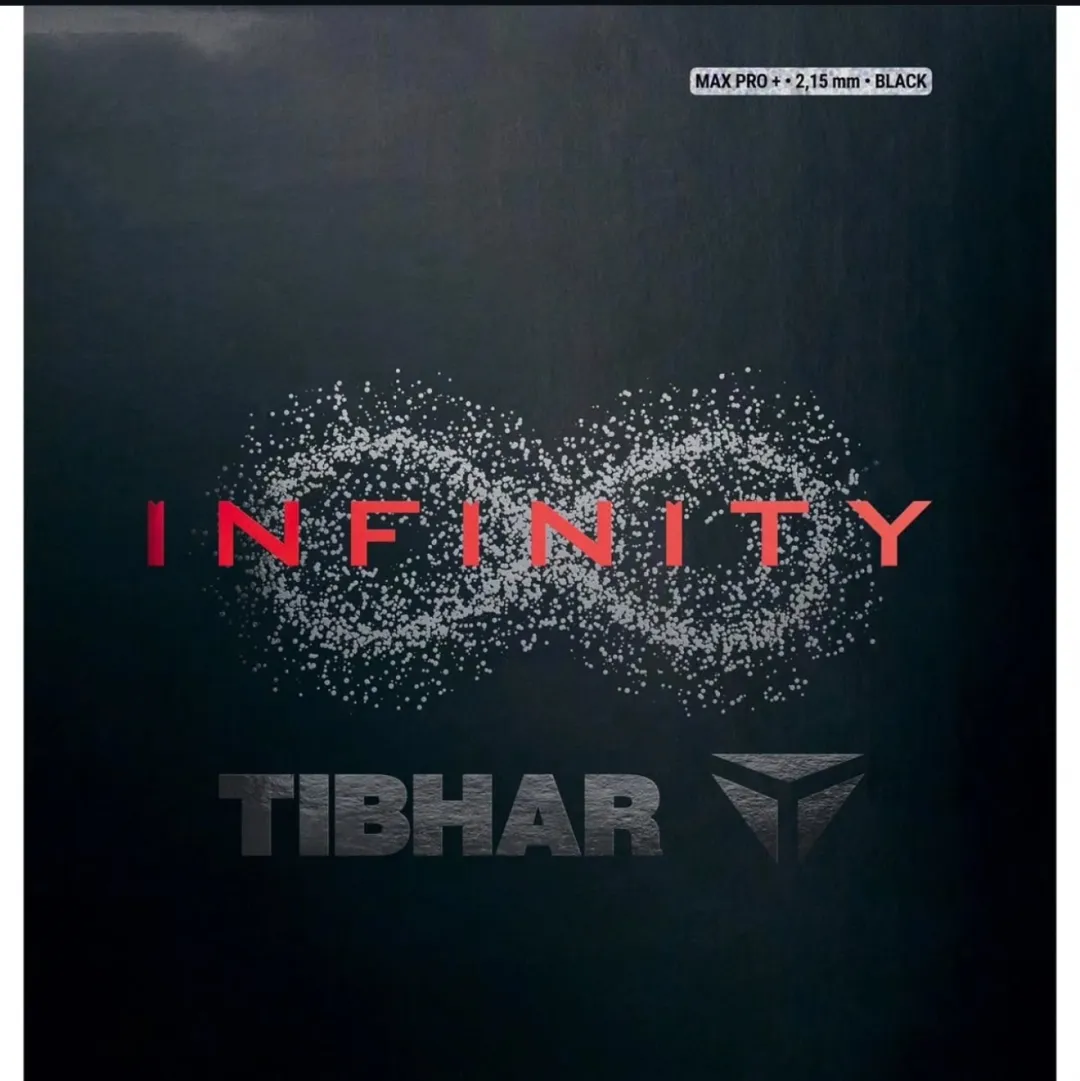
Expected to hit the market next month. Daco has been using this rubber for several years. The Lebrun brothers may be experimenting with Infinity on the forehand — possibly Infinity MX-S — so watch whether it shows up at these Worlds. The question is whether the penetration is improved compared to K3 Pro. If not, we can at least enjoy Daco’s powerful backhand.
3. Harimoto Hina’s backhand: sticking with Nittaku GENEXTION V2C, or switching back to ZYRE-03 or Dignics 09c?
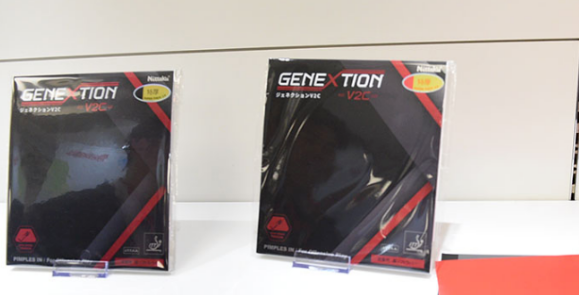
At the All-Japan Championships, Harimoto Hina used the Z03 on her backhand but failed to win a third straight women’s singles title, losing to Zhang Ben Miwa. After that, she tried the mildly tacky GENEXTION V2C on her backhand — results didn’t seem great, despite that rubber being voted one of the top ten inverted rubbers of the year in the Takkyu Okoku survey.
Watch whether Harimoto keeps this rubber at the Worlds or makes a change.
4. Xiang Peng’s backhand: National Hurricane or Jekyll and Hyde C55.0?
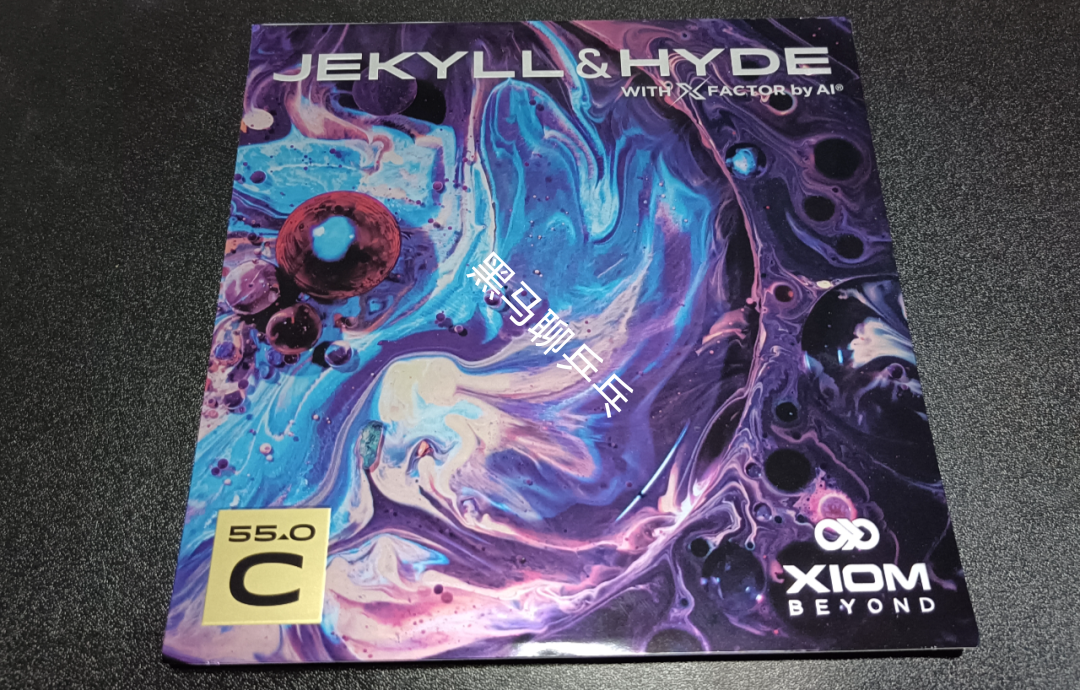
At last month’s Chongqing Championship, Xiang Peng switched his backhand back from Hurricane to Jekyll and Hyde C55.0. It’s clear he’s still going back and forth — before that, he’d been on Jekyll and Hyde, then went back to Hurricane.
Generally speaking, players tend to want to change their rubber when they’re losing. When they’re winning, they feel good about things and don’t want to touch their equipment.
5. Different outer carbon green-fiber blades on display
All made in Korea — Lennard Vriesde isn’t at this Worlds so we won’t see the Luma. But there are several others: for example the Stiga Alexis used by Alexis and Pucar, Zhou Qihao’s Shuangyu Project Z, and Tibhar Wu Junzheng. Different blades, same structure, same manufacturer.
6. How to use the 968
The Korean women’s team — Shin Yubin, Kim Na-young, Liang Xiaying — will give us a look at how different tactical styles approach using the 968.