Atypical Outer Carbon Blades: When Standard Construction Produces Unconventional Feel
The typical outer-fiber blade — fiber layers outside a paulownia core, in a 5+2 structure — is built for speed in mid-range rallies, easy transition play, stable backhand, and explosive first-ball speed.
But even with a structurally typical outer construction, manufacturers can tune the blade strongly toward spin.
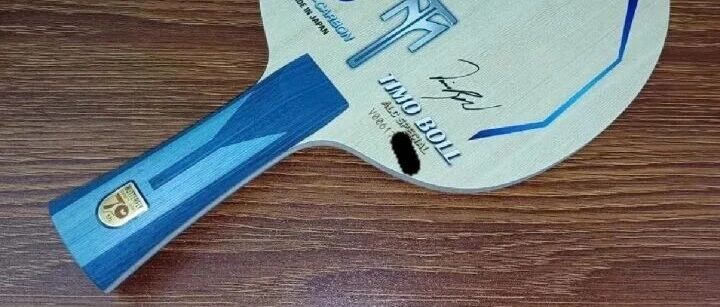
Timo Boll Spirit — Timo Boll ALC — Timo Boll 70th Anniversary
Boll asked Butterfly for something new: better short-game control and more spin. He was on Viscaria at the time. So Butterfly created the Timo Boll Spirit.
The evidence speaks for itself — you can’t say Butterfly simply swapped the handle and renamed it to fool Boll, and that he couldn’t tell the difference.
Later, moving into the no-glue era, Butterfly added speed and the Spirit evolved into the Timo Boll ALC. But the soft, dwell-focused character persisted — the crisp-outside, tender-inside feel became ever more pronounced.
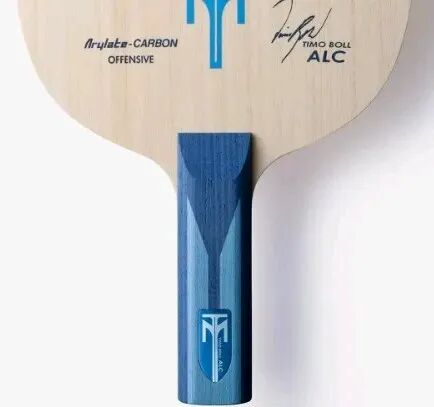
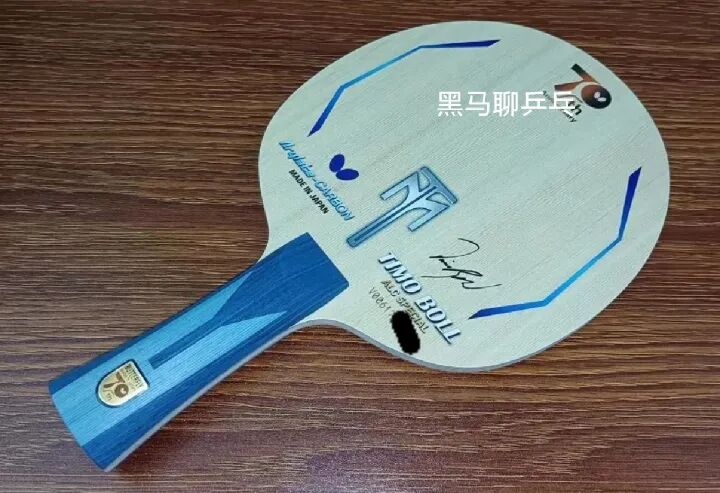
That character reaches its peak, I think, in the Timo Boll ALC 70th Anniversary edition. I’d almost call it the spiniest outer ALC blade Butterfly has ever made. I’ve tested the Spirit special-edition before, and it never had this level of spin-loading. This is an outer-construction blade that manages to produce a distinctly non-outer feel — built for speed, yet delivering exceptional spin, with solid first-ball speed to boot.
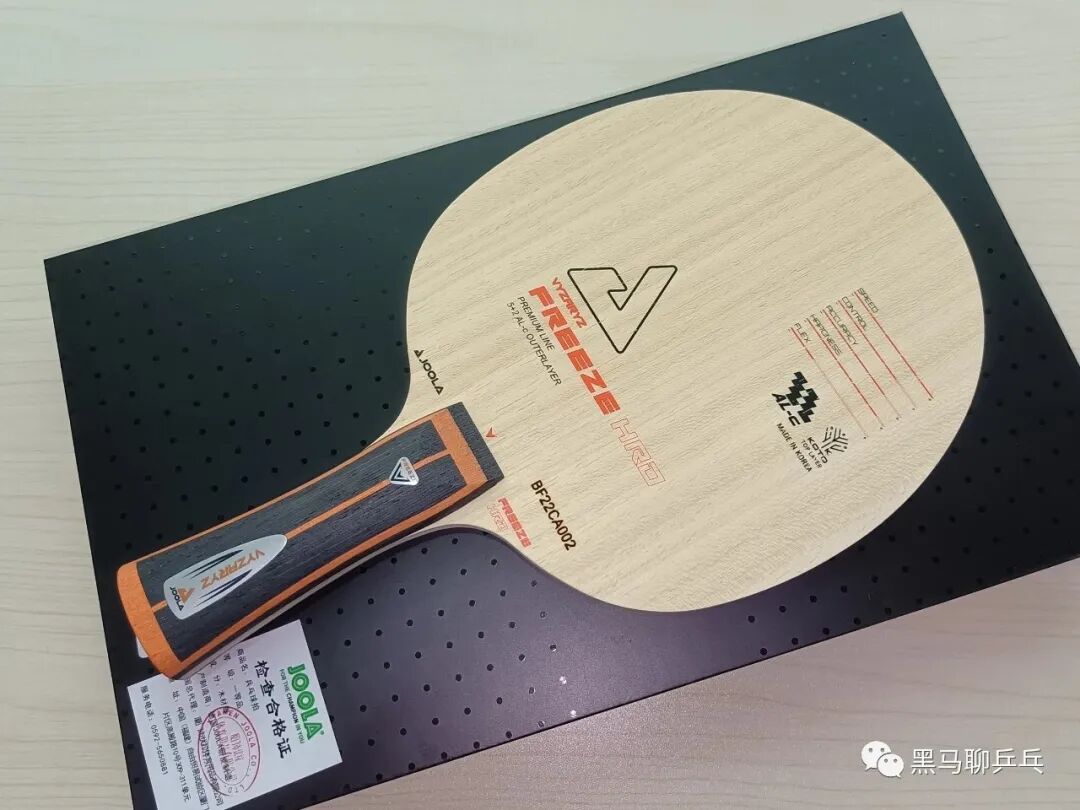
Andro HRD, Shuangyu Zhou Qihao, and Possibly Super Viscaria and Fan Zhendong SALC
These blades are also very dwell-heavy, with good spin-loading. They produce more pronounced overall flex deformation — an atypical feel from a typical outer-carbon skeleton.
The Shuangyu Zhou Qihao Project Z is the most extreme example. One player described it as “a Viscaria that feels slightly soggy and dense” — not a criticism, just a description of its character.
Achieving an atypical feel from a typical outer construction isn’t hard. You can treat each wood layer differently, then vary the fiber cure level to produce “softer” or “harder” behavior.
Now to the actual theme: truly atypical outer blades. These more specifically refer to blades that swap the paulownia core for ayous wood. Despite outer fiber placement, the different core shifts the emphasis away from transparency and explosive power toward dwell arc and projection feel.
Carbon 45 — Carbon Dynasty — Xu Xin Blue Label
Outer fiber, but with an ayous core rather than the paulownia typical of standard outer blades. And the fiber isn’t the balanced aramid carbon of outer blades — it’s tensile carbon. Add in Stiga’s superb Swedish wood processing.
The result: these three atypical outer blades all have superb dwell. The first two use paulownia face veneers and achieve an almost extreme level of ball-holding. The Carbon Dynasty has better support and bottom-end power than Carbon 45, but only barely adequate. Carbon 45 is even more limited — pros have abandoned it for good reason.
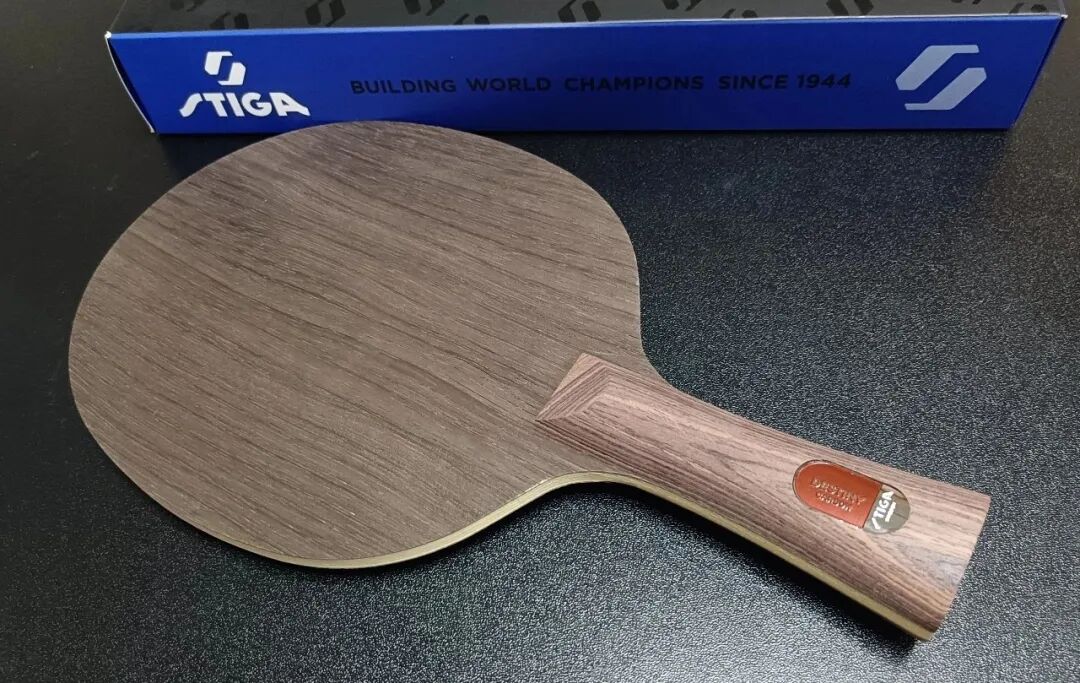
Xu Xin’s Blue Label has the strongest deep power of the three. When you really swing through, it can even feel fierce. Spin isn’t quite as extreme as the others, but it’s still very ball-gripping.
ZX-Gear Out, Victas Pitchford Limited
These two show how much craftsmanship matters. Honestly, they play pretty well. Paulownia face veneers, outer Z-carbon fiber, ayous core in a 5+2 configuration — the feel is clear and responsive, the ball-holding is good, and the first-ball speed is solid.
But even with an ayous core that should theoretically provide strong deep power, both blades fall short — below Viscaria in this regard. Why?
I think you need the hardness of each layer to alternate — soft and hard interspersed, working together — to get truly meaningful bottom-end power. If all the layers are similar in hardness, the overall deformation won’t be distinct enough.
Though these two atypical outer blades perform decently in matches — handling both dwell and first-ball speed at low-to-moderate force — their bottom-end power simply isn’t impressive.