Taiyuan Challenge: Choppers Dominate, ALC and Z03 Are the New Norm
1
Talk about developing reserve talent — let’s first see China’s young players figure out how to handle choppers.
At a regular Challenge event where neither China nor Japan sent their top stars, the women’s singles saw two Japanese choppers steal the show. The women’s semis featured three Japanese players — Ofutato Satsuki, Hashimoto Honoka, and Sato Hitomi — along with one Chinese national team member, Shi Xunyao.
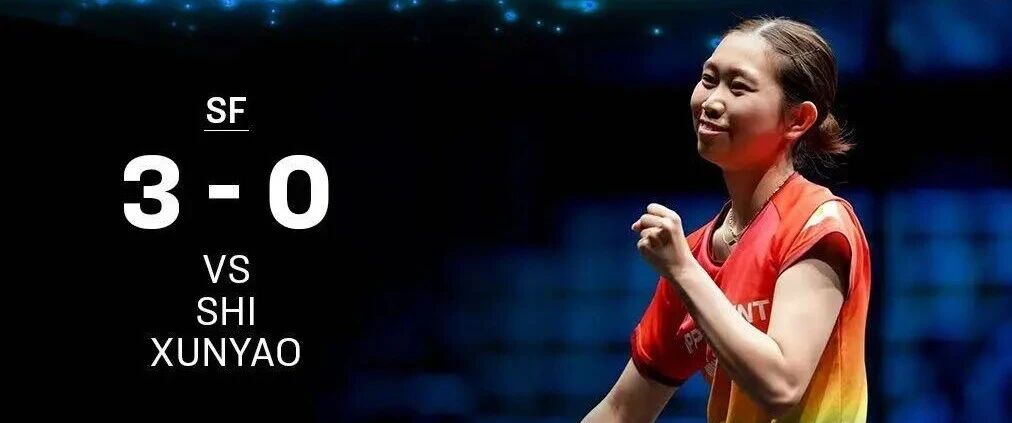
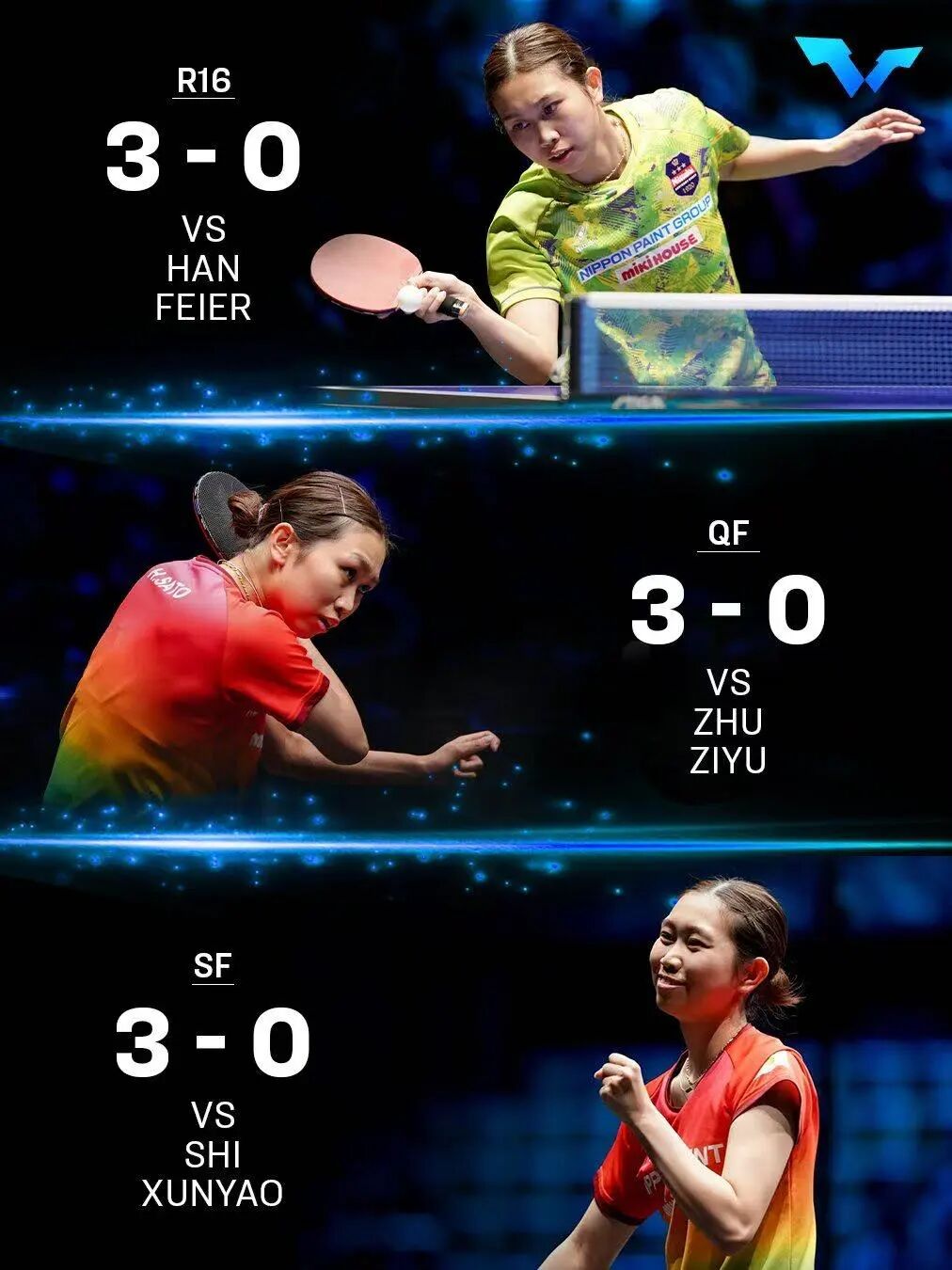
In the semis, Ofutato dispatched Hashimoto 3-0 — they’re teammates and know each other too well. Sato then beat Shi Xunyao 3-0.
Hashimoto is no stranger to Chinese fans; apart from Sun Yingsha and a few elite players, most Chinese squad members struggle against her. Even Wang Manyu needed a hard-fought 4-2 at the World Championships.
The other chopper, Sato Hitomi, also rolled through three Chinese national team members with three 3-0 results.
2
In the men’s singles, the finalists are Wen Ruibo and Yoshimura Maharu. Tonight they meet for the title. On a Stiga table, it would be quite fitting if a Stiga-sponsored player lifts the trophy.
Wen Ruibo: Luma hybrid carbon blade, Neo Blue National rubber, DNA Hybrid M 55 Yoshimura Maharu: outer SALC special order, both sides Z03
The other two men’s semifinalists were Li Tianyang and Pucar. Li used a DHS custom chopper blade 08X, while Pucar used the Tibhar Alexis with K3 Pro rubbers on both sides.
Li Tianyang’s 3-0 sweep of teammate Chen Yuanyu shows that even teammates can struggle against a chopper if they’re not a top-level attacker. In the semis, Wen Ruibo also had a tough time, edging through 3-2.
Li Tianyang has an interesting serve game with varied positions and spin, and his receive attacks are dangerous too. His chop-attack style is worth studying for amateur players — you don’t have to use pips on the backhand; double inverted works fine. Whatever Li’s ceiling turns out to be, he’s valuable as a training partner because every return requires real-time adjustment on your part, which sharpens your adaptability for unfamiliar opponents on the international stage.
3
On whether choppers should use long pips or short pips (regular/semi-long) on the backhand, there are pros and cons to each. Long pips like Sato Hitomi’s Curl P1V generate more extreme reverse spin.
Short pips, like Li Tianyang’s (model unclear) or Hashimoto’s DO Knuckle (medium thickness), can’t produce the same absolute level of reverse spin as long pips — but they’re more ambiguous. Whether you’re pushing or chopping, it’s easier to mix spin and no-spin with similar-looking strokes. And there’s another advantage: short pips make it much easier to counter-attack. That’s why more and more choppers are going to short pips these days.
4
Let’s look at the equipment some players are using.
Huang Youzheng (always switching blades): Fan Zhendong ALC, Hurricane on both sides Sato Hitomi: Butterfly Diode V, Z03, Curl P1V long pips Yokoi Sakura: Fan Zhendong ALC, Z03 on both sides Ofutato Satsuki: Harimoto Tomokazu SZLC, Z03 forehand, D09c backhand
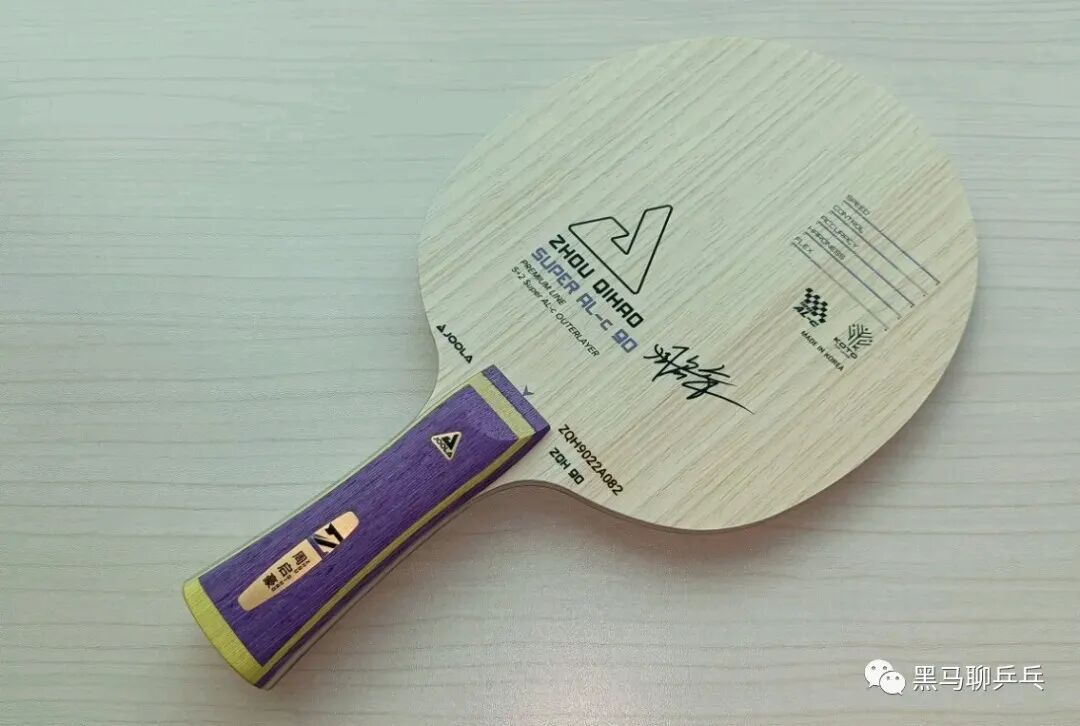
A few interesting points here. First, once you try ALC, you’ll naturally want to test SALC — or switch back and forth depending on feel and form, like Huang Youzheng does. My take: if you have strong enough power, go ALC. If you want to borrow more from the blade’s rebound, go SALC. The same logic extends elsewhere — like choosing between the Icestorm HRD (green fiber carbon) and the Zhou Qihao 90 (super green fiber carbon).
The other thing worth noting is the incredible adoption rate of Z03 in Japan right now. A huge number of Japanese women’s team players have switched to Z03 on the forehand. Before the T-League, Yokoi was using D09c on both sides; now she’s switched blade and gone to Z03.
That said, everything deserves a nuanced view. Why? Because Ofutato Satsuki was originally playing Z03 forehand / D09c backhand — but during her match against Hashimoto, she switched the racket around, effectively going D09c forehand / Z03 backhand the whole match. Perhaps she found D09c more stable for pulling underspin balls on the forehand?