Singapore Smash Inner Carbon Blade Showdown
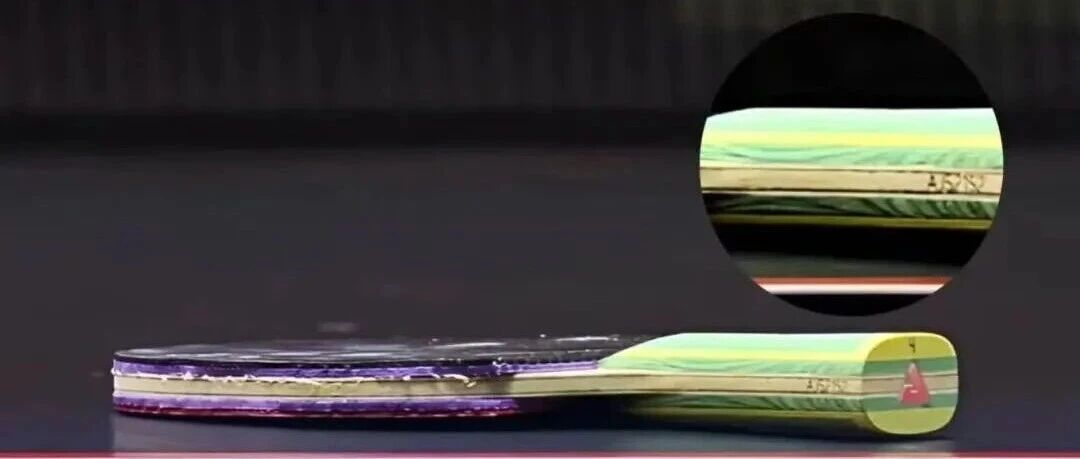
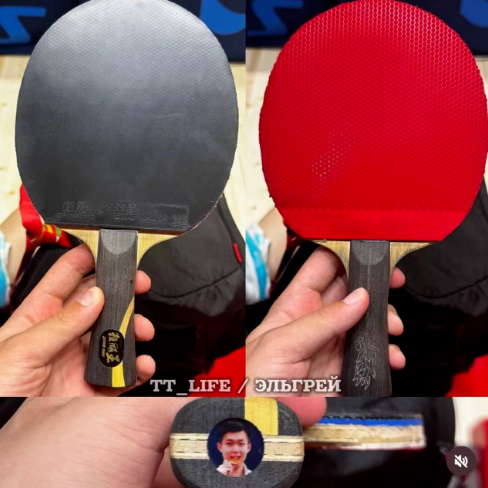
1. Q968 — Keyword: Raw Power
Chen Junsen: Q968, NEO Blue-Sponge Hurricane 3, Moristo SP
For a player who uses long pips on the backhand, whether to choose an outer or inner carbon blade often comes down to playing style and technical preferences. If the forehand is mainly flat-hit or close-to-the-table, and speed is the priority, outer carbon tends to be preferred — like Ito Mima (Ito Mima Carbon), Bernadette Szocs (Viscaria), and Kim Geum-hyeon (Do-Best 70). If the player likes stepping back and values arc quality and raw power on the forehand, inner carbon can be the better fit — like Chen Junsen (Q968) or Mu Zi (W968).
Of course, outer and inner carbon aren’t mutually exclusive for any given player. Mu Zi, for instance, has used both the Viscaria and 968. Ultimately, it depends on what the player needs at any given moment.
But compared to their first meeting at the China Grand Smash — where Chen Junsen won 3-2 — this time at the Singapore Smash, Chen Junsen lost 2-3. He never managed to show that “raw power.” In the earlier match, he served a lot of long balls to limit Harimoto’s backhand flip, and he was pounding winners from his forehand side with high frequency. This time, while his long pips did a lot of good work, Harimoto had learned from the first match — his service return improved and his court coverage was sharper. Chen Junsen couldn’t generate the ball quality needed on the attack.
Deep power and single-shot quality are supposed to be the 968’s strong suits. In the days after the match, Chen Junsen went back to intensive forehand practice, including mid-table rallying.
2. Harimoto Tomokazu SALC — Keyword: Force Absorption, High Forgiveness
Harimoto Tomokazu: Harimoto Tomokazu SALC, both sides ZYRE-03
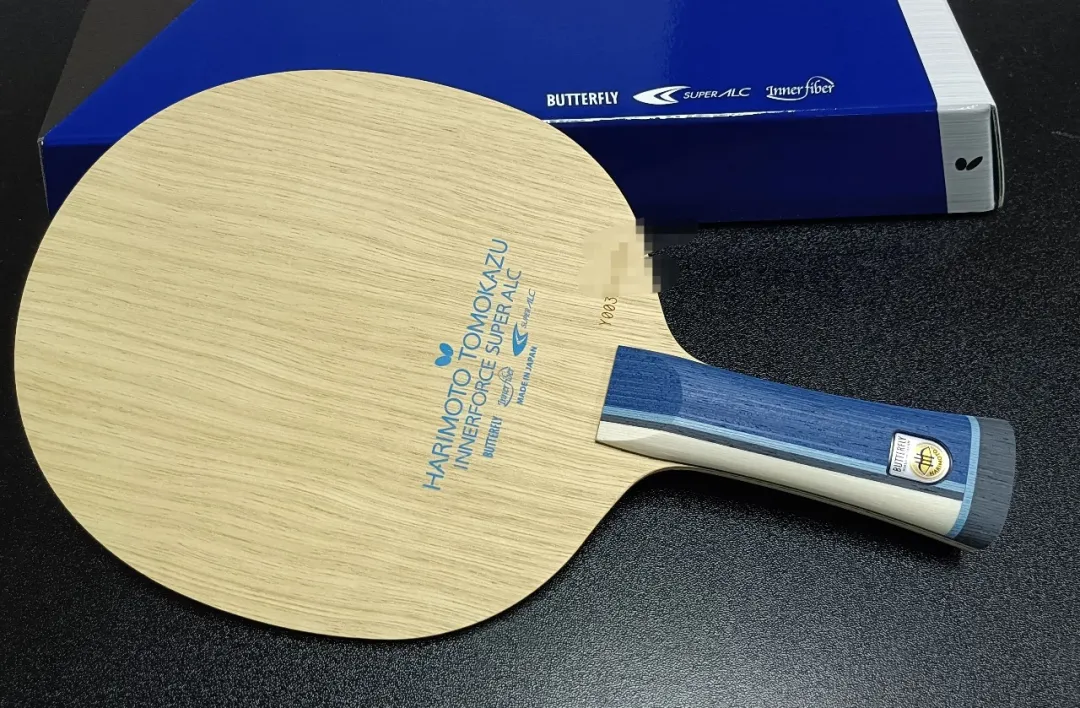
I’ve long suspected the Harimoto SALC design was inspired by Fukuhara Ai’s ZLF — also an inner fiber blade with a large paulownia core. That design preserves the crisp, transparent ball feel at the table and offers high forgiveness. It’s not built for maximum stored energy, but it guarantees reliable arc and dwell.
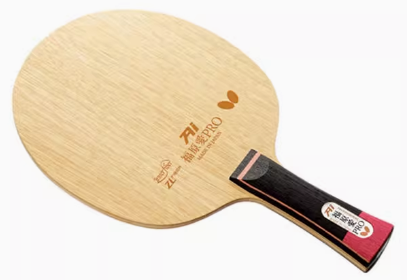
Compared to the Harimoto ALC, the Harimoto SALC feels softer, is more forgiving, and the paulownia core is genuinely better at absorbing incoming force.
3. JOOLA Hugo (Inner Green Aramid Carbon) — Keyword: Explosive Power
Hugo Calderano: JOOLA Hugo (inner green aramid carbon), flagship JOOLA rubber on both sides
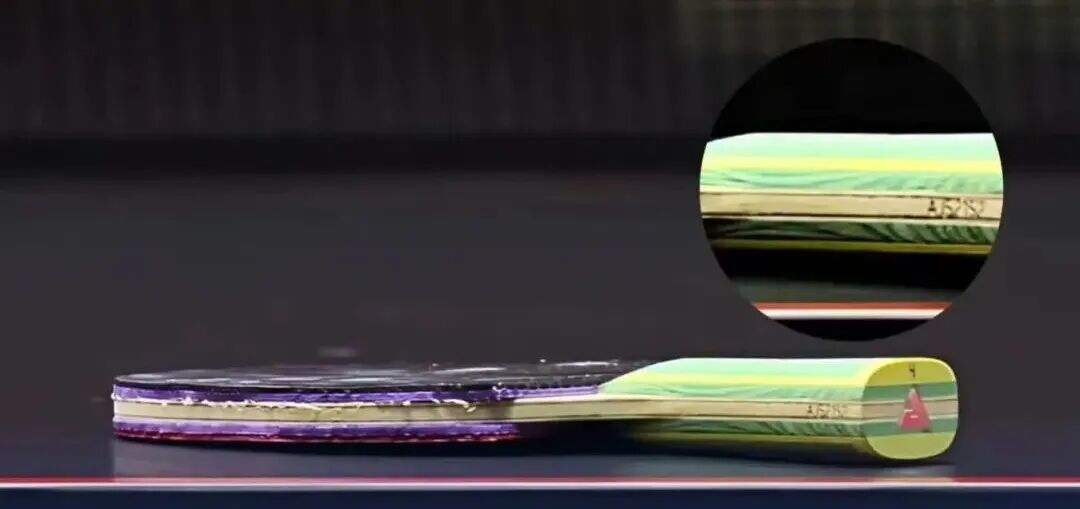
Watching Hugo’s match against Wong Chun Ting — even though he wasn’t at peak form — the inner green aramid carbon JOOLA Hugo showed noticeably better forehand and backhand explosive power compared to the all-wood XYLO 7. The ball seemed to accelerate with almost no effort, shooting off the bat. The speed boost over pure wood was clearly perceptible.
Even when both blades come from the same Korean manufacturer, the stable and controlled feel of the Andro VCI and the fast-accelerating Stiga Ora Hybrid Carbon are genuinely different styles.
There’s plenty of room for individual character with the JOOLA Hugo as well.
4. Cybershape 6 (Gold Label) — Keyword: Massive, Heavy Firepower
Truls Moregard: Cybershape 6 Gold Label, both sides Helix Platinum 55 degrees
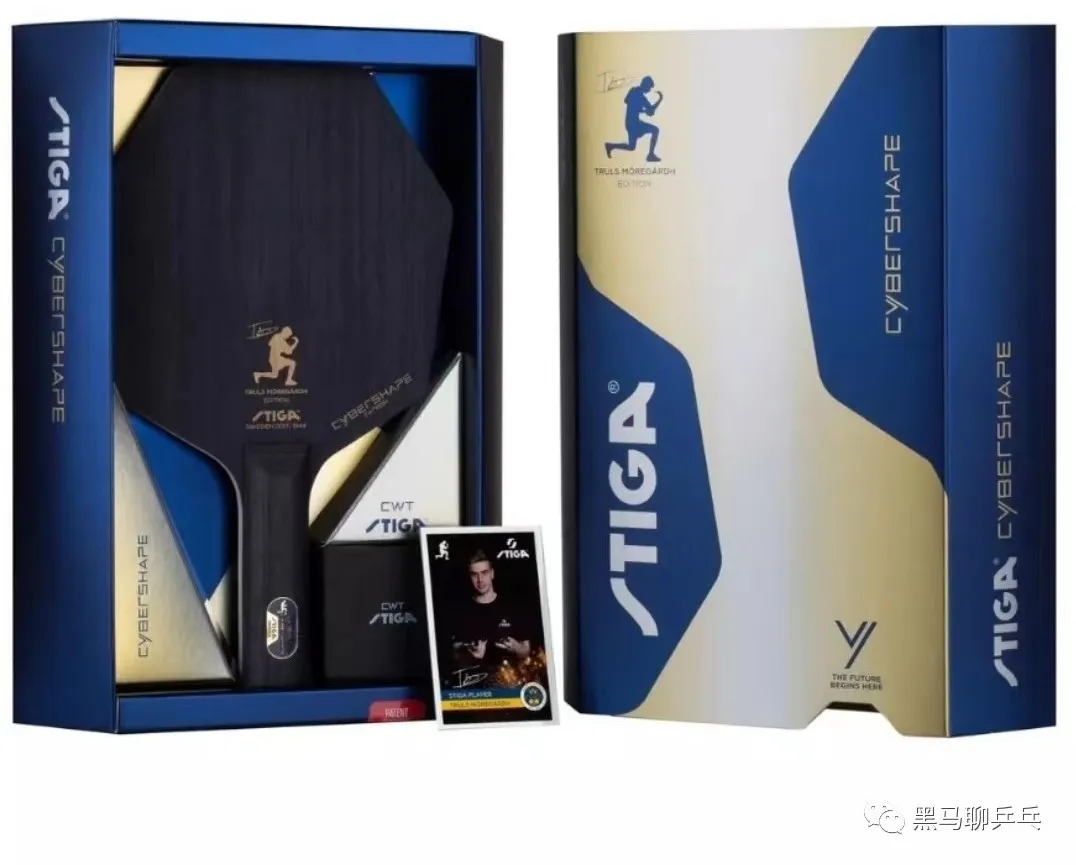
This one is also an inner fiber blade with a large paulownia core, and it absorbs force quite well too — Moregard’s short game and side-cuts show that. But thanks to its construction and special surface treatment, the Cybershape 6 has exceptional overall rigidity, support, and raw power. Moregard regularly unloads high-quality single-shot rippers.
Now, a word about the Helix rubber — a German flagship that launched this year. The general consensus is that its grip is strikingly impressive. That topsheet feel gives you a sense of security on banana flicks and loops. The Helix Platinum M, to my hand, feels firmer than the DNA Platinum M. If I’m playing DNA Platinum H on the backhand, I’d probably go with Helix Platinum M to get a similar effect. It’s genuinely excellent for adding spin, and locking in power feels natural.
The XH hardness works well for forehand play too. Looping against backspin is reliable. I haven’t tried the 55-degree version yet — that’ll be the next test, to see how much more raw power it adds.