Macao World Cup: 10 Key Equipment Insights (Part 2)
3. The Era of Softer Blades
Hard blades are disappearing from the World Cup stage. This fits perfectly with what we’ve been calling the “ideal blade”: soft yet powerful.
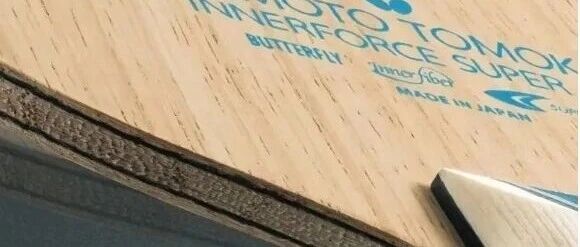
Lin Yun-ju switching from his SUPER ZLC to the Super Viscaria isn’t an isolated case. Felix Lebrun has always preferred a slightly slower blade — better for his own control. Harimoto Tomokazu said he’s satisfied with the feel and control of the Fan Zhendong ALC in topspin rallies. The Harimoto siblings have both moved from the Harimoto Tomokazu ALC toward the softer, more through-feeling, large-koto-core Harimoto Tomokazu SUPER ALC.
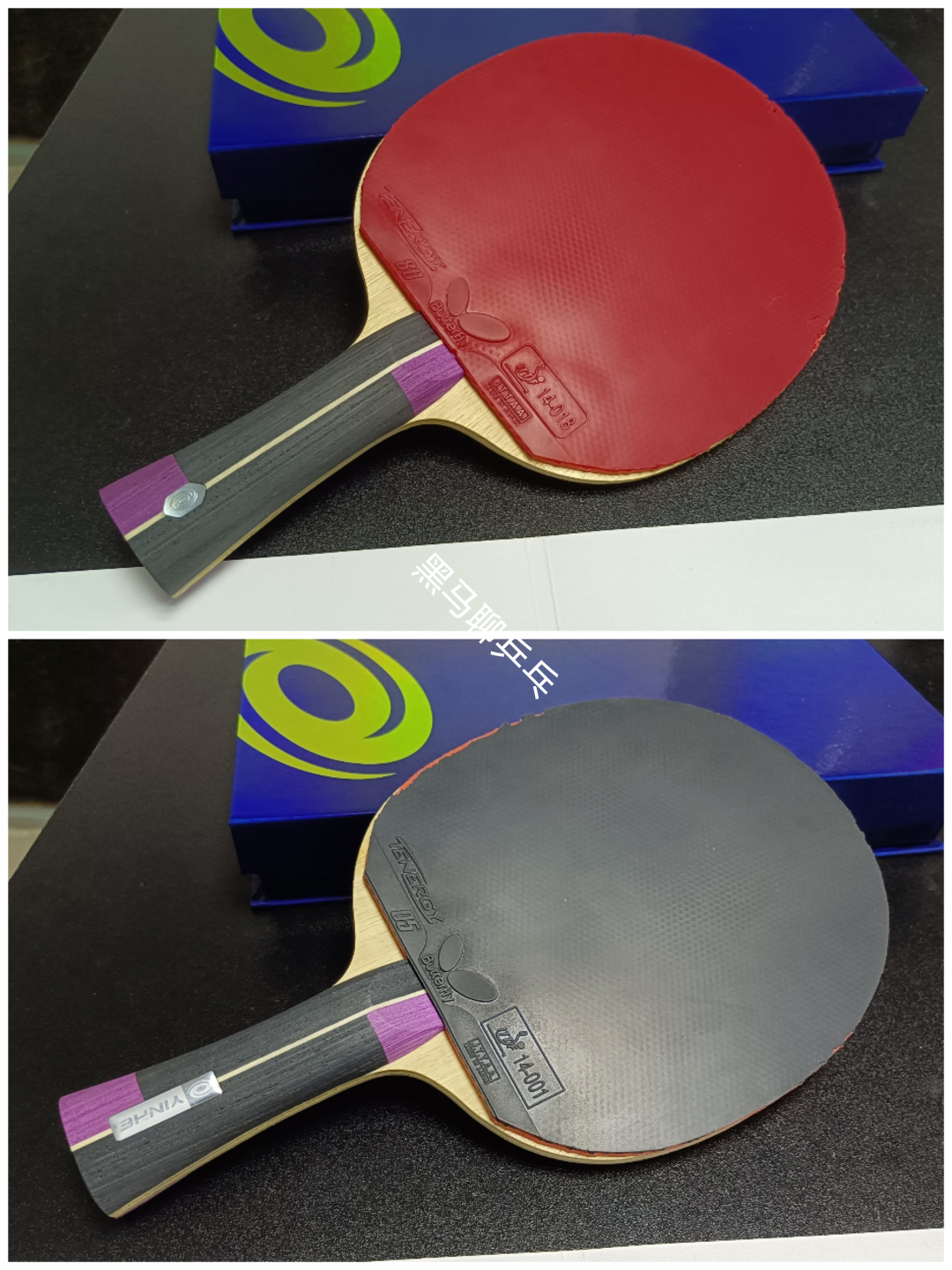
Compared to the market version of the Viscaria, blades like the Lin Gaoyuan ALC, the gold-label Viscaria, and the Fan Zhendong ALC are perceived as softer in dwell — and those are the ones getting attention. Pro players don’t lack power, and most of them don’t need excessive rebound force. Jaha Kanak switching from the Super Viscaria to the Boll ALC is the same story: he wants something softer and easier to control.
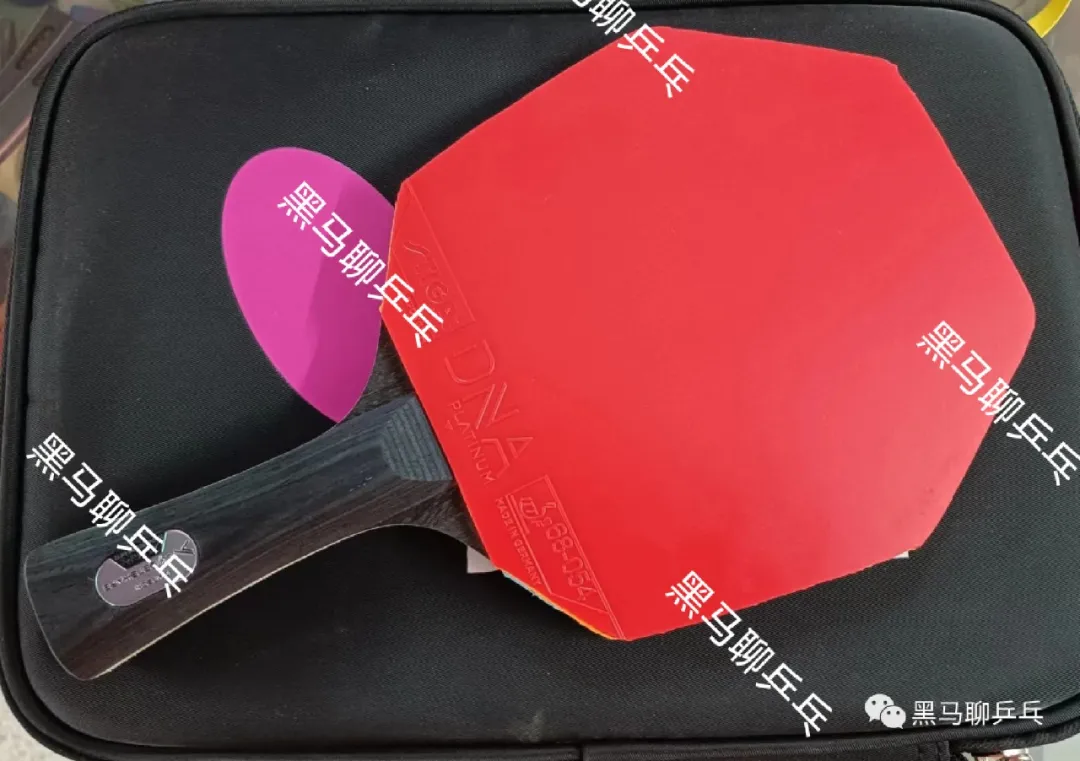
Yes, some inner carbon blades have gotten slightly stiffer — the S968 with its thinner carbon and thicker core, or the Q968 which is just a touch harder than the W968. But at their core, they’re still soft blades. Blades that produce overall deformation more easily, that give you more of a sense of command, that let you adjust on the fly — soft blades are the direction the sport is heading.
You’ll notice that almost every blade I design now prioritizes softness first. That gives you higher error tolerance and the ability to deploy all your techniques more freely.
I won’t deny that recreational players have a thousand different styles. But at the professional level, topspin looping is the single most critical skill for most players. And soft blades make it easier to unleash that.
4. Softer Rubbers Still Have Their Day
I’ve been saying this for a while. Rubber hardness always comes down to personal feel. There’s no rule that says you must use the hardest rubber available right now. Some recreational players say T80 and T05 don’t provide enough support these days. That needs some nuance — they might feel less supportive compared to the stiffer Dignics line, and theoretically that’s correct. Under the heavy impact of power blocks and defensive shots, the Tenergy series (except T05 Hard) does feel a bit soft and hollow. But that doesn’t mean it’s “not good enough.”
In fact, a lot of players can’t even drive through T05 on the backhand — including me, the author, who only uses T05 on the forehand. I’ve tried T05 Hard on the forehand; the power explodes in a flash. But I just want a rubber I can coast with even when I’m tired.
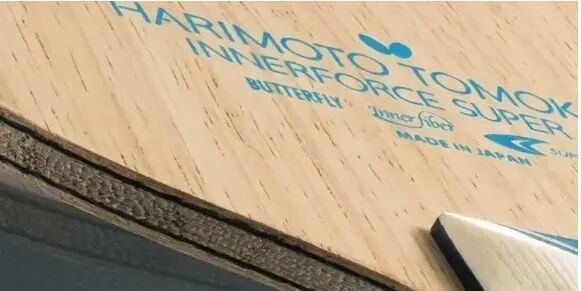
I just confirmed with Hannah Goda’s coach: she was using two-sided DNA Platinum at hardness M before this tournament. For the World Cup, playing Sun Yingsha all seven games and losing the deciding game 11-13, she switched to hardness H on both sides. Honestly, when I was playing with Cyber 6, I thought H on the backhand wasn’t even that hard — just right. And Hannah won the African championship using M on both sides. In this epic battle with Sun Yingsha, her backhand counter-hitting and forehand attacking were razor-sharp. So what hardness works for you is entirely personal.
Of course, I have another angle on this. For players with better power generation, or those who prefer to generate their own power, sometimes softer is actually better. For those who prefer to redirect incoming power, sometimes a harder rubber — even if it doesn’t transmit fully — can actually suit them fine. At the end of the day, go with what feels right. I’ve seen retired provincial team players who absolutely shred it with an F2 on the backhand and say: “I know exactly how much power I’m putting in.”
5. Forehand Prefers Inner Carbon, Backhand Prefers Outer Carbon
Or put another way: if you want to rely more on your forehand, go inner carbon. If you want to rely more on your backhand, go outer carbon. It’s a simple truth.
Beyond that, close-to-table players should choose koto large-core blades, while mid-distance players should choose ayous large-core. This is widely accepted. Among inner carbon players, the close-to-table Harimoto Tomokazu and Moregard both use koto large-core, while Hugo — who prefers to stay back — uses ayous large-core. Koto core emphasizes a crisp, through-and-through feel; ayous core emphasizes energy storage and elastic tension.
There are exceptions, of course. But for most players, choosing inner carbon for the forehand and outer carbon for the backhand is “going with the current” — a more natural path to success.