London World Championships: Key Equipment Insights (Part 1)
Let’s get straight to the point. Today I want to share some equipment impressions and takeaways from the World Team Championships.
1 — Hurricane 3: Control and Speed
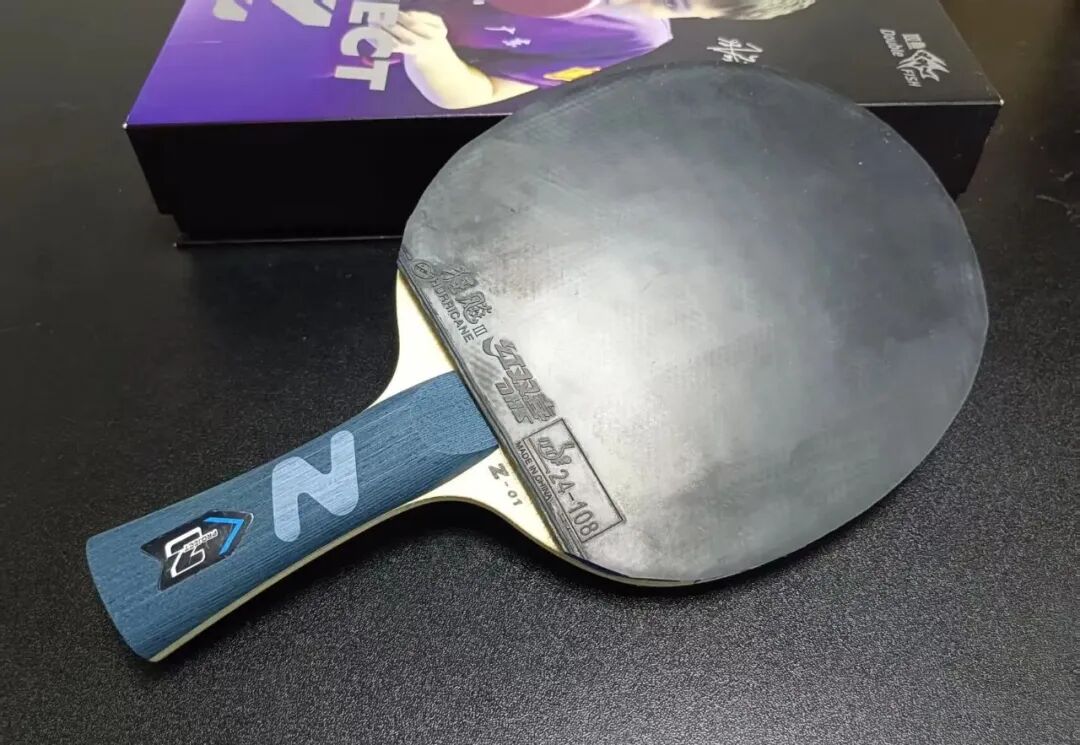
What makes a rubber easier to control? Lower elasticity. Before being fully boosted, Hurricane 3 is genuinely “low elasticity.” Its highly tacky topsheet further suppresses bounce, which translates into better control.
Does control matter? For beginners, absolutely. For advanced players, equally so. When a rubber gives you better control, executing your tactics becomes easier — whether you’re pushing short or flicking long. That’s why many flagship foreign rubbers have moved toward semi-tacky surfaces: easier to maintain arc and basic ball quality even when you’re not in position.
A case in point: starting from the 2024 Incheon WTT Star Contender, Hugo Calderano switched to a semi-tacky Jekyll and Hyde C55.0 on both wings to strengthen his short-game control. He made notable progress. That is the primary function of a tacky rubber: improved control, whether it’s a Chinese high-tack or an imported semi-tacky.
Of course, Chinese high-tack rubbers (including Palio and Kokutaku Platin AMG) tend to have even lower elasticity and thus offer even better control. Imported semi-tacky sits between Chinese high-tack and imported grippy rubbers — a deliberate compromise.
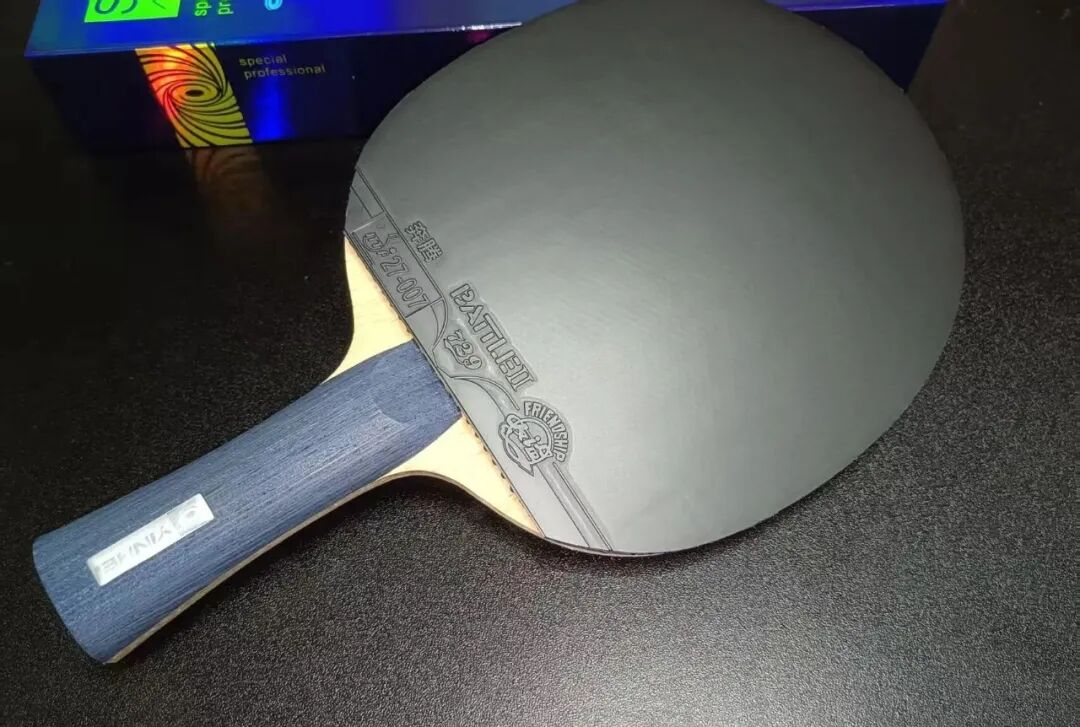
However, low elasticity comes with a cost: slower speed. Slow speed affects both your active driving and your passive redirecting. That’s why former national team players analyzing matches always stress that Wang Chuqin and Liang Jingkun need to stay close to the table — the backhand Hurricane simply isn’t fast enough to keep up if they drop back. Staying near the table lets them redirect with better timing and pick up some speed.
If your game is speed-oriented — especially passive redirection speed — there’s even less reason to use Hurricane. At minimum you’d want a semi-tacky import. High-tack Chinese rubbers like Hurricane suit active power-hitting more than passive play. Feeling fatigued while using them is perfectly normal.
The current solution to the low-elasticity, low-speed problem is boosting. Just look at how full and granular Wang Chuqin’s topsheet looks — that tells the whole story.
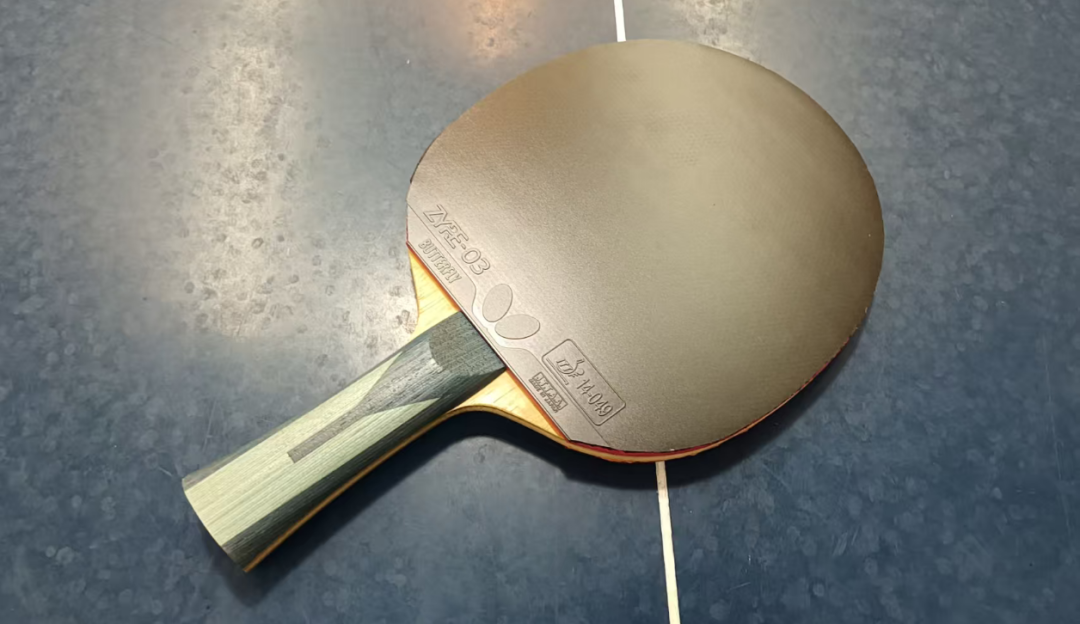
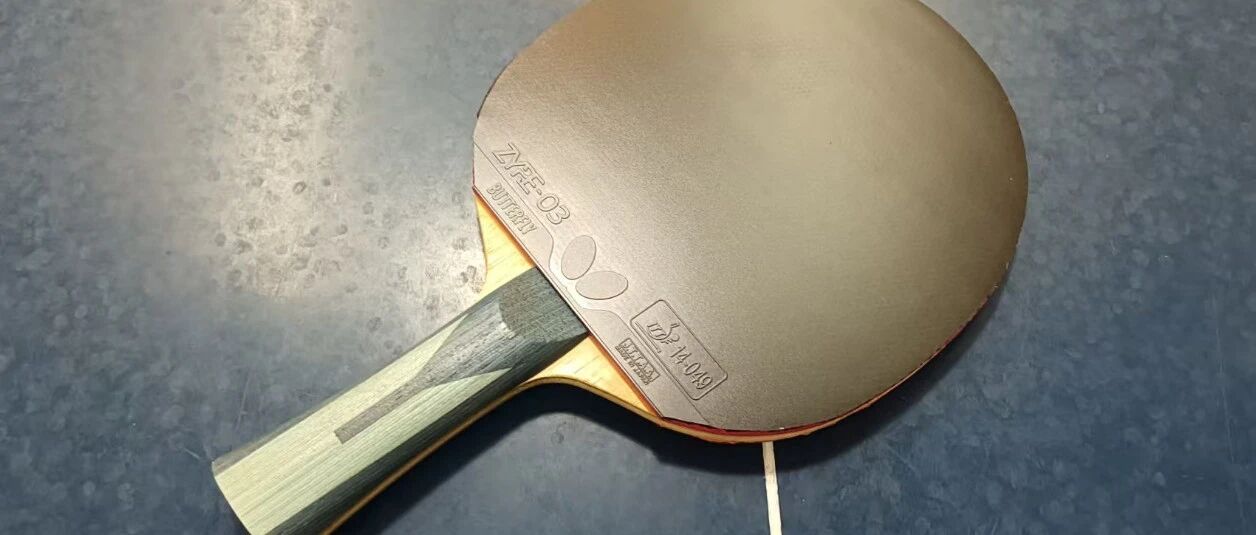
2 — ZYRE-03 and T05 Hard: The Grippy Side
These grippy rubbers have much higher elasticity. They rebound faster, feel more effortless, and generate penetrating drive with less effort on your part. Passive redirection is also relatively easy — there’s a satisfying sense of speed.
The flip side: the bouncier the rubber, the harder it is to control. Harder to control means you need greater focus at all times, or your game swings wildly up and down.
Moreover, grippy rubbers are generally less consistent in dwell time than tacky rubbers. When you’re not relaxed, error rates climb.
Choosing a high-tack rubber means generating and shaping arc primarily through your own active force. Choosing a semi-tacky means aiming for a middle ground — decent but not extreme in either direction. Choosing a grippy rubber means less susceptibility to incoming spin and easier acceleration. At the end of the day, none is definitively “best” — you have to factor in your personal style and blade pairing.