I Think I've Found the Most Important Quality of a "God Blade" (Part 1)
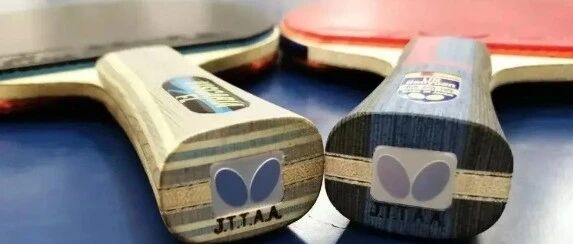
Over the past few days I’ve been playing against some seriously good opponents of quite varied styles. There was a sixth-grader on a professional track whose transition speed was truly slick — one ball after another, and no lack of pop behind each one. Then there was an amateur around 2000 points whose backhand was more ferocious than most pros; I was always terrified he’d crack my blade. Thankfully the Yinhe custom blade I’ve been using is reasonably affordable — if it does crack, I can just grab a new one.
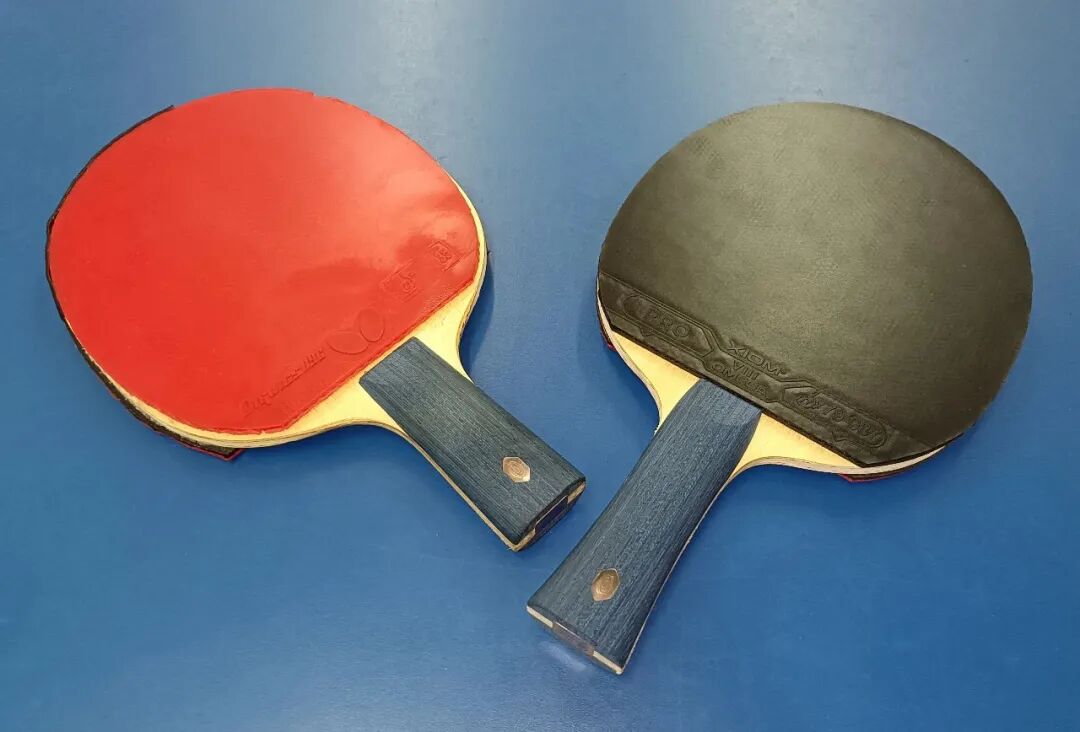
There was also a former provincial team main player who doubled as a national squad sparring partner. Playing him was an enormous mental workout. I had no hope of winning, but just to handle his ten-plus varieties of tricky serves I burned through no small number of brain cells.
Every time I spar with a top player, my understanding of blades deepens. Maybe that’s the essence of being a gear enthusiast.
After all of it, I’ve come to a conclusion: for most players, the single most important quality a blade needs in order to qualify as a “god blade” is captured in four words — soft yet powerful.
1
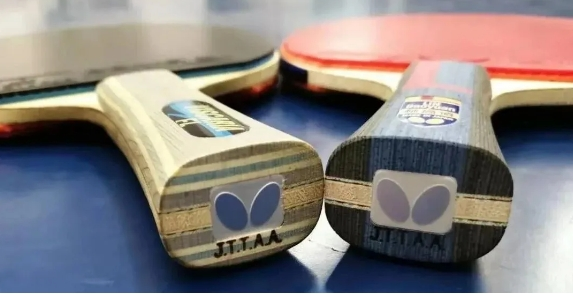
Looking back at the blades used by the national team over the years, when people talk about god blades, four names inevitably come up: W968, Carbon 45, Golden-label Viscaria, and Lin Gaoyuan ALC.
The 968 is well known. It has an incredibly rich dwell sensation, and once you load it, it absolutely fires. The buildup feels beautiful — especially when paired with boosted rubbers — and the ball quality on the exit is very heavy. That’s “soft yet powerful” right there. The “soft” part refers specifically to that quality of dwell, the sense of the blade wrapping around the ball.
I’m grouping Carbon 45 and Lin Gaoyuan ALC together for convenience because they share similar characteristics: both have good dwell, but neither has particularly strong inherent drive. But didn’t I just say god blades need to be “soft yet powerful”? Here’s the thing — whether a blade has “power” isn’t absolute. As long as the power is sufficient for the user, it counts as powerful.
During the Tokyo Olympics cycle, Carbon 45 was enough for many national team members. The women players at the time prioritized transition speed over raw power on single balls.
Lin Gaoyuan ALC meanwhile had quite a few notable users for a while: Lin Gaoyuan, Zhou Qihao, Wang Manyu, Zheng Peifeng, and others. For them — whether special issue or retail version — the power was sufficient at that point in time.
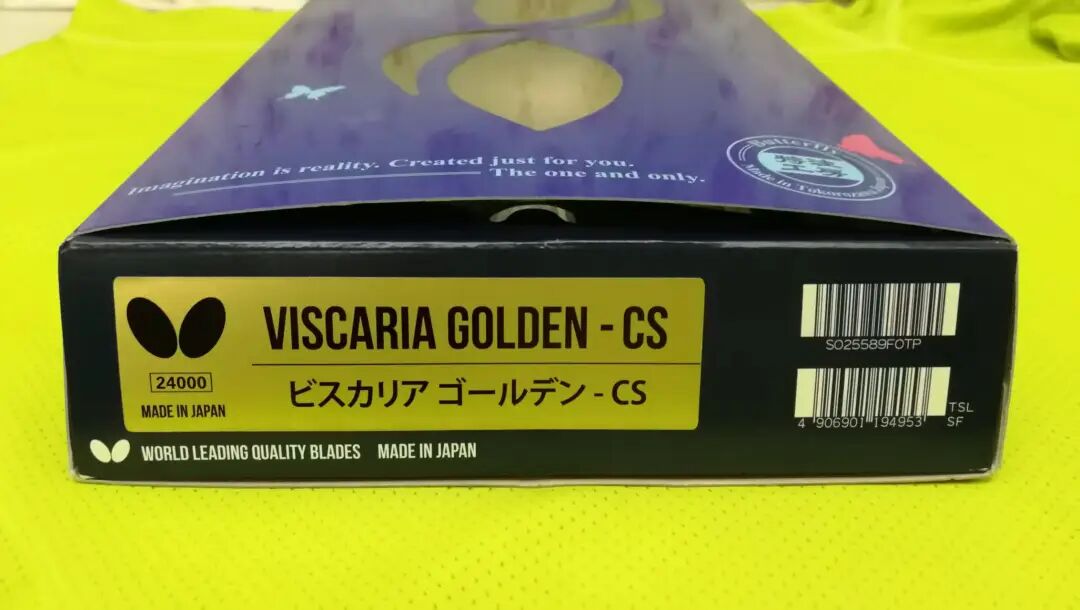
Then there’s the Golden-label Viscaria. When it first came out, I was a bit dismissive. It carried the golden-label name but the drive felt average, even a bit scattered. What it added was softness — better dwell, easier backhand lift on backspin, better forehand hold.
Later I understood why players like Zhou Qihao initially sought out 94–95g versions: you needed that weight to get any real drive out of it. The early batches weren’t as good as the hype suggested. Later batches, though with some variation in quality control, had blades that were tougher and more powerful. “Soft yet powerful” was finally achievable.
2
Let me explain why you need the “soft” part. Soft means: better hold on the ball, easier to load spin, and enough adjustment capability in the blade. For example, against the opponents I faced recently — if I pushed or flicked over a half-long sidespin or side-backspin ball with a less-than-great arc, they’d immediately counter-loop or counter-drive it. When my backhand couldn’t generate speed, maybe I could flip a short tight arc or add spin and push deep to the baseline. The point is the blade needs to be soft enough that there’s a moment of dwell on contact, so that even when I can’t execute at speed, I still have the option of spinning the ball with variation.
Against the provincial team coach’s wide variety of serves, sometimes I didn’t read them until the very last moment. In those situations, if my blade isn’t soft enough, I can’t adapt in time — because I might suddenly need to flip into a banana flick, or a quick brush, or a straight short push, or a sudden deep chop. Only a blade with enough give can hold the ball long enough to let you pull off technique on the fly.
This is also why, among Butterfly outer carbon blades, players tend to prefer ALC over ZLC. Outer ALC has more dwell pause than outer ZLC — it’s slower, but more stable and more controllable.
To be continued.