How Equipment Shapes Your Game as an Amateur Player
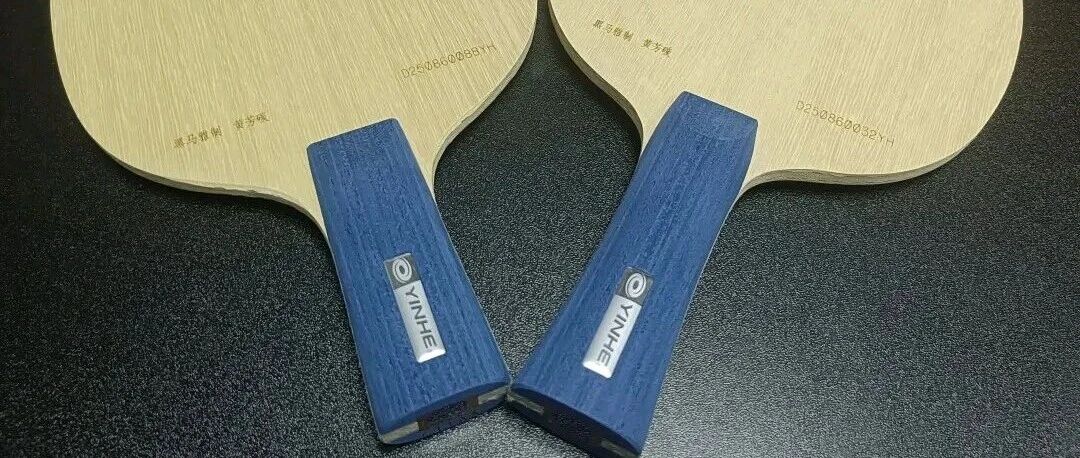
1. The Value of Pure Wood: Feel and High Error Tolerance
Pure wood blades have increasingly become “training blades” in recent years. That label actually captures their strengths perfectly: more honest tactile feedback, a deeper understanding of spin, easier arc creation, higher error tolerance, and responsiveness to your intent.
So, children training on pure wood blades is correct. For adults — even beginners — it’s not always necessary to start with pure wood. One reason is that most pure wood blades become tiring quickly during extended play, which isn’t ideal for many older players. Young players are different — they have seemingly limitless energy, and can fully leverage the idea that “the blade is the best extension of your hand.”
For beginners, developing feel and understanding of spin is critical, so a thin pure-wood blade is always the first recommendation. But why do some pips players also love pure wood — players like Sun Mingyang and He Zhuojia? Because it listens to them. Pure wood is relatively linear: it produces what you intend, whether it’s spin variation or switching between attack and defense.
For advanced amateurs and professional players, pure wood may have limits in rebound speed and support — but it still makes spin generation easier and keeps error tolerance high. Whether to use a pure wood blade as your main setup really comes down to one question: do you have the physical stamina to sustain it?
Just this afternoon I played against a skilled player using a YE-3D — the pure 5-ply wood I used at the University Games years ago. I didn’t even notice right away. He played controlled short game, looped when he could, and used some defense (pushes and blocks) that wasn’t the fastest, but his active power meant the overall ball quality was solid. For that kind of player, the old pure 5-ply wood doesn’t become a limitation because he still has ample energy and stamina to drive it.
2. Equipment Also Shapes and Molds You
Much of this happens without you noticing. For example, once you switch to an outer ALC blade as your main setup, your stroke gradually becomes more compact, you use your backhand more frequently, you start scoring through speed, and you naturally stay closer to the table.
When you use an inner KLC blade as your main setup, you naturally step back a bit and prefer mid-distance rallies. These blades (often paired with a larger ayous core) produce longer arcs and perform better from further back. Over time, most players using these develop a preference for winning through spin and power feel.
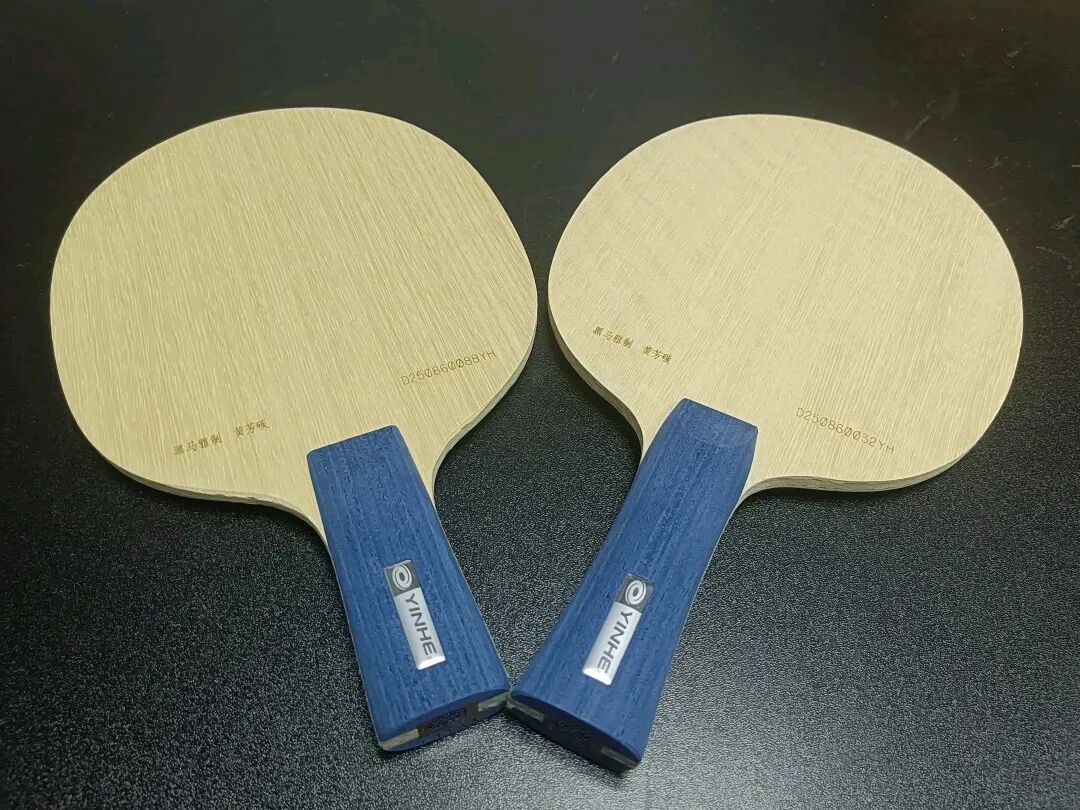
As for those who constantly switch blades — well, that’s complicated to analyze. They’re just enjoying the different feel and characteristics each weapon brings. That’s part of the joy of the game.
3. A Core Quality of a Great Blade: Soft Yet Powerful
I’ve said before that one quality of a great blade is “soft yet powerful.”
“Soft” mostly refers to your sense of control over the blade. Even if it’s physically stiff — like Super Zhang Jike, or ordinary carbon, or Norbilis — if you can fully command it, it can be considered “soft” in this sense.
What is the standard for “fully commanding” a blade? High error tolerance — you make few mistakes, you feel confident, different techniques flow smoothly. A blade with great power that you can’t properly control doesn’t qualify as great. A great blade is always personal.
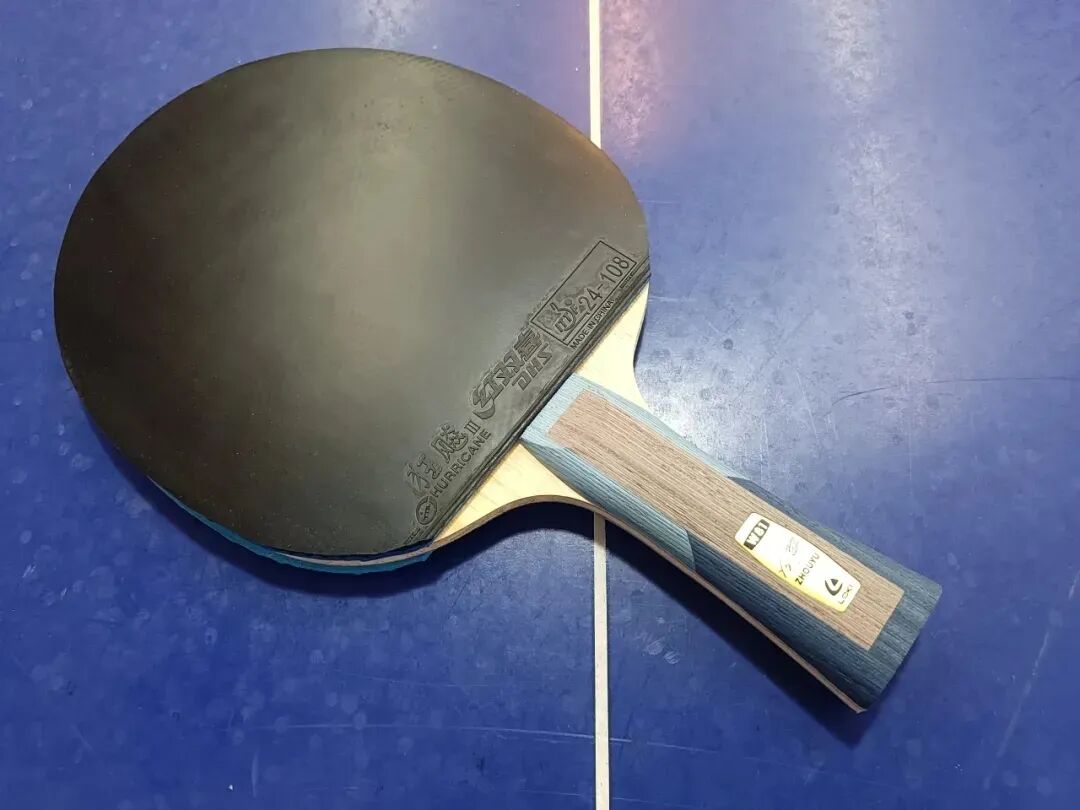
“Soft” also means clear, transparent feel — no rigidity. For example, Zhou Yu Special ALC holds the ball well and amplifies power — some players even find it easier to use than Viscaria. But in my view it doesn’t surpass Vis, because the feel has a slight stiffness.
Why do I always praise Butterfly Special blades? Because beyond the enhanced power storage, the tactile feedback is clearer. Clearer feel lets you make instant micro-adjustments at the moment of contact, while also delivering higher error tolerance. Why do I have confidence in the Heima Custom series? Because they nail that quality first — soft, clear feel, high error tolerance, not rigid.
Of course, some players aren’t that sensitive to blade feel. Some have rubbers that are too hard and unbroken-in — like a Hurricane that hasn’t been boosted through yet. When the rubber hasn’t been played through, you can’t really sense the blade beneath it.