From the Gold-Label Viscaria Green Plastic to Stiga Cyber CWT Weights
Most players probably know that some gold-label Viscaria blades have a piece of green plastic added inside the handle.
But not all of them. Some FL handles have it, some ST handles do not. Whether this is consistent across all variants is uncertain.
So what role does this green plastic actually play?

The most direct interpretation is “added weight.” If a particular production run came out too light, adding a plastic piece to bring up the weight makes perfect sense. Similar practices exist at other brands. Another interpretation is balance — if the original plan called for a hollow handle, adding a plastic block later both raises the total weight (a blade that feels too light affects market perception and how players evaluate it) and shifts the balance point back toward the handle.
The most optimistic interpretation is this: while improving ball quality, the blade still achieves a good weight distribution. In other words, it might feel heavier than it looks, but in practice it doesn’t feel that heavy — and hitting power actually goes up.
Looking deeper into Stiga’s Cyber CWT technology, this interpretation starts to make a lot of sense.
What Was the CWT System Designed to Do?
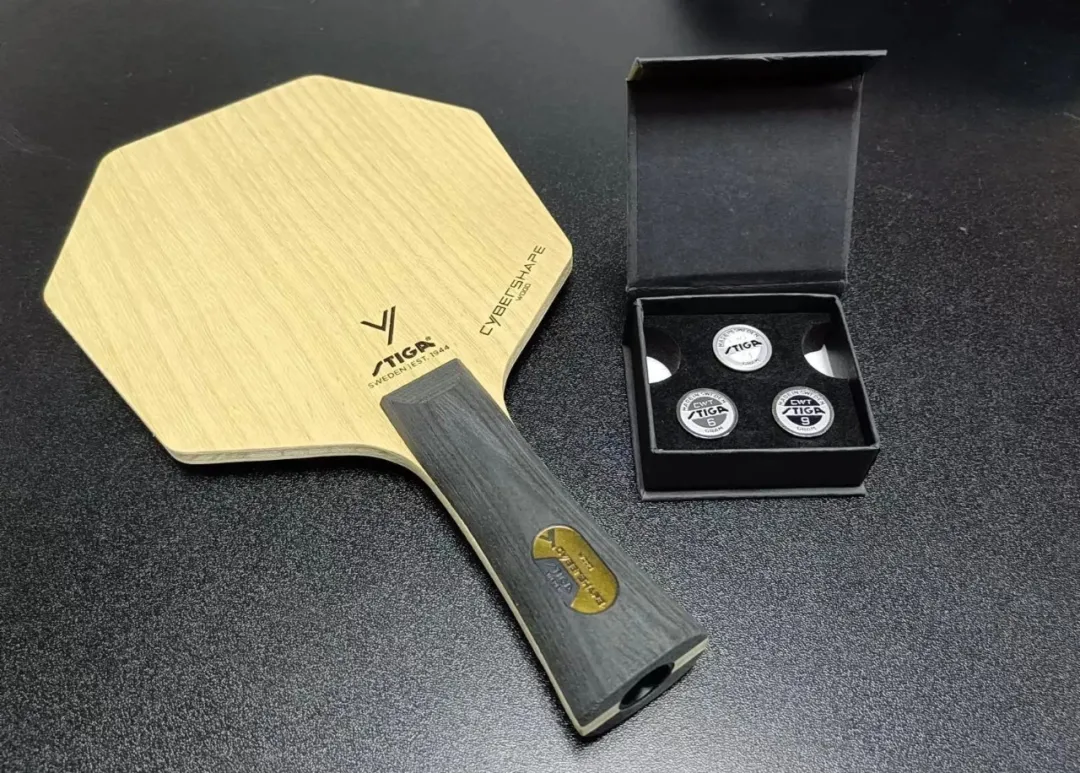
The CWT (Counterweight Technology) system on the Cyber 6 and Cyber pure wood gives the blade four weight options: unweighted, plus 3g, 6g, and 9g inserts.
For background on what different weights actually do, see the earlier article: Weekly Equipment Watch 158 — Cyber Pure Wood’s Adjustable Weight: Tech Innovation or Reheated Leftovers?
As for the original intent: one of the co-developers, Moregard, said he wanted to adjust blade weight based on his feel and the size of the venue. The specifics were left vague. The working hypothesis goes something like this: in a small venue where the ball is already coming fast, you might skip the weights entirely for better control. In a large arena where you need more punch, you add weight to improve single-stroke quality.
Beyond that — if you’re feeling sluggish one day and want to play more freely, you use a lighter insert, say 3g, or nothing at all. If your opponent has a very strong defense and you need to go for broke, you load up with the heavier insert to squeeze out more hitting power.
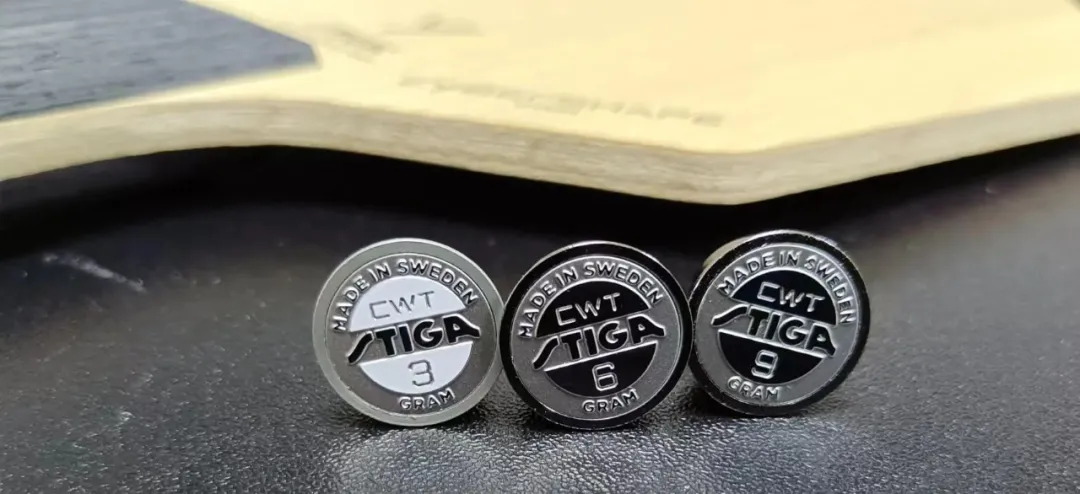
Here’s the key point: even with the added weight in the handle, because the racket’s overall mass has increased (all else being equal, and assuming you can still swing it comfortably), hitting power goes up. So adding a hard plastic piece to the gold-label Vis, or a heavier insert to the Cyber 6, is expected to improve hitting power. And at the same time, you don’t feel it as dramatically heavier, because the balance point has moved toward the handle.
Players who tested the Stiga prototypes reported that the 85g Cyber 6 with the 9g insert added didn’t feel nearly as heavy as you might expect.
There’s one more dimension to consider. The author compared an 85g and a 91g Yoshimura limited edition — a single production run, so construction is identical. With the same rubber on both, the heavier one produced a harder hitting feel and a flatter trajectory. The lighter one offered deeper dwell time and a more arced ball flight.
Similar descriptions came back from professionals who tested the Cyber 6 CWT.
Based on all this analysis, CWT is not just a marketing gimmick. It is a genuine innovation designed to meet the subtle demands of professional players.