Do You Need a Backup Blade? Interesting Facts About Primary and Backup Paddles (Part 2)
Images in this article are from the Zhuqiu Wanguo website.
How Some Japanese Players Prepare Their Primary and Backup Blades
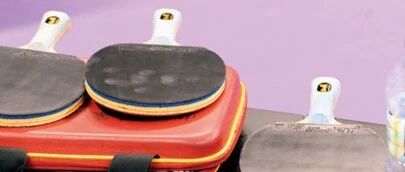
Kenji Matsudaira: Joola Wanja, both sides Dynasty Inferno
Matsudaira was previously under Victas, then signed with Joola. This Dynasty Inferno rubber may be a new release — I haven’t been able to find any information on this batch code yet. Matsudaira says his primary and backup differ by around 1g. The sponge hardness is the same, but the weights differ. The heavier one feels stiffer and suits summer play better; the lighter one is a bit softer and better for winter. However, he sometimes chooses the backup for actual matches based on how the court feels. Some pros really are this sensitive.
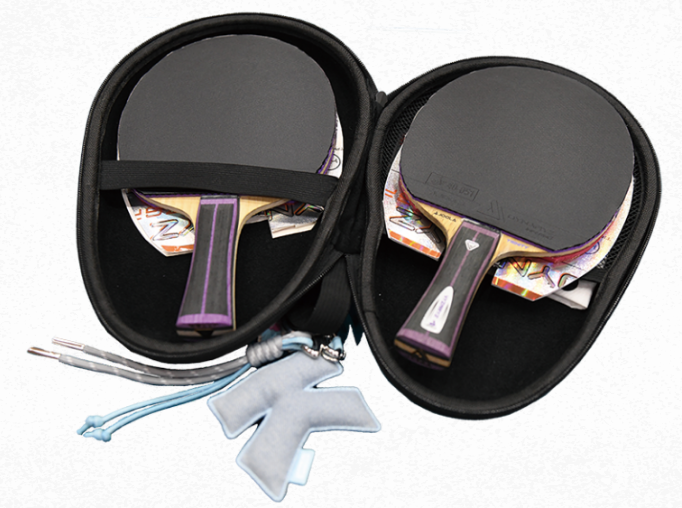
Yuta Uda: inner ZLC special order (G-FLESS grip), Dignics 09C forehand, ZYRE-03 backhand
When he switches to a new primary blade, the old one becomes the backup. Before a tournament he puts fresh rubbers on both paddles. He replaces rubber roughly every two days. His new blade also has the G-FLESS anti-slip grip, similar to Boll’s 30th anniversary blade. We’ve seen him use the backup in matches quite a few times over the past few years — Butterfly special orders, many with Viscaria handle inlays.
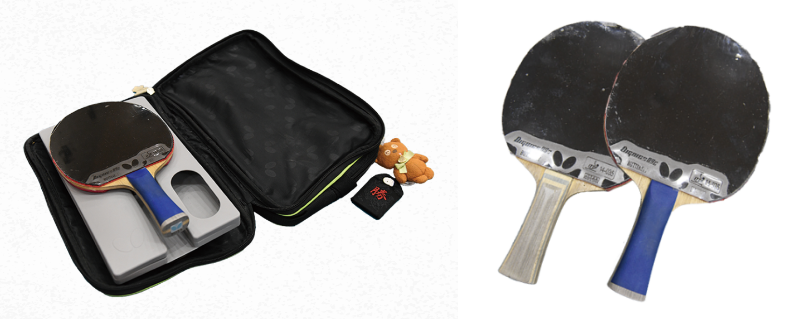
Yusuke Watanabe: Fan Zhendong SALC, both sides Dignics 09C
He’s a clubmate of the two above. Generally he puts fresh rubber on the primary the day before a tournament. For the backup he changes rubber a few days ahead of time and does a quick break-in session, so it’s ready for unexpected situations. In regular practice, he replaces rubber every four to five days, up to a week.
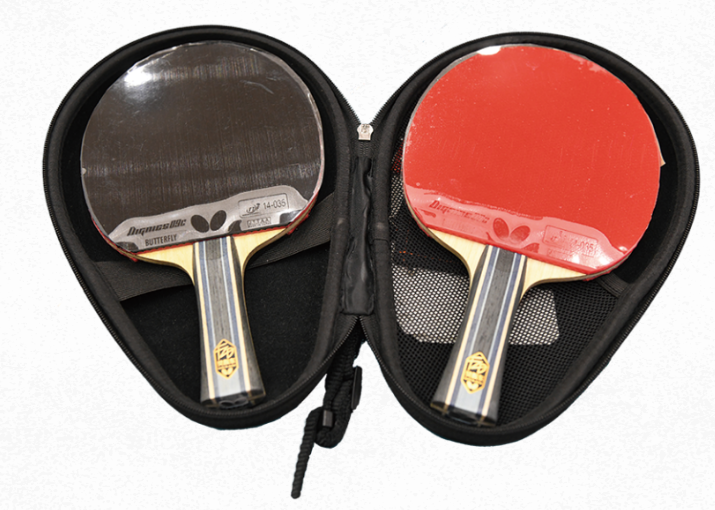
Timo Boll prepares four paddles at a time, same blade and same rubbers, then uses them in random rotation. Ma Long, as many people know, also prepares three complete sets and treats each of them like a primary during practice.
Historical Backup Blade Stories
Shigeo Itoh was the 1969 World Championships men’s singles and team champion. During a men’s team match against Yugoslavia, his primary blade — a single hinoki — cracked. But his backup was back at the hotel. He had to borrow a teammate’s paddle and ended up losing that individual match.
At the 1989 Dortmund World Championships, after Sweden won the men’s team title, Jan-Ove Waldner’s paddle was stolen during practice. He was forced to use what he described as a completely different racket for the singles — and still beat his teammate Persson to win the men’s singles title. That’s just what pure ability looks like.
At the 2008 Beijing Olympics, Zhang Yining’s paddle was flagged during pre-match inspection as having a rubber surface that wasn’t flat enough and was deemed unfit for play. She used her backup — which she described as feeling like the sole of a shoe (meaning the glue hadn’t set properly those two days) — and still won 4-1 over Feng Tianwei. She went on to win her second consecutive Olympic gold.
In the same Olympics, men’s singles semifinal — Wang Liqin vs. Ma Lin — right at the start of the match Wang Liqin’s backhand rubber got nicked. Ma Lin challenged it with the referee, and Wang had to switch to his backup. He felt off with it and ultimately lost 2-4. The small difference in feel can cut either way depending on your mindset. Wang Liqin admitted afterward that although he did practice with the backup regularly, switching mid-match during a big competition still brought real discomfort.
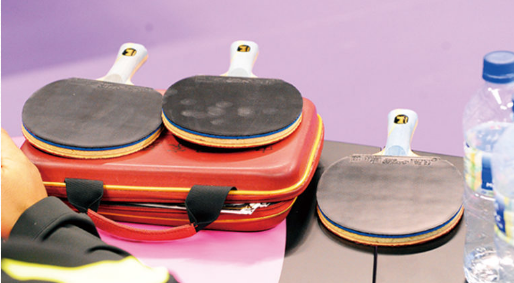
Perhaps it was precisely lessons like these that led Ma Long to always prepare three identical sets and practice with each of them as if it were his primary.