Classic Inner and Outer Fiber Blade Techniques Explained
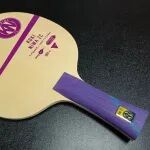
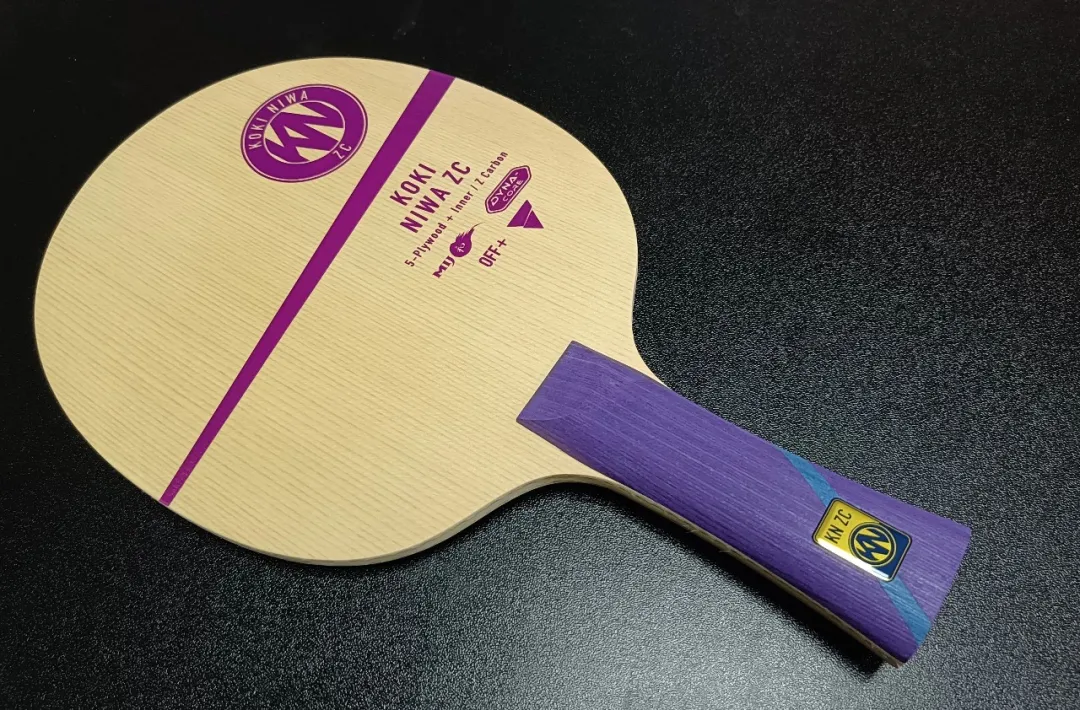
The most popular blade structure in table tennis is the 5+2 (five wood layers, two fiber layers). However, this article focuses on ‘classic’ blades, excluding special structures. Here, ‘classic inner’ refers to blades with classic fiber placement inside and an Ayous core, while ‘classic outer’ refers to blades with classic fiber placement outside and a Paulownia core. For example, the W968 is a classic inner blade, whereas the Viscaria is a classic outer blade. 
Key Differences Between Inner and Outer Fiber Blades
-
Core Playing Characteristics
- Inner Fiber Blades: These blades excel in ‘spin and power.’ While they can handle quick exchanges, they generally don’t match the speed of classic outer blades. Without sufficient spin, inner fiber blades can feel slower and less threatening.
- Outer Fiber Blades: These blades thrive on ‘speed with moderate power.’ They offer better speed and control in quick exchanges and are easier to maneuver for players who may not have exceptional power.
-
Power and Performance
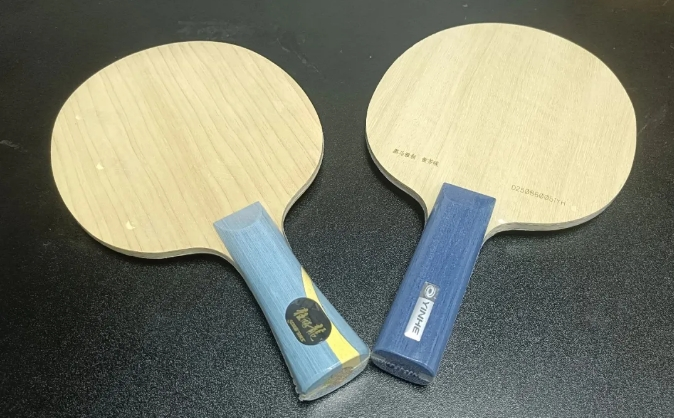
- Inner Fiber Blades: These blades have a higher power ceiling. When you engage the inner fiber layer and Ayous core, the blade provides superior elasticity and a powerful ‘kick’ effect, allowing for higher single-stroke quality. However, without enough power, the blade may feel sluggish.
- Outer Fiber Blades: These blades are more forgiving and offer better speed at lower power levels. They are ideal for players who rely on quick exchanges and prefer a blade that responds well to moderate power.
-
Player State and Technique
- Inner Fiber Blades: These blades require more ‘power to drive’ and are more dependent on the player’s physical state. If the player’s power doesn’t transfer to the fiber layer, the blade behaves like a traditional all-wood blade, which can feel slow. Players need to be well-rested and energetic to maximize the blade’s potential.
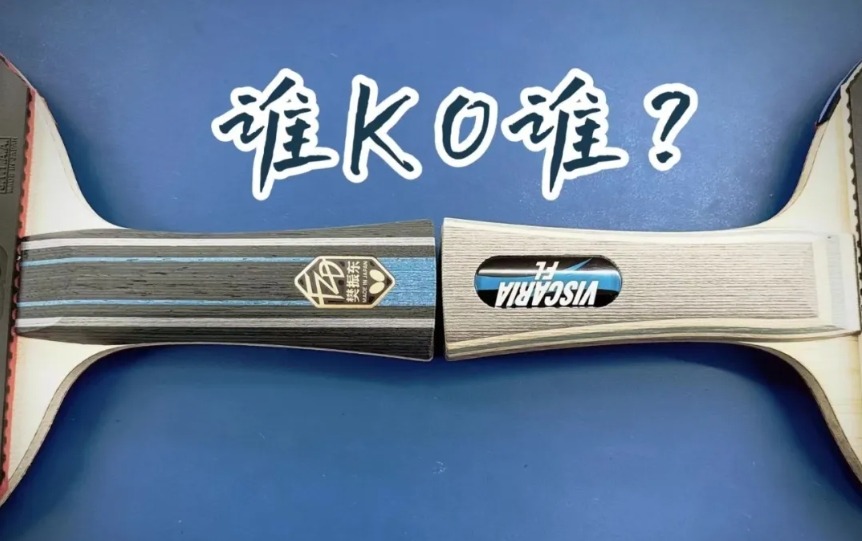
- Outer Fiber Blades: These blades are more forgiving with various stroke techniques and are less affected by the player’s physical state. They are easier to control and can compensate for less-than-perfect technique.
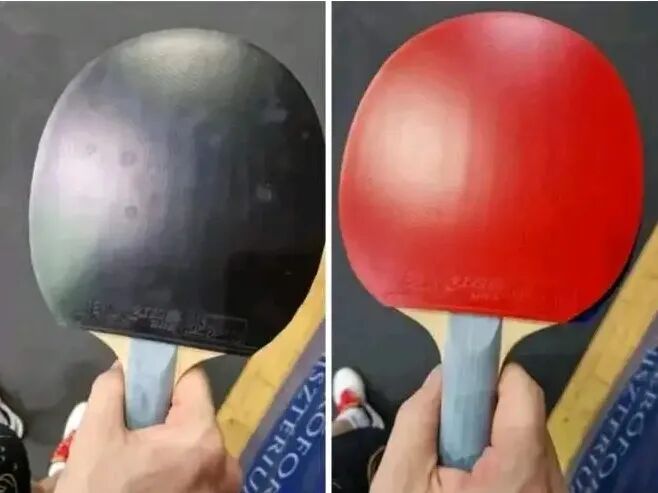
- Inner Fiber Blades: These blades require more ‘power to drive’ and are more dependent on the player’s physical state. If the player’s power doesn’t transfer to the fiber layer, the blade behaves like a traditional all-wood blade, which can feel slow. Players need to be well-rested and energetic to maximize the blade’s potential.
Additional Considerations
-
Outer Fiber Blades and Rubber Selection: The performance of outer fiber blades is more influenced by the choice of rubber. The elasticity of the blade at moderate power levels means that the rubber needs to provide adequate control and help maintain arc and spin.
-
Player Age and Style: Younger players may find inner fiber blades more suitable due to their higher power requirements, while older players might prefer the ease of use and speed of outer fiber blades.
In summary, the choice between an inner and outer fiber blade depends on the player’s style, physical condition, and personal preference.