Chonglan AC-X 2026 Review: A Forgiving Outer-Carbon Blade
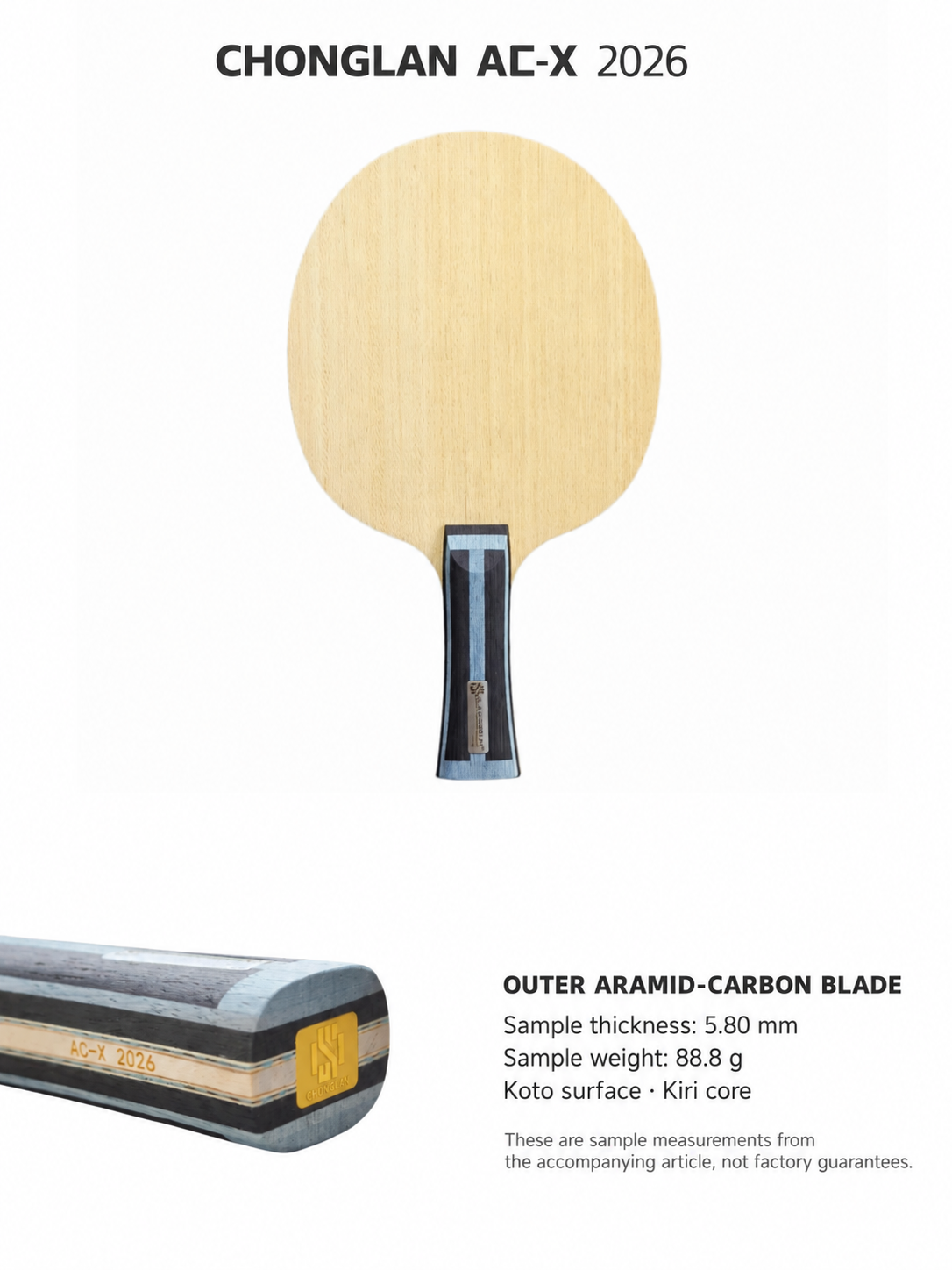
The Chonglan AC-X 2026 uses a familiar construction and keeps its appearance simple. What interested me was how well it played. It is another example of the progress Chinese blade makers are making with outer-carbon designs.
Construction and measurements
The AC-X 2026 uses an outer blue aramid-carbon construction, similar in layout to the Butterfly Viscaria. The blue aramid-carbon material comes from the Japanese company Kuraray.
My sample measured 5.80 mm thick and weighed 88.8 g. These are measurements of this particular blade, rather than a weight or thickness guarantee for every specimen.
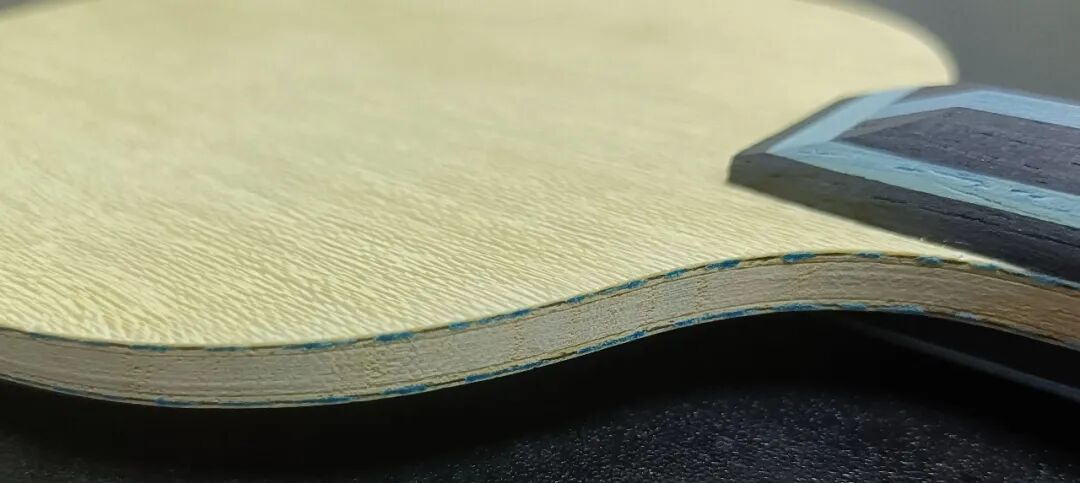
The construction and head shape are close to the classic Viscaria. The handle also feels familiar: fairly full in the hand. Looking closely at the wood, the surface veneer has an attractive fine pattern, and the core material looks well selected.
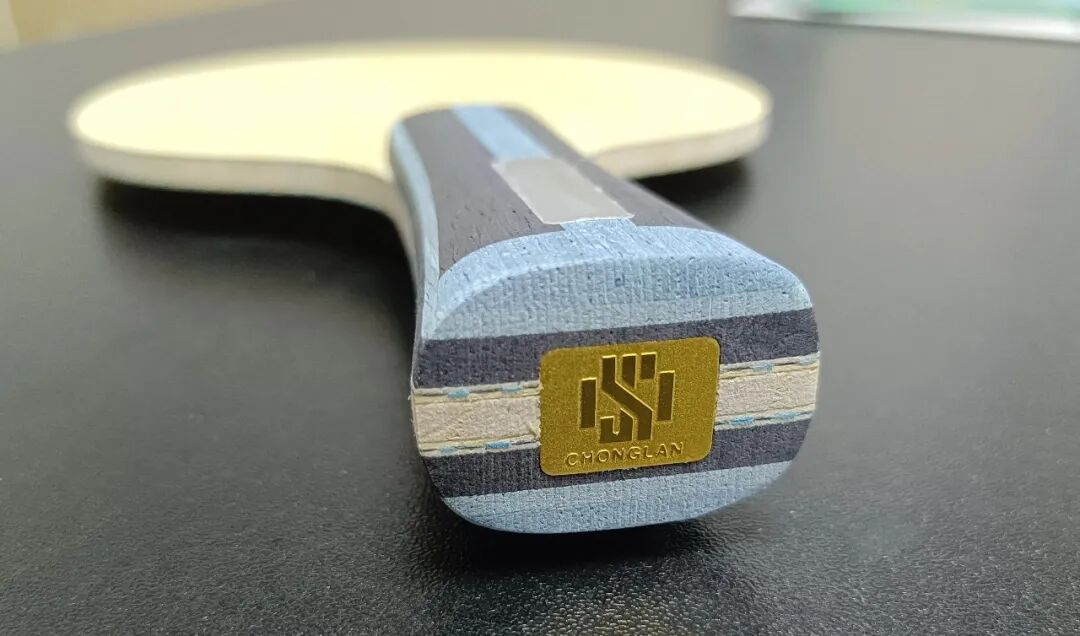
Chonglan introduced its first AC-series blades three years before this 2026 version. The AC-X retains that recognizable outer-carbon approach while offering a well-balanced playing feel.
Dwell, arc and stability
In feel, it reminds me somewhat of the Lin Gaoyuan ALC. There is useful dwell, together with an easy, natural arc. On both wings, the contact feels smooth; creating a safe trajectory and adding spin do not require much effort.
The sweet spot feels large. Pushes and short touches stay manageable, and both forehand and backhand loops feel dependable. Defensive shots are similarly steady.
I would put its power a little above the middle of the range, based on my impressions. Its main appeal is the combination of stability and support: it remains composed when facing a strong incoming shot.
Backhand response and rubber pairings
The backhand is easy to direct, and opening against backspin feels light and uncomplicated. I rarely had the feeling that the ball was simply dropping off the racket. That makes the blade approachable for developing club players.
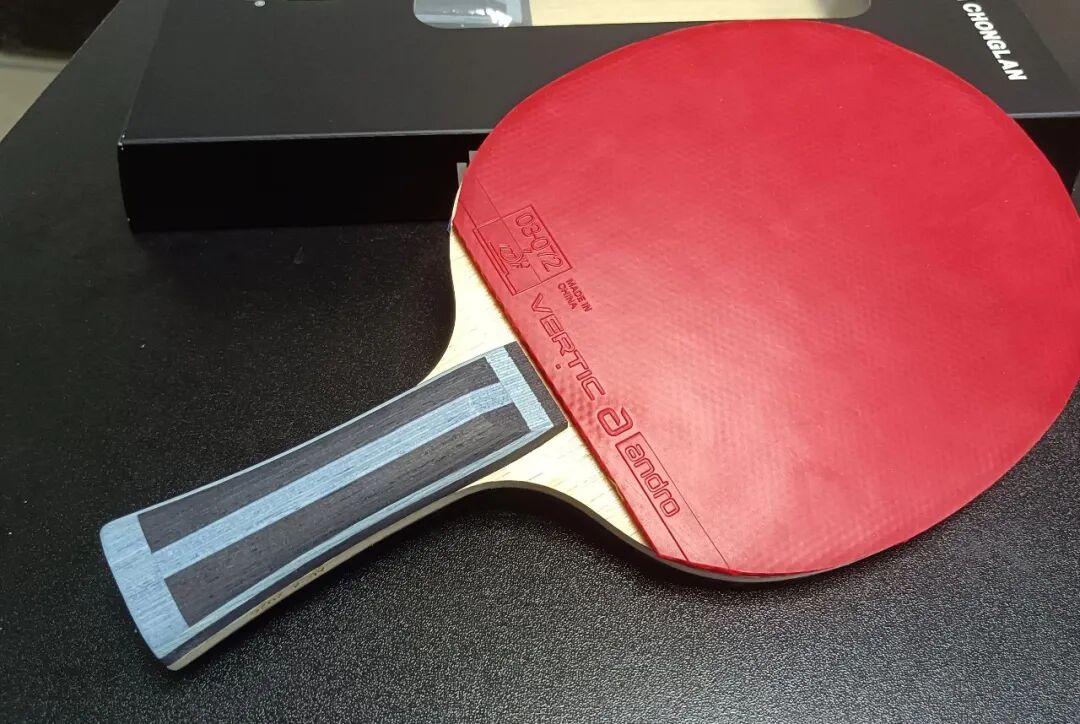
I tried a slightly tacky rubber on the backhand and a highly tacky rubber on the forehand. I also tried non-tacky rubbers. None of those pairings presented an obvious compatibility problem, which gives the AC-X some flexibility when choosing a setup.
Overall impression
Across different levels of effort, the response feels fairly linear: the blade gives back what I put into the stroke. It keeps that holding sensation while retaining a light, quick release.
For me, the strongest reasons to consider it are the large sweet spot, easy arc and supportive feel. Players looking for a manageable outer-carbon blade should find those qualities useful. The headline here is how accessible the performance feels, rather than an unusually demanding or extreme response.