3–0 Over Wang Manyu? Hina Hayata's New Weapon
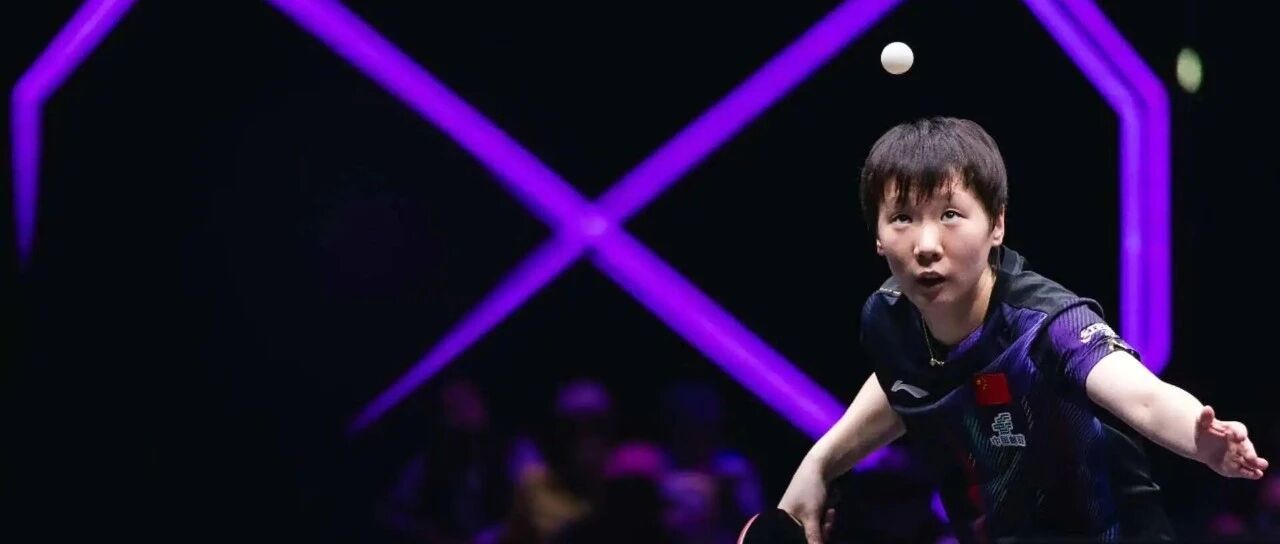
If you watched this match carefully and still concluded that Wang Manyu was going through the motions to conserve energy for the World Cup, I can only say that’s disrespectful to both players.
Simply put, in this best-of-five match, Wang Manyu was stunned from the start and never found her footing. So how exactly did Hina Hayata do it?
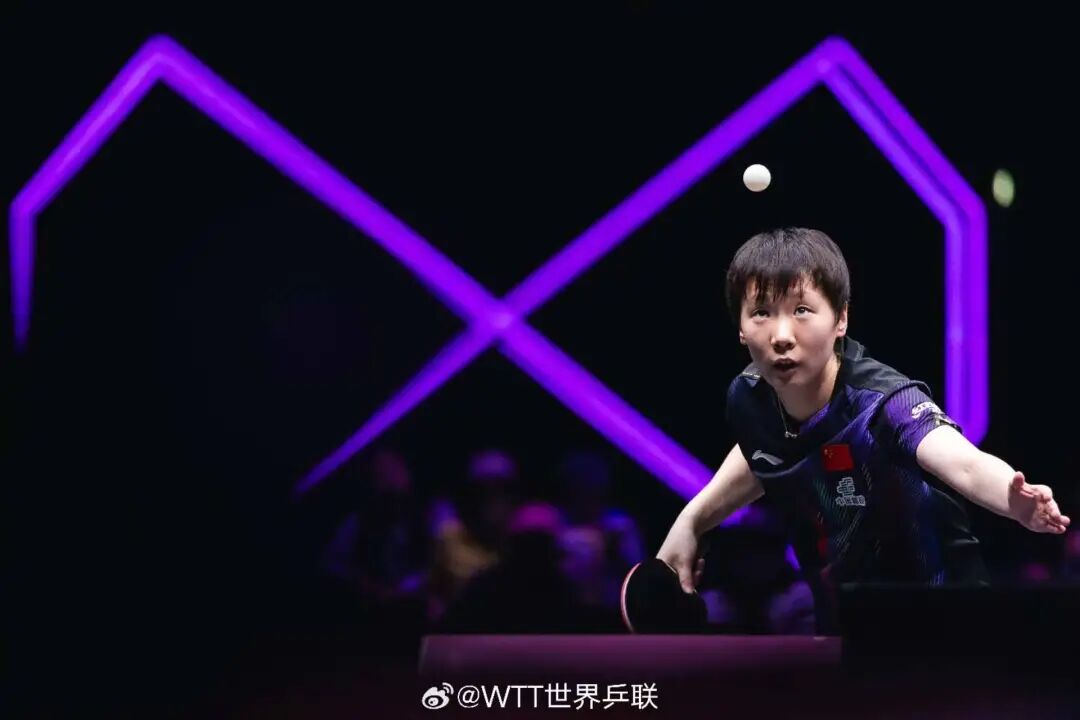
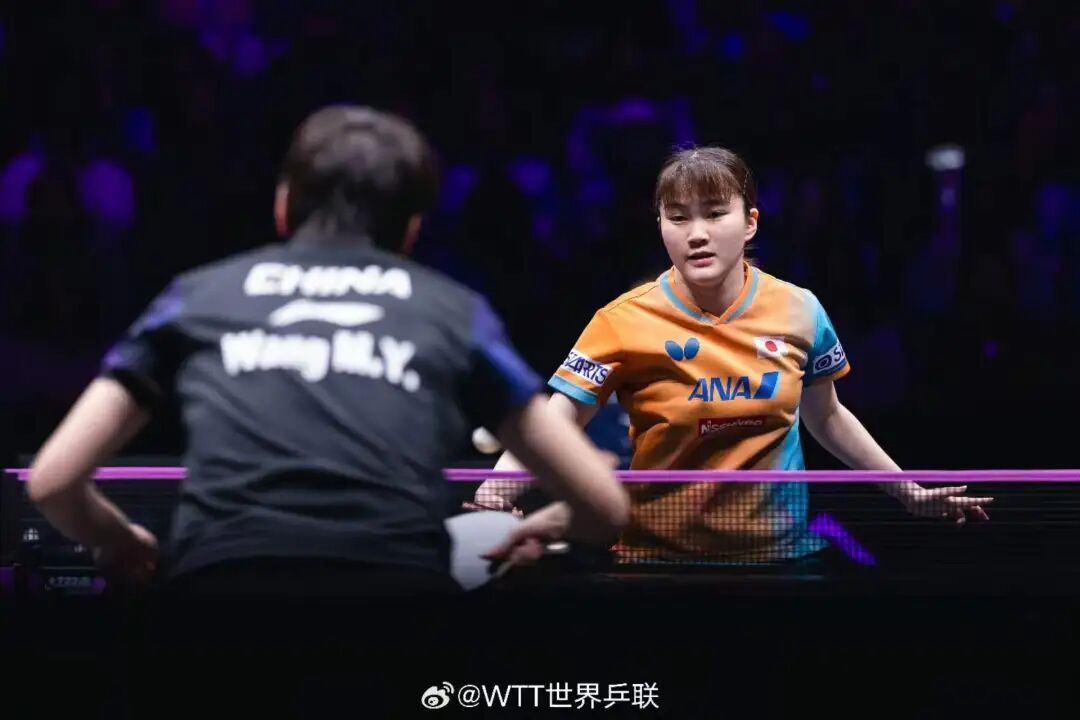
Chongqing Champions Series women’s singles round of 32: Hina Hayata 3–0 Wang Manyu (11–7, 11–5, 11–3).
At the Doha Champions Series in January, Wang Manyu had beaten Hina Hayata 3–0 (12–10, 11–5, 11–6).
First of all, athletes have peaks and valleys in their form, and this was only the first round — not always easy to get into match rhythm right away. Second, Hina Hayata is ranked world No. 13 and has been inside the top 10. Her WTT match win total is close to Wang Manyu’s — she’s not an easy opponent.
So what did Hayata use to break through against Wang Manyu in this one?
Strategy One: Long Serve to Open, Big Game Big Shots
At last August’s European Grand Smash in Sweden, there was a match that really got my attention: Larsson beat Liang Jingkun 3–0. At the time I wrote:
Larsson in that match was a bit like Jarvis against Liang Jingkun at the Doha World Championships. Long serves to open, straight into topspin rallying, simplifying the game — just keep redirecting the backhand down the line to the big guy’s forehand. If the game is basically played from long serves, you start to wonder: how close are top international players actually to our national team? That was my question at the time. In that match, Larsson was constantly dragging Liang Jingkun into topspin exchanges right from the serve.
Back to Hayata’s win over Wang Manyu: while she did mix short and long serves, she used a lot of fast hook-spin long serves. In the rally phase, Hayata’s ball was fast and powerful. She executed her tactics decisively, which also meant she looked to be in great form.
The first two points of game two: one was a fast long serve followed by a violent backhand quick drive; the other was a hard forehand shot in a rally. It looked like a topspin exchange, but it was over in three or four balls — very high quality. She cut the close-table short battle with Wang Manyu out of the equation as much as possible and simplified the game.
In the post-match interview, Hayata mentioned that at their January meeting she’d served mostly short; this time she served long a lot, creating real pressure on the serve. We could see that from her first ball all the way through the rally, her speed seemed to be on double speed — genuinely very fast. In that kind of speed, Wang Manyu — whose receive is primarily backhand-oriented, rarely steps around, and stays stable — seemed to struggle to keep up.
Strategy Two: More Aggression on Receive
Hayata explained that in their previous match she used a lot of push returns, but this time she tried to flick or “counter-flick” as much as possible.
What’s a “counter-flick”? It’s what we’d normally call a sidespin brush-flick. In game two, from 4–2 to 6–2, two of those brought points. From 10–5 to 11–5, another one.
Also on the receive, Hayata often attacked directly with a power banana-flick straight to Wang Manyu’s forehand, and Wang Manyu’s counter-loops had a few errors. Combined with the hook-serve-into-two-wing-blast pattern, the pressure was intense.
I’d rather believe Wang Manyu simply didn’t adjust in time — after all, Hayata’s speed is quite high and her attack is very aggressive. Her ball quality among women’s players has always been in the “heavy” category, and her form on this day was excellent.
Apart from all that, Hayata also used a new weapon in this match.
Hina Hayata: Harimoto Tomokazu SZLC, forehand ZYRE-03, backhand Dignics 09c.
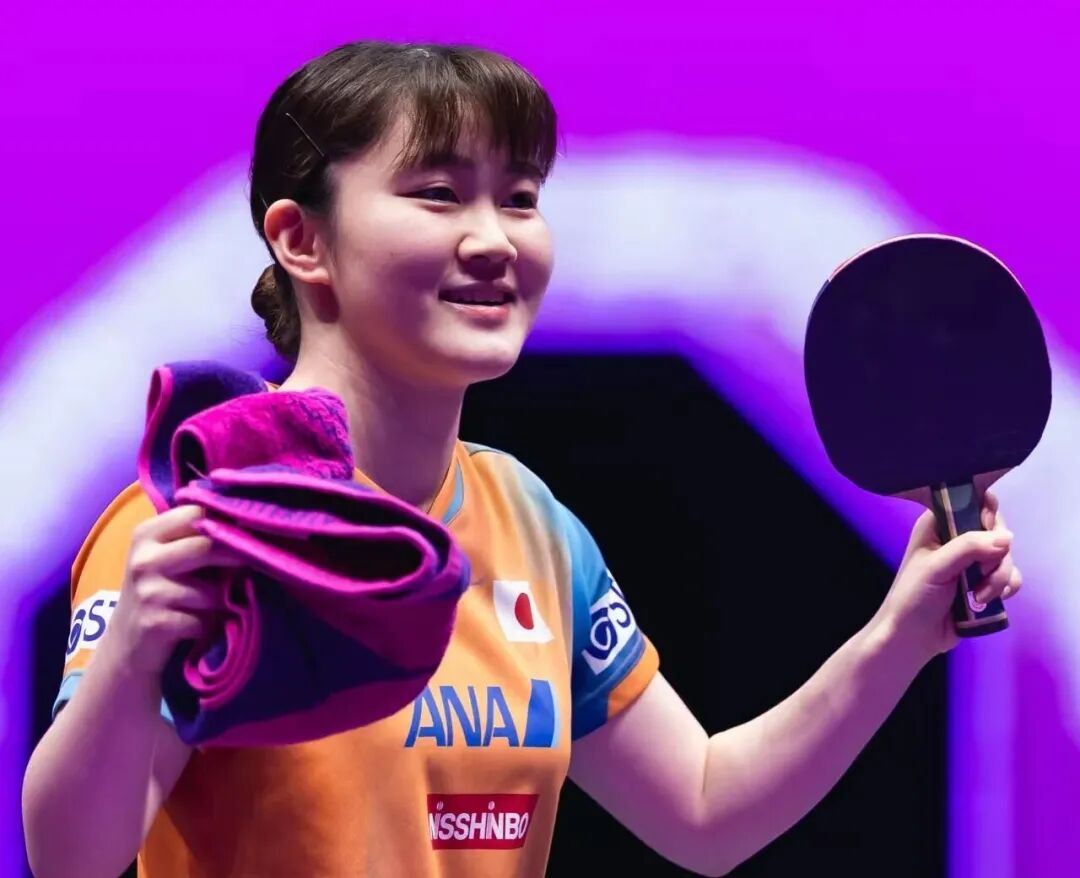
A couple of days before I had written that both Hina Hayata and Yokoi Sakura had been using the tension-type tacky D05, but later both switched to the semi-tacky spin-type D09c. Their coach Sakamoto Ryusuke explained that because the rubber is spin-oriented, the speed dropped, so the blade had to go to something more high-bounce. We can see that Hayata is on the Harimoto Tomokazu SZLC, while Yokoi Sakura is on the Fan Zhendong SALC. Up through their championship at the Chennai event in February, Hayata was still on two-sided D09c.
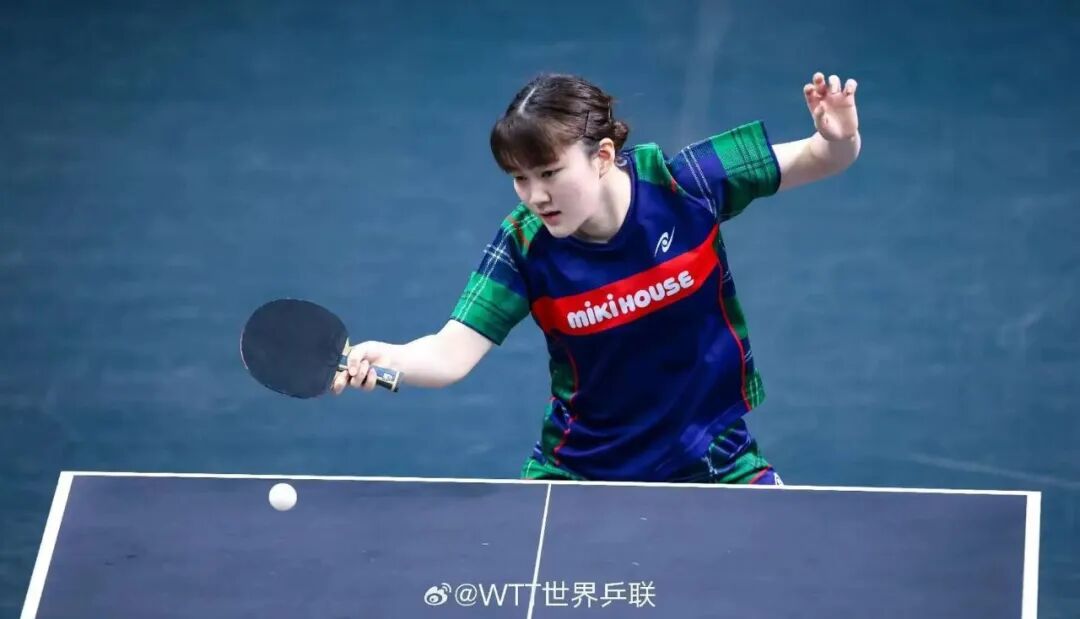
But right here at the Chongqing Champions Series, her forehand switched from D09c to ZYRE-03. The speed boost was clearly much better. It matches perfectly with her long-serve high-speed tactics.