Tibhar Evolution MX-S Review: The Spinmaster of the Evolution Range
Pros
- Highest spin output in the Evolution range (9.5/10 on Revspin)
- Exceptional blocking -- absorbs pace, low spin-sensitivity
- Outstanding short game and serve control
- Wide gear range -- from controlled touch shots to explosive power loops
- Very consistent production quality batch-to-batch
- Works well at all distances from close-table to mid-distance
Cons
- Heavy weight (76 g uncut) adds grams to the overall setup
- Demands strong technique -- not forgiving for passive or imprecise strokes
- Less catapult than MX-P -- player must generate own speed
- Durability starts declining after about 6 months of intensive play
- Can feel slow on all-wood blades with soft outer plies
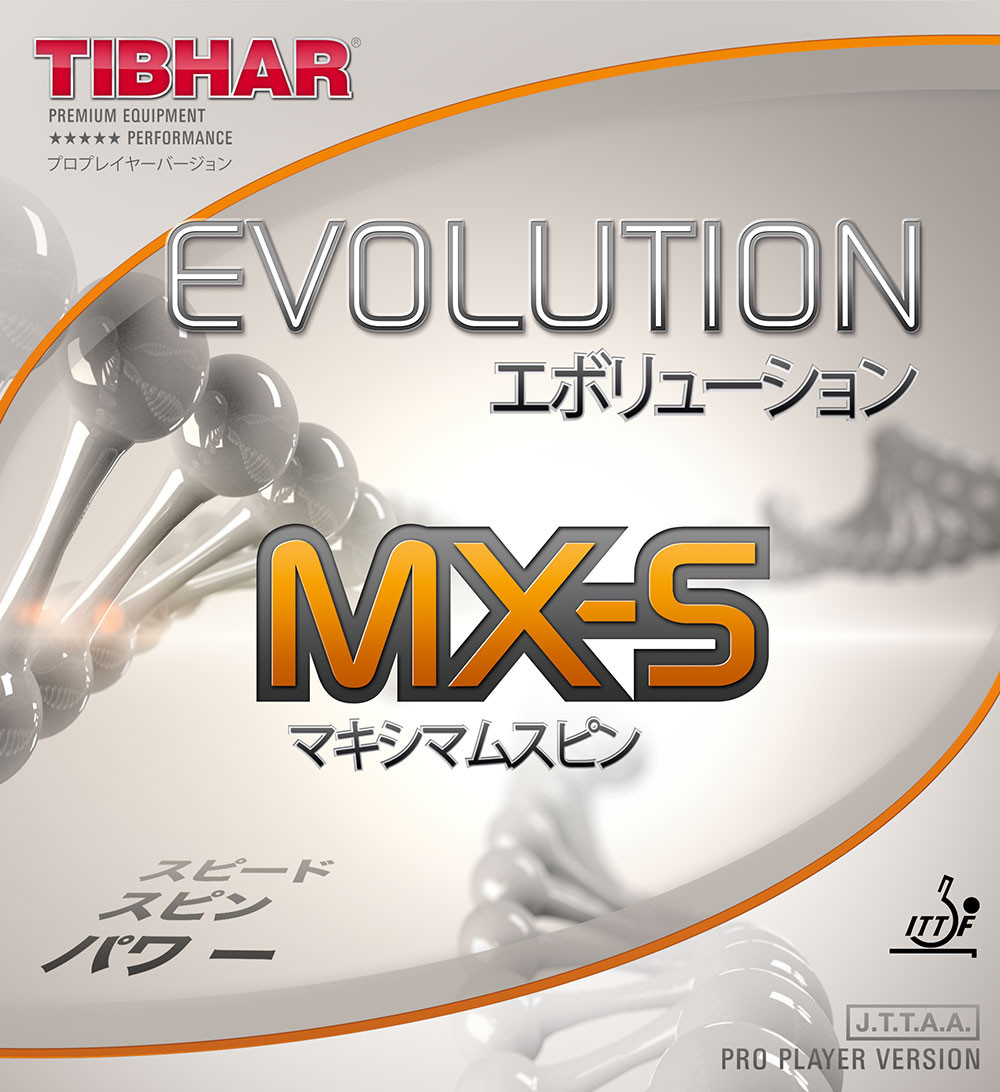
The MX-S is the hardest, heaviest, and spiniest rubber in Tibhar’s flagship Evolution line, which puts it in rare company among European tensors. Released in 2013 and made in Germany with Red Power Sponge technology and a ProTension topsheet, it’s built for the player who makes their own speed through stroke mechanics, fast arm acceleration and a sharp wrist snap, rather than leaning on the rubber’s catapult. The sponge runs around 47.3 degrees with small-pore construction, sitting firmer than the MX-P (which is faster with more catapult) while putting up the highest spin in the range. Tibhar rates it speed 13, spin 11.5, the top spin figure across all six Evolution variants. Advanced club and national-level players keep reaching for it when they want maximum spin control without the jumpiness of highly elastic rubbers.
Performance
Play a few balls and the MX-S feels different from most European tensors. Forehand loops come off with a crisp click and a tactile feedback that tells you exactly how clean the contact was. The throw sits medium to medium-high in practice and drops to medium-low in tight match conditions, which is enough arc to clear the net on an opening loop against heavy backspin but still demands a clean strike when you loop-drive with pace. Spin on serves and loops ranks with the best any tensor can do, heavy backspin on short serves and vicious topspin on the loop. Flat hitting is strong too, the hard sponge snapping back off a direct hit for fast winners with good trajectory control when the wrist is in it.
Blocking is the standout. The firm sponge soaks up the energy of an incoming loop, and the topsheet doesn’t grab spin, so you can redirect shots with barely any adjustment. Passive or active, the blocks stay controlled. The short game keeps pace: pushes and serve returns stay short and low because light strokes never trigger the catapult, and flicks and banana flips pay off once you’ve adjusted to the firm feel. The cost is forgiveness. Can’t generate enough racket speed and the MX-S goes slow and dead on you. It only wakes up under full, confident strokes paired with a blade that has some pace of its own. Weight is part of the deal: the uncut sheet is 76 grams, one of the heavier rubbers in its class, and a cut sheet lands around 52 grams.
What Reviewers Agree (and Disagree) On
Across Revspin (106 ratings, 9.4 overall), Megaspin reviewers, and the in-depth TableTennis11 analysis, the community lines up tight on two points: spin supremacy and blocking. Everyone accepts the trade against the MX-P, less catapult and a hair less speed in exchange for more spin and a slightly harder topsheet. The fight is over who it’s for. Technical players rate it near-perfect; players still building their strokes find it unforgiving and frustrating. A handful of ex-MX-P owners went back, deciding the MX-P fit their game better even with the lower spin ceiling. Durability splits opinion, with some reviewers seeing grip fall off after 6 months of intensive training and others getting more life out of it than the average competitor.
Who Should Buy It
Reach for the MX-S if you’re an advanced offensive player with strong, sound strokes who wants a rubber that pays back effort with maximum spin. It loves a fast carbon or composite blade that makes up for its medium catapult. Coming off Chinese rubbers like the DHS Hurricane or Xiom Omega V Asia and curious about European tensor construction without losing the tactile feedback? The MX-S is a natural bridge. It also serves players who put blocking precision and short-game control alongside their attacking spin, mixing counter-looping with aggressive serve tactics. Beginners, intermediates still working on technique, and anyone after a lighter bat should look elsewhere.
FAQ
How does the Tibhar Evolution MX-S compare to the MX-P?
The MX-S is harder (~47.3 degrees vs ~46.7 degrees), a bit heavier, and spinnier; the MX-P is faster with a more pronounced catapult. Flat-hitters and power loopers go MX-P; spinny, technique-driven players go MX-S. The MX-S topsheet is also a touch softer and more matte against the MX-P’s slightly glossier surface.
Is the Tibhar Evolution MX-S suitable for backhand use?
A very strong, technical player can make it work on the backhand, but the weight and the stroke demands push most people to use it on the forehand. Reviewers who ran it on both wings liked it, while still saying a softer tensor is the more practical pick for the backhand side.
What blade works best with the Tibhar Evolution MX-S?
Fast blades with hard outer plies, carbon or arylate-carbon composite frames rated OFF to OFF+, suit the MX-S by adding the speed its medium catapult lacks. On slower all-wood blades the pairing comes up short for aggressive play, though the short game and blocking stay excellent.
How durable is the Tibhar Evolution MX-S?
The Revspin community puts durability at 7.5 out of 10, meaning it outlasts the average rubber. In practice, train 8 hours a week and you’ll feel grip and spin tail off after about 6 months. Wipe the topsheet with a rubber cleaner after every session and the grip holds up longer.
Is the Tibhar Evolution MX-S ITTF approved?
Yes. The Evolution MX-S went onto the ITTF List of Approved Racket Coverings in 2013 and is legal for all competitive play, ITTF sanctioned tournaments included.
Sourced From
This review synthesizes opinions from 3 independent community sources:
- TableTennis11 (ecommerce)
- Megaspin (ecommerce)
- Revspin (forum)