Yasaka Rakza 7 vs Yasaka Rakza 7 Soft: Which Should You Buy?
| Yasaka Rakza 7 | Yasaka Rakza 7 Soft | |
|---|---|---|
| Our rating | 8.4/10 | 8.2/10 |
| best_side | both | backhand or both |
| control | high | 9+ (Yasaka scale) |
| speed | offensive | 11 (Yasaka scale) |
| spin | high | 14+ (Yasaka scale) |
| sponge_hardness | 45–47° | 40 degrees (37-42 ESN range) |
| type | tensor inverted | tensor/inverted |
| weight_uncut_g | 70 | approximately 42-44g |
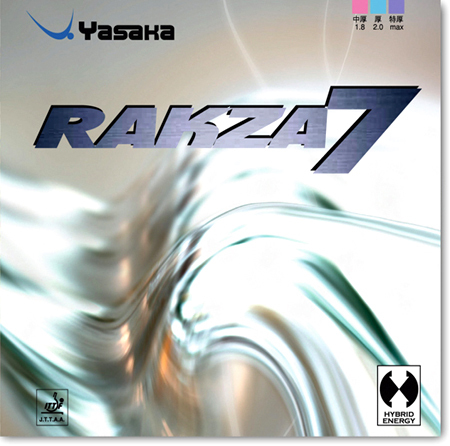
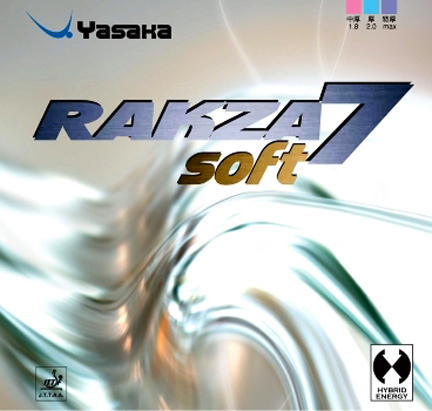
We may earn a commission from links on this page. Learn more.
When the axis data says almost nothing changed
This is the closest pairing in the entire batch, and that closeness is itself the finding. Rakza 7 rates 8.4 overall, Rakza 7 Soft rates 8.2, and every single axis gap between them is under half a point except speed, which moves just 0.4. Spin is dead even at 9.2 for both. Throw is dead even at 5.5 for both. Control differs by 0.2, tackiness by 0.2, durability by 0.5. If you came here expecting the Soft version to trade away spin or throw for its softer sponge, the aggregated axis ratings do not support that story at all.
So what is actually different
The real difference lives in the sponge itself, not in the axis scores that sponge produces. Rakza 7’s sheet hardness sits at 45 to 47 degrees; Rakza 7 Soft drops to roughly 40 degrees, in the 37 to 42 ESN range. That is a meaningfully softer sponge, and it changes dwell time, how the rubber responds to slower or less committed strokes, and, per the Soft version’s own pros, how well it partners with modern poly balls, a compatibility note the standard Rakza 7 does not carry.
Uncut weight tells a similar story that the axis data does not capture at all: the standard Rakza 7 weighs around 70g uncut, while the Soft version comes in around 42 to 44g, a substantial difference for anyone sensitive to overall racket weight or swingweight, especially on a heavier blade.
Reading between the review language
Revspin and PingPongMaster both describe the Soft version’s control as exceptional, in some reviews outscoring comparable tensors, which lines up with its very slightly higher control axis score, 9.1 versus 8.9. TableTennis-Reference and the Reddit table tennis community frame the Soft version specifically as a backhand or first-tensor-upgrade rubber, while the standard Rakza 7’s own bestFor language targets intermediate offensive and all-round players building consistency and spin technique on either side.
That best_side distinction in the spec data, both for the standard version, versus backhand or both for the Soft, matches a common real-world pattern: players often run the firmer Rakza 7 on their attacking wing and the Soft version on the other for a lighter, more forgiving feel, rather than treating the two as interchangeable full-racket choices.
The honest verdict on which is better
Neither, really. With every headline axis within half a point, choosing between these two on the basis of Revspin’s ratings alone would be picking noise over signal. The decision that actually matters is a feel and application question: do you want the firmer, slightly heavier, marginally faster standard Rakza 7 across your whole racket, or do you want the softer, much lighter Soft version, either as a full-racket choice for a lighter swingweight and better poly-ball dwell, or paired with the standard version on your other wing for asymmetric spin and control profiles.
Migration advice
If you already play the standard Rakza 7 and are happy with it, do not switch expecting a spin, throw, or durability upgrade, the numbers say there is essentially none to be had. Switch only if the sponge hardness and weight difference solve a specific problem you have, arm fatigue from a heavy racket, a backhand that wants more dwell time, or a preference for how the softer sponge meets today’s poly balls. If none of those apply, the standard Rakza 7 remains the more all-round, slightly higher-rated pick and there is no data-backed reason to pay for a change.
It is also worth naming the case where this comparison gets misread. Because the two share a name and a rating within 0.2 points, it is tempting to treat Rakza 7 Soft as a strictly weaker budget cousin of the standard sheet. The axis data says that framing is wrong: durability is the only axis where the standard version pulls meaningfully ahead, 8.0 versus 7.5, a 0.5-point edge, and even that is modest. Everywhere else the two are close enough that picking the standard version by default, simply because it is the original, is not a data-backed choice, it is a habit. Decide on sponge feel and weight, not on which one came first.
Frequently asked questions
Is Rakza 7 Soft actually softer in a way that matters?
Yes, its sponge hardness runs around 40 degrees against the standard Rakza 7's 45 to 47 degrees, a real difference in dwell time and feel, even though nearly every performance axis, spin, throw, control, durability, is within half a point between the two.
Does the Soft version sacrifice spin or throw?
No. Spin rates an identical 9.2 for both and throw an identical 5.5 for both, so the softness changes feel and dwell time, not the aggregated spin or throw ratings.
Which one should I put on my backhand?
Reviewers and the spec data both lean toward Rakza 7 Soft for the backhand or as a first-tensor upgrade, thanks to its lighter weight, around 42 to 44g uncut versus around 70g, and slightly higher control score, 9.1 versus 8.9.
Is it worth switching from standard Rakza 7 to the Soft version?
Only if you have a specific problem to solve, arm fatigue from racket weight, a backhand wanting more dwell time, or poly-ball compatibility; the axis ratings alone give no performance reason to switch.