Yasaka Ma Lin Carbon vs Yasaka Ma Lin Soft Carbon: Which Should You Buy?
| Yasaka Ma Lin Carbon | Yasaka Ma Lin Soft Carbon | |
|---|---|---|
| Our rating | 8.4/10 | 8.1/10 |
| Feel | medium-hard carbon, controllable, excellent value | medium-soft and flexible for a carbon blade, with clear feedback and a large sweet spot |
| Handle | FL | FL/ST/AN |
| Plies | 5 ply wood + 2 ply Carbon (limba/ayous with a carbon layer) | 7-ply (5 wood plus 2 very thin carbon layers) — same outer veneer as the Yasaka Extra |
| Speed | OFF- | OFF- |
| Sponge thickness | 6 mm | 5.8 mm |
| Weight | 88 g | 87 g |
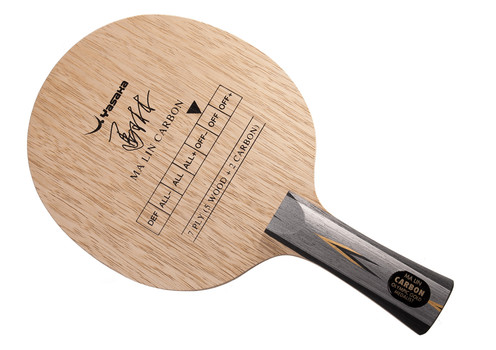
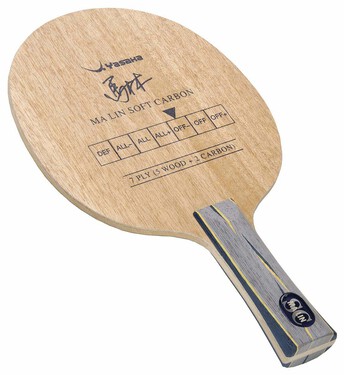
We may earn a commission from links on this page. Learn more.
Fast Verdict
These two blades share a name, a brand, and a target player, which makes this the most direct sibling comparison in this batch: the standard Ma Lin Carbon (rating 8.4) against the Ma Lin Soft Carbon (rating 8.1). The name “Soft Carbon” implies a more forgiving, easier-to-control option, and if you shop by name alone that is the natural assumption. The axis data says otherwise on two of the metrics that matter most.
The Surprising Part: “Soft” Doesn’t Mean More Forgiving Here
Consistency is the largest gap between these two blades, 1.8 points, and it favors the standard Carbon (8.5 versus 6.7). Hardness is the second-largest gap, 1.7 points, again favoring the standard Carbon (6.2 versus 4.5), which simply confirms the naming is accurate on feel. But control itself is nearly tied, a 0.1-point gap (8.4 versus 8.3), meaning the two blades are statistically identical on the axis most players associate with forgiveness. Put together, the standard Carbon is not just harder, it is also the more consistent blade by the numbers, which is the opposite of what “Soft Carbon” suggests to a buyer expecting the gentler name to be the safer, more error-forgiving pick.
The Soft Carbon’s own cons list backs this up directly: it vibrates and feels sluggish when you miss the sweet spot, and its short dwell time makes generating heavy spin harder without good technique. That is a description of a blade that punishes off-center contact more noticeably than its name implies, not less.
Where The Rest Of The Gap Comes From
Speed differs by a full point in the standard Carbon’s favor (8.6 versus 7.6), consistent with its own pros describing speed that “climbs higher than expected on strong impact, with a stiff carbon kick on smashes.” Stiffness differs by 0.7 points, also favoring the standard Carbon (5.5 versus 4.8), which lines up with the Soft Carbon being described in its own materials as medium-soft and flexible. Weight differs by only 0.4 points, close to a tie.
What The Spec Sheet Adds
One genuine, practical difference the axis data does not capture: handle options. The standard Ma Lin Carbon in this listing is available in FL only, while the Soft Carbon offers FL, ST, and AN shakehand grip shapes. If your hand does not suit a flared handle, that alone may decide this comparison for you regardless of the performance numbers. Both blades are close in raw weight, 88g for the Carbon and 87g for the Soft Carbon, so weight in grams is not a real differentiator even though the composite weight axis shows a small 0.4-point gap.
Who Each Blade Actually Fits
The standard Carbon’s bestFor description targets improving intermediate all-round attackers and penholders who want a controllable, forgiving carbon blade on a budget and are willing to drive the ball with a full stroke. The Soft Carbon’s bestFor targets improving, control-oriented offensive players moving up from premade bats who want a soft, forgiving carbon blade with an excellent short game and strong blocking rather than raw far-table speed. Both descriptions use the word “forgiving,” but the consistency data suggests the standard Carbon earns that word more literally in aggregated reviews.
Should You Switch?
If you are on the Soft Carbon and finding it sluggish or hard to control off-center, the standard Carbon offers more measured consistency and more speed at a similarly modest price, at the cost of a harder, stiffer feel. If you are on the standard Carbon and want a distinctly softer, lower-dwell feel for close-to-table blocking and touch shots, the Soft Carbon delivers that, but go in knowing you are trading some consistency and speed for it, not gaining forgiveness.
Bottom Line
Do not assume “Soft Carbon” is the safer, more forgiving choice between these two Yasaka siblings. On the numbers, the standard Ma Lin Carbon is both the faster blade and the more consistent one, while the Soft Carbon’s real selling point is its distinctly softer feel and its wider handle selection, not extra error margin.
Frequently asked questions
Is the Yasaka Ma Lin Soft Carbon more forgiving than the standard Ma Lin Carbon?
Not by the data. The standard Carbon actually scores 1.8 points higher on consistency, and control is nearly tied between the two. The Soft Carbon's own cons list even notes it vibrates and feels sluggish off the sweet spot.
What is the real difference between Ma Lin Carbon and Ma Lin Soft Carbon?
Feel and speed, not forgiveness. The standard Carbon is harder, stiffer, faster, and more consistent. The Soft Carbon is softer and more flexible with a shorter dwell time, and it offers more handle shape options.
Which Ma Lin blade should a penhold player choose?
The standard Carbon's bestFor description specifically mentions penholders, while the listed handle options for the Soft Carbon in this data are shakehand shapes (FL, ST, AN).