Victas V>15 Extra vs Xiom Vega Europe: Which Should You Buy?
| Victas V>15 Extra | Xiom Vega Europe | |
|---|---|---|
| Our rating | 8.4/10 | 8.0/10 |
| best_side | forehand | BH |
| control | 81 | 9 |
| speed | 94 | 7 |
| spin | 88 | 8 |
| sponge_hardness | 47.5 degrees | around 47.5 degrees (soft, listed near 42.5 ESN) |
| type | inverted | inverted |
| weight_uncut_g | 70 | 60 |
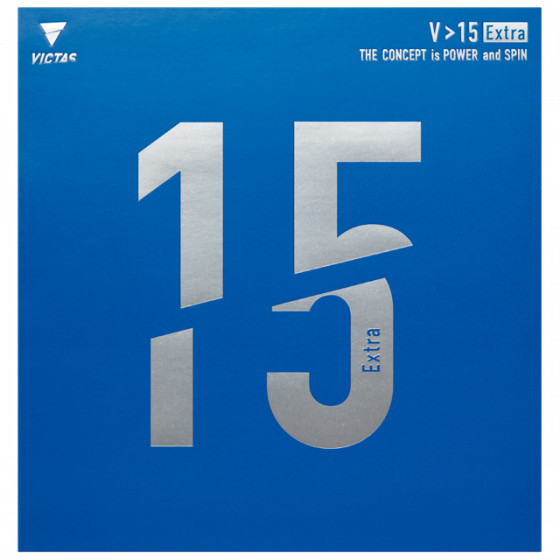
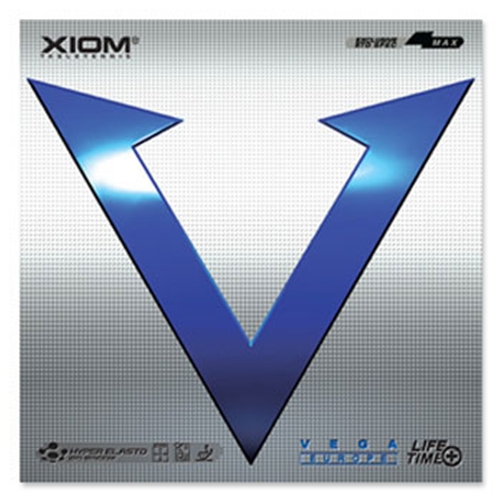
We may earn a commission from links on this page. Learn more.
Fast Verdict
Before getting into the axis numbers, it is worth naming something the data itself suggests: Victas V>15 Extra’s own bestFor description points at aggressive forehand looping, while Xiom Vega Europe’s bestFor description points at backhand control and stability. Plenty of players on r/tabletennis and elsewhere run exactly this combination, a fast forehand tensor paired with a slower, more stable backhand rubber, rather than treating these as two competing options for the same wing. Keep that framing in mind, because it changes how you should read every number below.
Where They Actually Diverge
Throw shows the largest gap, 0.9 points, with V15 Extra higher (5.6 versus 4.7). A higher throw means a longer dwell time and a higher, longer arc, which fits V15 Extra’s pros directly: reviewers at ExpertTableTennis and TableTennisDaily describe outstanding forehand topspin speed and spin output with a three-gear range from flat drives to fine-angle loops. Vega Europe’s lower throw supports flatter, more direct contact, which is exactly what its own reviewers praise for blocking and serve returns.
Speed differs by 0.5 points in V15 Extra’s favor (9.2 versus 8.7), and spin differs by 0.3 points, also favoring V15 Extra (9.2 versus 8.9). Both are real but modest gaps, consistent with V15 Extra being the more attack-oriented rubber of the two without being in a completely different performance tier. Control tilts the other way by 0.2 points toward Vega Europe (8.9 versus 9.1), a small but consistent signal that Vega Europe is the steadier, more error-forgiving rubber for shots that are not full-power attacks.
Tackiness differs by 0.8 points, and this one is worth reading carefully: V15 Extra scores just 1.1 and Vega Europe scores 1.9. Both are low by the standards of genuinely tacky rubbers like Chinese tacky sheets, which can score above 6, so this is a gap between two low-tack, elastic-style rubbers rather than a tacky-versus-non-tacky split. Durability differs by only 0.3 points, close enough to call a tie.
What The Cons Lists Confirm
V15 Extra’s own cons are explicit that the rubber is demanding on technique, with errors amplified by the hard sponge, and that backhand blocking can be inconsistent and requires precise angles. That last point is a direct, first-party confirmation that this rubber is built and best used on the forehand, exactly where its bestFor description already points it. Vega Europe’s cons note average speed and spin compared with modern tensors and a lack of top gears for finishing shots, which is consistent with a rubber designed around control and stability rather than raw firepower.
A Note On The Sponge Spec Sheet
One detail in the spec rows is easy to misread: both rubbers list a sponge hardness around 47.5 degrees. If you only glanced at that single number, you would expect these two to feel nearly identical off the sponge. They do not, and the axis data explains why a shared hardness rating does not mean a shared personality. Throw, tackiness, speed, and spin all diverge enough between these two rubbers that hardness alone is clearly not driving the feel difference; topsheet construction and the tensor formulation underneath the shared hardness number are doing most of the work. This is a useful reminder for any rubber comparison on this site: a single matching spec does not mean two products play the same, and you should always check the axis deltas before assuming a shared number means a shared experience.
Should You Switch?
If you are currently playing Vega Europe on your forehand and finding you cannot generate enough pace or spin to finish points, moving your forehand to V15 Extra while keeping Vega Europe on the backhand is a well-supported combination based on both rubbers’ own bestFor descriptions and cons lists. If you are playing V15 Extra on both wings and your backhand blocking feels inconsistent, per V15 Extra’s own cons, swapping your backhand to Vega Europe addresses that specific, named weakness rather than asking one rubber to do two jobs. And if you are just starting out and have neither rubber yet, Vega Europe is the lower-risk, lower-cost way to build clean strokes before you add a faster forehand sheet like V15 Extra once your technique catches up to it.
Bottom Line
Do not frame this pair as “which rubber is better” the way you would for two true rivals. The axis data and the bestFor language both point toward V15 Extra as a forehand-focused attacking rubber and Vega Europe as a backhand-focused control rubber, and the most common real-world resolution is to run one on each wing rather than picking a single winner.
Frequently asked questions
Should I use Victas V15 Extra and Xiom Vega Europe on the same racket instead of choosing one?
That is a well-supported setup based on the data. V15 Extra's bestFor description targets forehand attacking, and Vega Europe's targets backhand control, which is why many players run one on each wing.
Which rubber is faster, V15 Extra or Vega Europe?
V15 Extra, by 0.5 points on the speed axis, and it also scores 0.3 points higher on spin. Vega Europe scores 0.2 points higher on control instead.
Is Victas V15 Extra hard to control on the backhand?
Its own cons list says backhand blocking can be inconsistent and requires precise angles, which is why it is more commonly recommended for the forehand.