Tibhar Samsonov Force Pro Black Edition vs Yasaka Ma Lin Soft Carbon: Which Should You Buy?
| Tibhar Samsonov Force Pro Black Edition | Yasaka Ma Lin Soft Carbon | |
|---|---|---|
| Our rating | 8.2/10 | 8.1/10 |
| feel | mild hard, uniform vibration, linear rebound | medium-soft and flexible for a carbon blade, with clear feedback and a large sweet spot |
| handle | FL / ST | FL/ST/AN |
| plies | 7-ply all wood (limba-ayous-ayous-ayous-ayous-ayous-limba) | 7-ply (5 wood plus 2 very thin carbon layers) — same outer veneer as the Yasaka Extra |
| speed | OFF- | OFF- |
| thickness_mm | 6.6-6.7mm | 5.8 |
| weight_g | 83-90g (avg ~87g) | 87 |
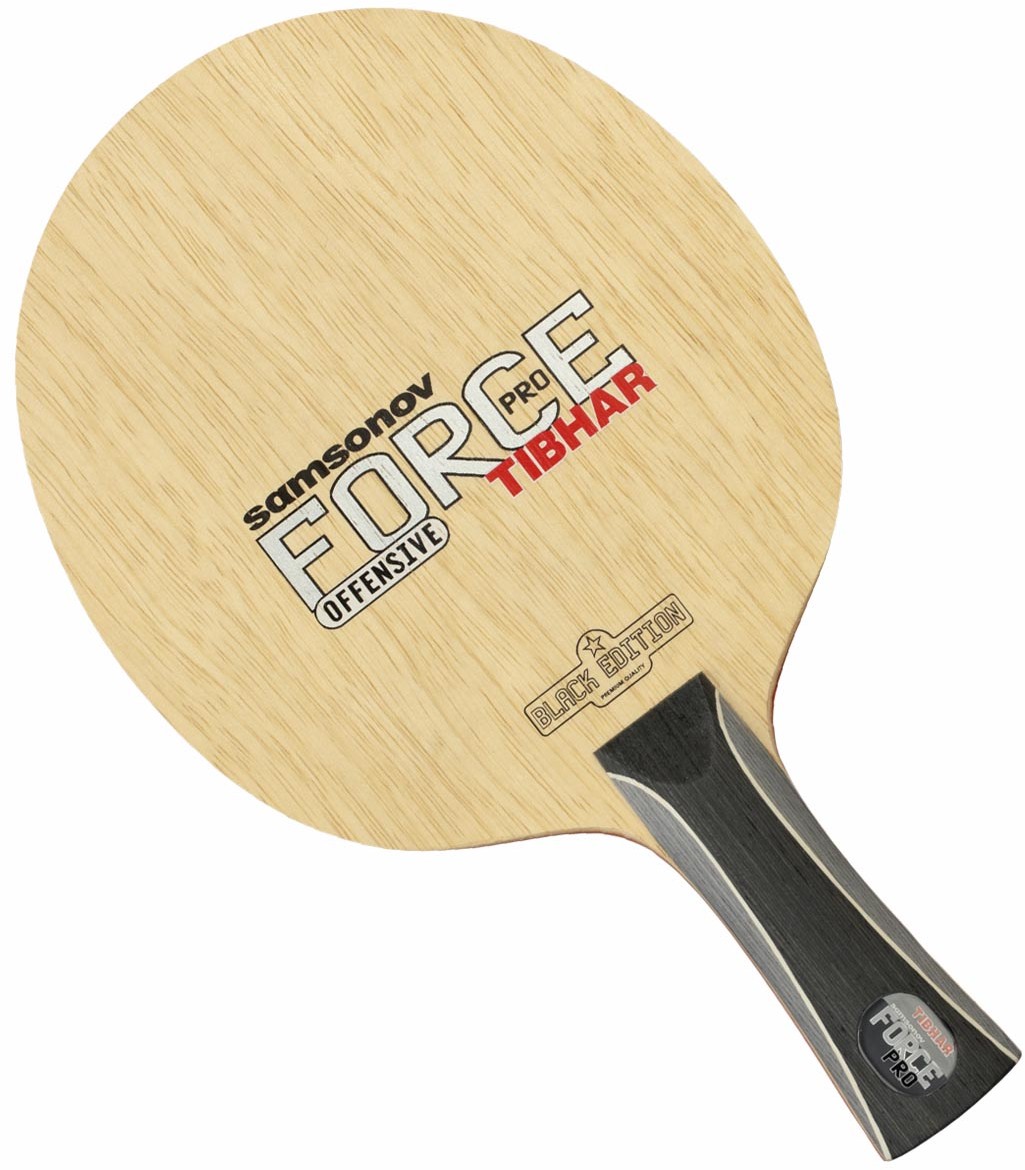
Tibhar Samsonov Force Pro Black Edition
Check price on AmazonRead the full Tibhar Samsonov Force Pro Black Edition review →
We may earn a commission from links on this page. Learn more.
Both are control-oriented blades rated similarly, but they approach the game from opposite angles. The Tibhar Samsonov Force Pro Black Edition is a 7-ply all-wood blade that delivers uniform feel and linear rebound across the entire surface. Its consistency makes timing forgiving and works with almost any rubber. However, it feels slightly head-heavy and demands solid fundamentals.
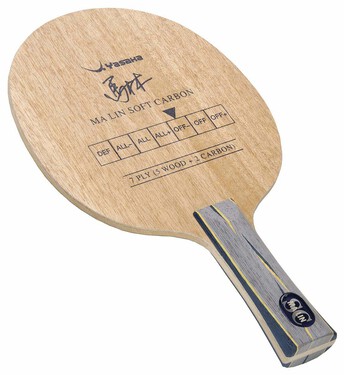
The Yasaka Ma Lin Soft Carbon trades the all-wood feel for flexible carbon construction. It excels in the short game with unusually clear ball feedback for a carbon blade and a large sweet spot. The trade-off is a shorter dwell time that makes generating heavy spin harder without good technique.
Choose the Tibhar if you want an all-wood blade with predictable feedback and versatility. Pick the Yasaka if you want a softer, more forgiving carbon blade with an excellent short game and are willing to supply more technique.
FAQ
Which is better for beginners?
The Yasaka is more beginner-friendly due to its softer feel and large sweet spot. The Tibhar requires solid stroke fundamentals and conditioning for its head-heavy balance.
How do they differ in speed?
Both are OFF- rated, but the Tibhar has a higher speed ceiling with a faster blade. The Yasaka caps out earlier but with more controllable response.
Which works with more rubber types?
The Tibhar works well with a wider range of rubbers including tensor and sticky types. The Yasaka is pickier about rubber selection.
How much do they weigh?
The Tibhar averages around 87g while the Yasaka is slightly lighter at 87g, though both have similar heft.