Stiga Allround Evolution vs Yinhe T-11+: Which Should You Buy?
| Stiga Allround Evolution | Yinhe T-11+ | |
|---|---|---|
| Our rating | 8.2/10 | 7.8/10 |
| feel | soft, high feedback | very light, stiff but soft balsa core with a carbon ping |
| handle | FL/ST/AN | FL |
| plies | 5W (all wood) | 5W+2 Carbon with balsa core (two thin wood outers, one carbon layer per side, around a thick balsa middle ply) |
| speed | ALL+ | OFF- |
| thickness_mm | 5.4 | 6.5 |
| weight_g | 80 | 78 |
We may earn a commission from links on this page. Learn more.
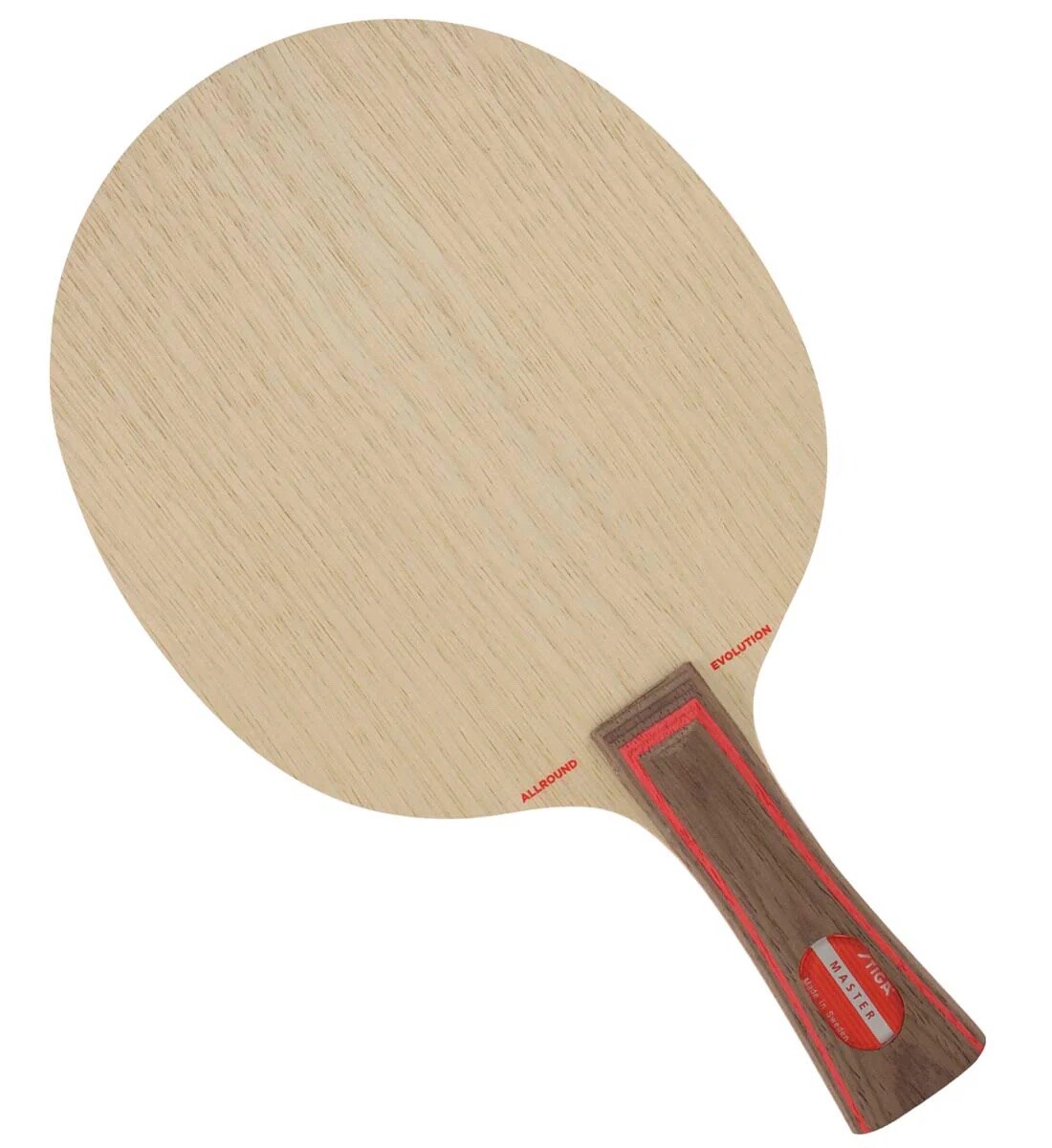
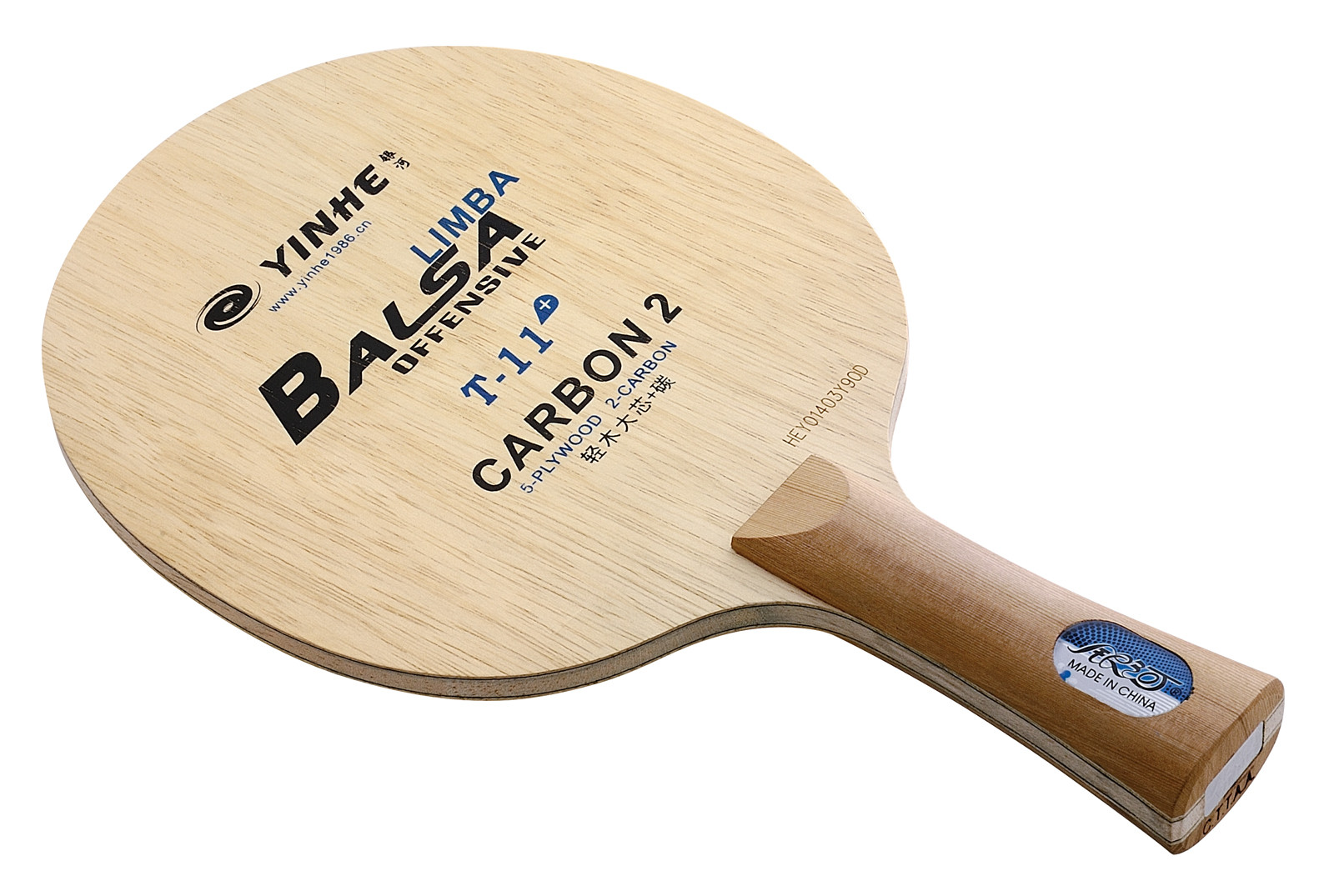
The Stiga Allround Evolution is a soft, high-feedback ALL-plus blade built for learning correct strokes with maximum control, offering a small, safe step up in speed over the Allround Classic without losing touch. It is still slow by modern standards, so you supply the pace. The Yinhe T-11+ is a stiff, featherlight balsa-carbon blade at OFF-minus that delivers fast flat hitting, smashing and flicking.
Choose the Allround Evolution if you are a beginner or developing player who wants control and feedback with a touch more pace than the Classic, paired with medium or medium-hard non-tensor rubbers. Choose the T-11+ if you have an active game and want light speed for flat hitting and combination play, accepting its fragile surface and weaker heavy looping.
Developing players who want control lean Stiga; speed-first active hitters lean Yinhe.
FAQ
How much faster is the T-11+?
Noticeably. The T-11+ is an OFF-minus carbon blade with fast balsa-carbon speed, while the Allround Evolution is ALL-plus and remains slow by modern standards despite its step up over the Classic.
Which is better for learning strokes?
The Stiga Allround Evolution. Its outstanding control, touch and feedback make it one of the best blades to learn on. The T-11+ is not beginner friendly.
What rubbers suit the Allround Evolution?
It pairs best with medium or medium-hard non-tensor rubbers, including tacky Chinese rubber. The T-11+ is best matched with soft to medium rubbers.