Sanwei Fextra 7 vs Xiom Stradivarius: Which Should You Buy?
| Sanwei Fextra 7 | Xiom Stradivarius | |
|---|---|---|
| Our rating | 8.3/10 | 8.4/10 |
| feel | Medium, woody and well-damped with moderate vibration; controllable offensive feel close to a Stiga Clipper but a touch crisper and not quite as stiff | Crisp and solid with low residual vibration; direct ball contact feel with a large sweet spot |
| handle | FL | Flared (FL), Straight (ST) |
| plies | 7-ply all wood (Limba/Ayous) | 5 wood + 2 arylate carbon (Aramid Carbon) |
| speed | OFF- | OFF |
| thickness_mm | 6 | 5.7 |
| type | OFF- | — |
| weight_g | 88 | ~85-87 |
We may earn a commission from links on this page. Learn more.
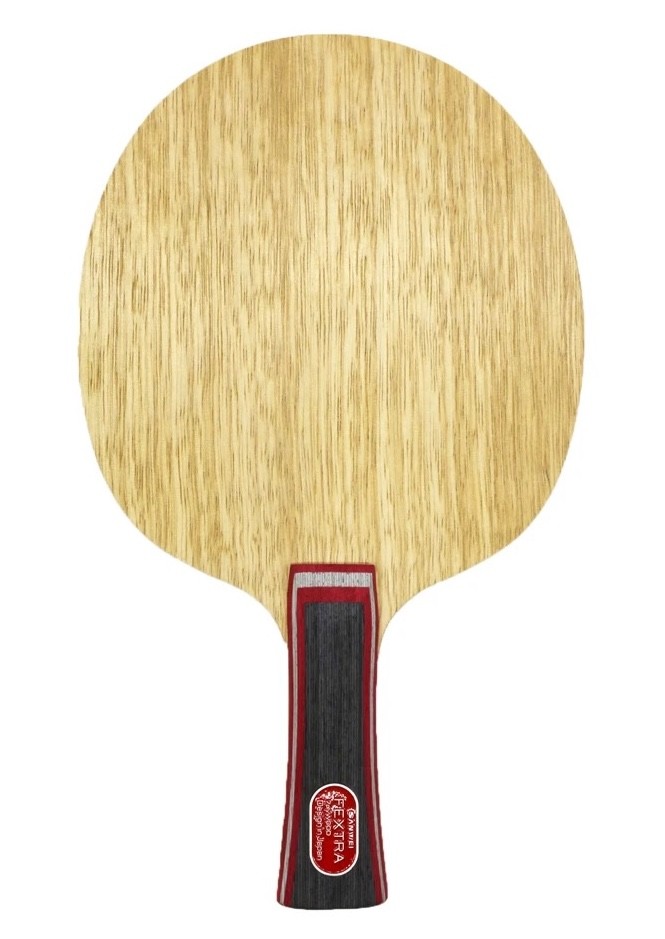
The Fextra 7 suits spin-focused looping players who prize feel and dwell at budget pricing around 25 USD. Its 7-ply all-wood construction gives honest feedback and pairs well with either tacky or modern rubbers, making it a cheap stand-in for the Viscaria or Clipper.
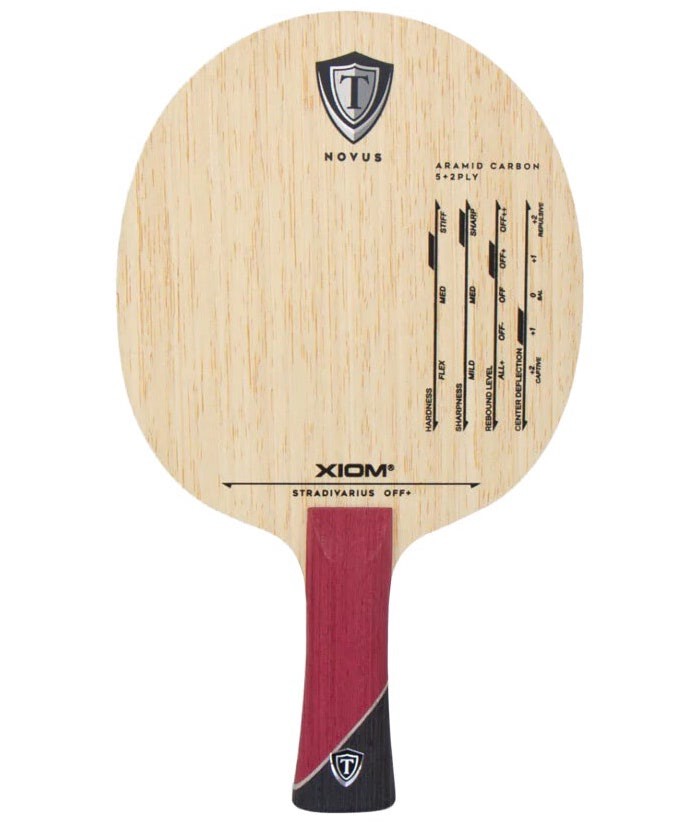
The Stradivarius competes with ALC blades at half the price, delivering crisp, direct ball contact via aramid carbon. It excels in topspin and close-to-table offensive play, with a larger sweet spot than the Fextra and stable OFF performance across distances.
Choose Fextra 7 if you want warmth, spin and budget magic. Pick Stradivarius if you want a faster, more modern carbon feel without premium pricing.
FAQ
Which is faster?
Stradivarius (OFF speed) outpaces Fextra 7 (OFF-), especially at mid to far distance. Fextra 7 suits close-table spin play.
Which has better control?
Fextra 7 offers softer, more forgiving feedback due to all-wood construction. Stradivarius feels stiffer and more direct, suiting confident offensive strikers.
What about weight consistency?
Stradivarius is more stable (85-87g). Fextra 7 varies significantly (84-94g), so verify before buying.
Best rubber pairing?
Fextra 7 works with tacky or tensor rubbers; Stradivarius pairs flexibly with a wide range including stiff topsheets.