Nittaku Violin vs Xiom Stradivarius: Which Should You Buy?
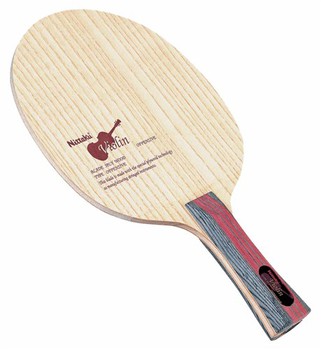
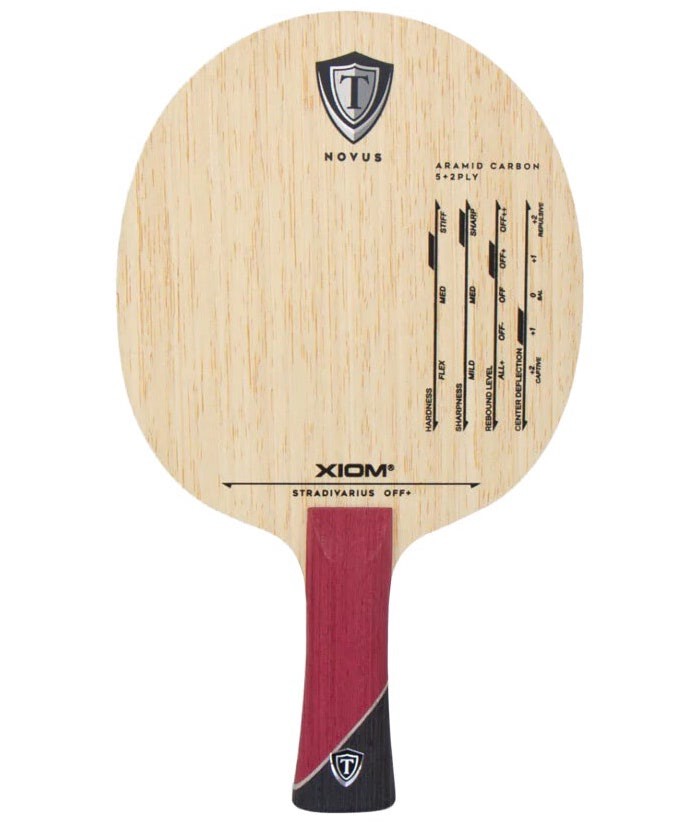
| Nittaku Violin | Xiom Stradivarius | |
|---|---|---|
| Our rating | 8.4/10 | 8.4/10 |
| feel | Soft, warm and flexible with long dwell, premium hand-crafted Japanese all-wood feedback | Crisp and solid with low residual vibration; direct ball contact feel with a large sweet spot |
| handle | FL | Flared (FL), Straight (ST) |
| plies | 5-ply all wood (Kiri core with White Ash outer plies) | 5 wood + 2 arylate carbon (Aramid Carbon) |
| speed | ALL+ | OFF |
| thickness_mm | 5.3 | 5.7 |
| type | ALL+ | — |
| weight_g | 86 | ~85-87 |
We may earn a commission from links on this page. Learn more.
Choose Nittaku Violin (8.4 rating) if you want premium all-wood feel, long dwell time, and a blade that suits spin and looping without speed pressure. Choose Xiom Stradivarius (8.4 rating) if you want a cleaner, direct ball contact feel with arylate carbon, good topspin performance, and a larger sweet spot at a fraction of Butterfly ALC cost.
Both rate 8.4 but offer different feels: Violin is warm and flexible, Stradivarius is crisp and solid. Stradivarius bridges all-wood and premium carbon, delivering OFF+ close to the table and solid OFF at mid-distance. Violin loses power at distance. Stradivarius works with any rubber; Violin pairs best with tensors. For technique-building and feel, Violin; for balanced offensive play and value against Butterfly, Stradivarius.
FAQ
Which has the larger sweet spot?
Stradivarius by design. Violin has a more modest sweet spot that rewards centered, clean strikes.
Can Violin play offensive at mid-distance?
Yes, but it’s not its strong suit. Stradivarius handles mid-distance drives and striking better.
Which is lighter and more maneuverable?
Both are similar weight (86 vs 85-87 g), but Violin’s flexibility makes it feel slightly more maneuverable overall.
How does each compare to Butterfly ALC?
Stradivarius is positioned as a good value ALC alternative. Violin is in a different category—all-wood, not a direct ALC competitor.