Nittaku Septear vs Sanwei T5000: Which Should You Buy?
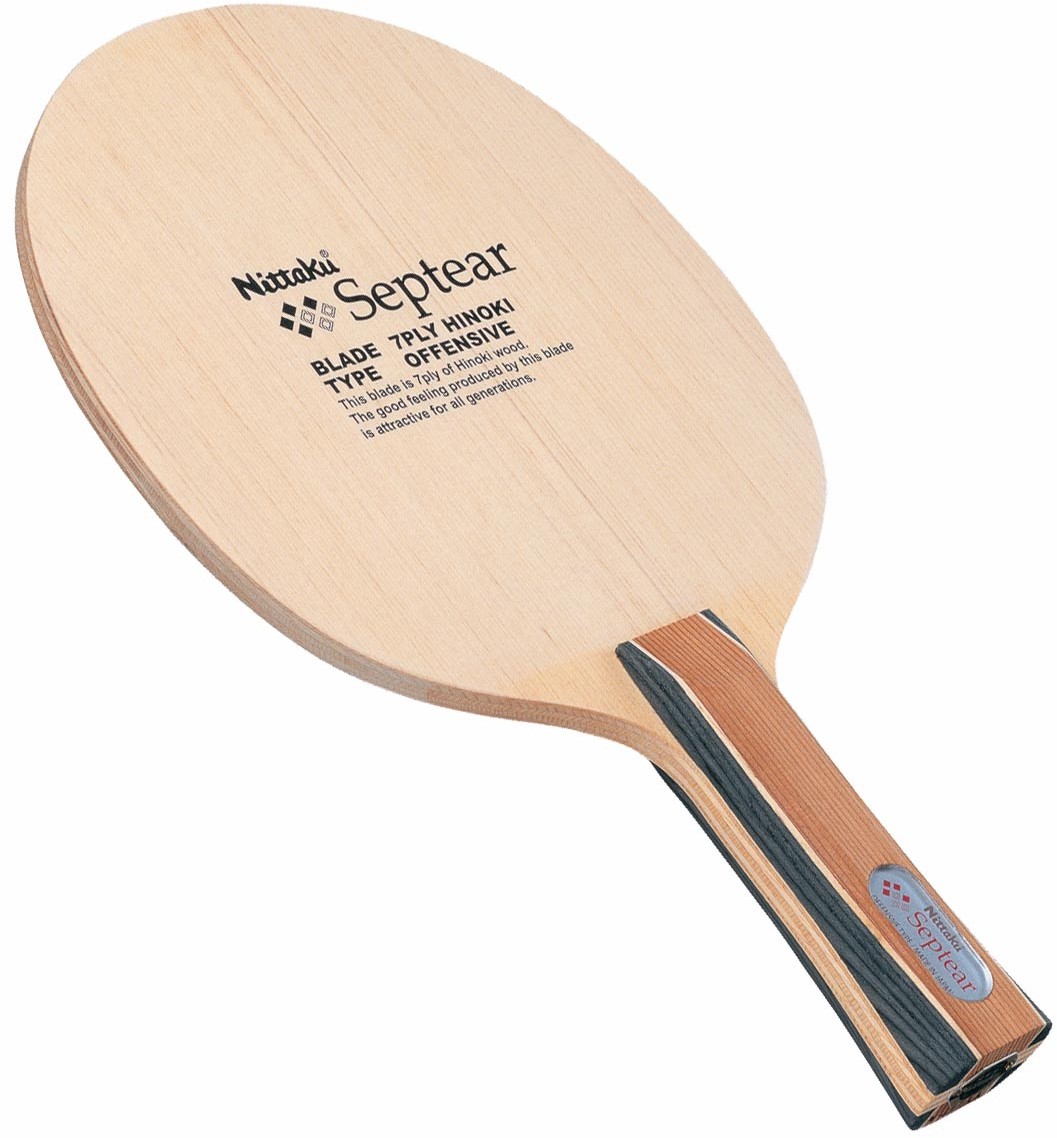
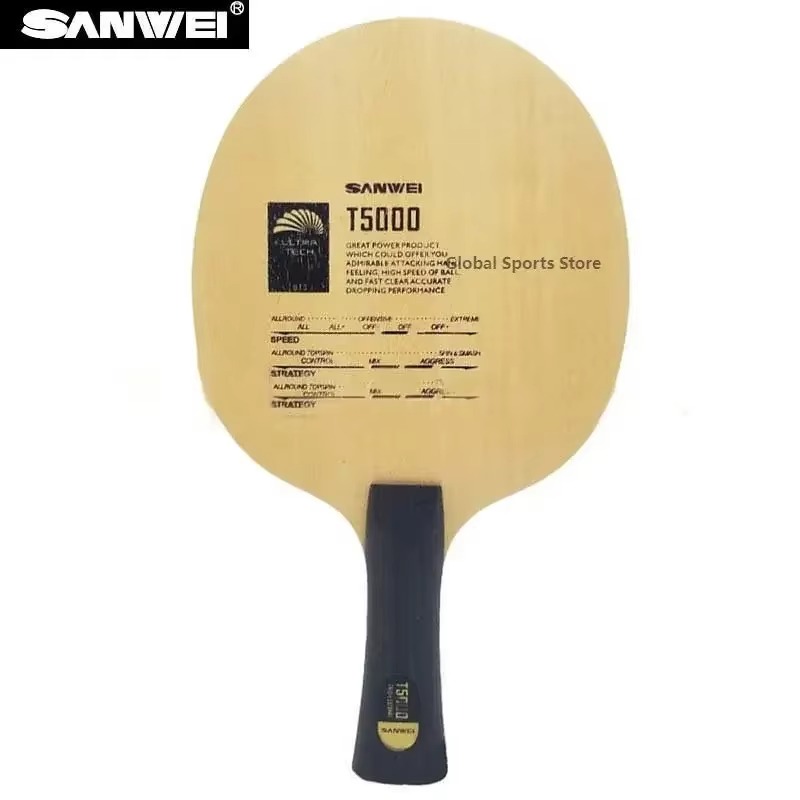
| Nittaku Septear | Sanwei T5000 | |
|---|---|---|
| Our rating | 8.2/10 | 8.1/10 |
| feel | Soft with high dwell time | Stiff with crisp carbon feedback; solid rebound and good sweet spot consistency |
| handle | Straight or Concave (flared) | Flared (FL) |
| plies | 7-ply all wood (Kiso Hinoki) | 5 wood + 2 carbon (7 total) |
| speed | ALL+ | OFF |
| thickness_mm | 6.7 | 6.5 |
| weight_g | 85 | 86 |
We may earn a commission from links on this page. Learn more.
Nittaku Septear is a premium all-wood control blade with exceptional dwell time and soft responsiveness. Its 7-ply Kiso Hinoki construction and high dwell time suit developing and intermediate all-round players prioritizing touch and technique building. The forgiving sweet spot supports consistent development, though lack of explosive power limits advanced attackers.
Sanwei T5000 is an exceptional budget option at around 15 USD, offering 5-ply wood plus 2 carbon construction with stiff, high-rebound feel. Its strong sweet spot consistency and good looping ability with catapult effect work well across a wide rubber range, including high-end options like Tenergy 05. However, slower looping than comparable inner-carbon blades and variable build quality limit its range.
Septear is for control and technique building at premium pricing. T5000 is an excellent entry to carbon blades for budget-conscious beginners and intermediate attackers seeking speed without expense.
FAQ
Which is faster?
T5000 with carbon construction is faster. Septear at ALL+ is slow by modern standards.
Which is better for beginners?
Septear for technique building and control. T5000 for affordability and speed introduction.
Can T5000 match premium blades?
No. Its slower looping and softer feel place it below premium inner-carbon alternatives from DHS and Yinhe.
Why is T5000 so cheap?
Budget construction and modest performance compared to premium options. Excellent value for budget players.