Nittaku Fastarc G-1 vs Yinhe Moon Speed: Which Should You Buy?
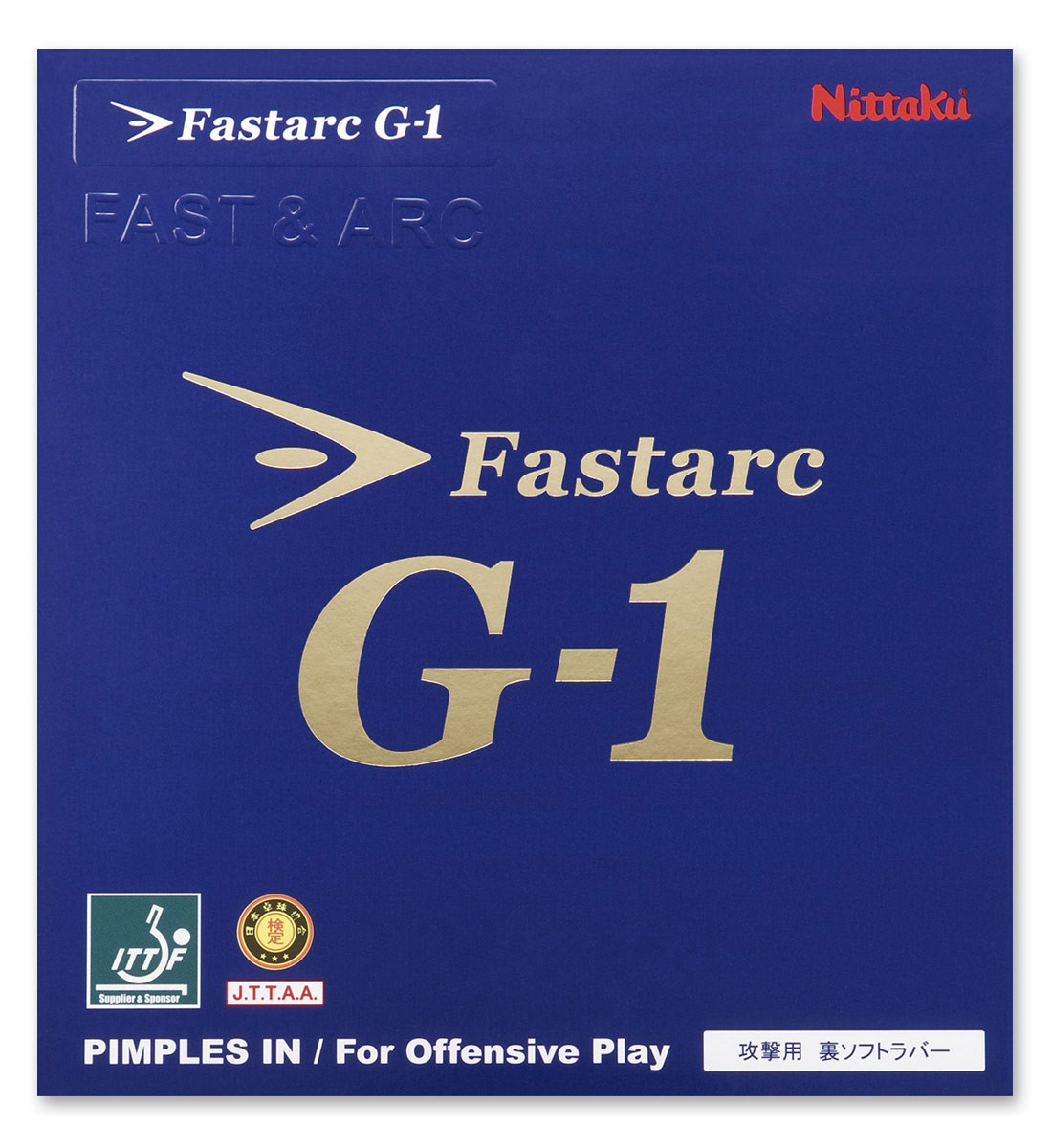
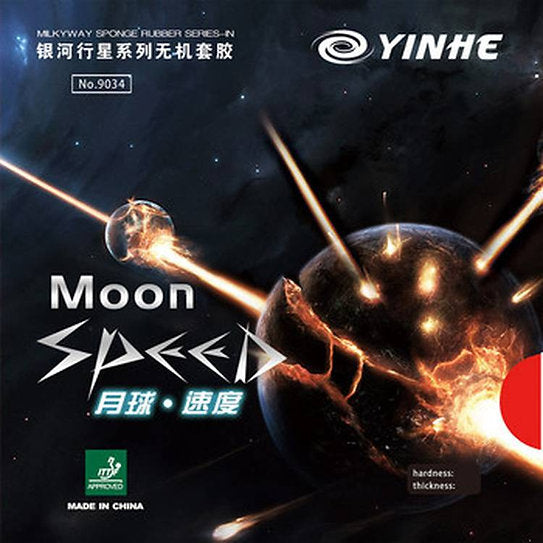
| Nittaku Fastarc G-1 | Yinhe Moon Speed | |
|---|---|---|
| Our rating | 8.8/10 | 7.8/10 |
| Best side | Both wings | Both wings |
| Control | medium-high | medium-high |
| Speed (different scales) | 15.0 (Nittaku) | high |
| Spin (different scales) | 12.5 (Nittaku) | medium-high |
| Sponge hardness (different scales) | 47.5° | soft to medium (around 37 to 39 degrees; medium measures roughly 46 to 48 ESN, comparable to MX-P and M1) |
| Type | tensor inverted | inverted non-tacky tensor (factory tuned, God Crossbow / Max Tense sponge) |
| Uncut weight | 69 g | 62 g |
A row marked “different scales” puts two rating systems in one line. Those cells are not a single score you can subtract.
We may earn a commission from links on this page. Learn more.
A 4.4-point gap you cannot ignore
Of every rubber pairing we track, this one has the single largest axis gap: throw. The Fastarc G-1 scores 8.5, the Moon Speed scores 4.1, a difference of 4.4 points. On a ten-point scale, that is close to half the range, and it is not a subtle stylistic preference, it is a structural difference in how the two rubbers behave. The Moon Speed’s own listed cons confirm this directly: “low throw with a snappy top gear leaves little margin for error” and “lifting heavy backspin needs more effort than tackier rubbers.” The Fastarc G-1’s whole design intent, per Nittaku and reviewers at Tabletennis11 and Racket Insight, is the opposite: a high, safe throw that makes opening loops against backspin consistent and forgiving. If you are choosing based on how comfortably you can lift a heavy backspin push from a step off the table, this number should be decisive.
The surprising axis where they are nearly tied
Here is the twist worth knowing before you buy on throw alone: control is almost identical, 8.0 for the Fastarc G-1 versus 7.8 for the Moon Speed, a gap of only 0.2. That means a rubber with dramatically less forgiveness on backspin can still feel similarly controllable once the ball is already in play, on blocks, counters, and drives. Throw and control are measuring different things, and this pairing is a clean example of why you should not assume they move together. Tackiness (2.5 versus 2.4) and durability (7.0 versus 6.9) are both effectively tied, gaps of 0.1 that will not show up in real play.
Where the real gap sits: spin and speed
Spin favors the Fastarc G-1 by 0.9 (8.9 versus 8.0), and speed favors the Moon Speed by 0.5 (8.1 versus 8.6). Neither is enormous on its own, but together with the throw gap they paint a consistent picture: the Moon Speed trades spin and margin-for-error for a faster, snappier, lower-arc response, which lines up with its own pros describing it as a “fast, bouncy tensor feel that rivals far pricier ESN rubbers” that excels at “blocking, counter topspin, drives and close-to-table flicks.”
What each rubber is actually built for
Reviewers on MyTableTennis.NET and Bladerubber.net repeatedly compare the Moon Speed to the Xiom Vega Pro, at a fraction of the price, which tells you its intended competitive set: a budget, near-table, block-and-drive rubber for improving offensive players who want a springy backhand tensor and are comfortable driving through the ball close to the table. It is offered in soft, medium, and hard sponges so you can match hardness to either wing, but its cons note the sheets can run heavy, up to around 72 grams uncut on some versions, and it loses effectiveness on passive shots away from the table. The Fastarc G-1 is built for a different job entirely, an all-court attacking rubber for either wing with a forgiving, high arc specifically so intermediate-to-advanced players can open against backspin with confidence, backed by Tenergy-like durability that holds up over months.
Should you switch
If you currently play the Fastarc G-1 and your game depends on opening heavy backspin from mid-distance, moving to the Moon Speed removes almost half of your safety margin on that specific shot, a 4.4-point throw drop is not something you compensate for with technique alone in the short term. The Moon Speed makes sense if your actual game is close-to-table blocking, countering, and driving on a budget, especially if you are already comfortable trading margin-for-error for a faster, snappier response.
Bottom line
This is the clearest example in our lineup of two rubbers built for opposite jobs. The Fastarc G-1 is the safer, more forgiving all-court loop rubber. The Moon Speed is a faster, lower-margin, near-table block-and-drive rubber that punches above its price. Pick based on where on the table you actually play and how much margin for error you need on backspin, not on the fact that control between them is nearly identical.
Frequently asked questions
Why is the throw gap between these two rubbers so much bigger than in other comparisons?
At 4.4 points (8.5 versus 4.1), this is the largest single-axis gap we measured across the whole rubber lineup. The Moon Speed's own listed cons explicitly describe its low throw and snappy top gear as leaving little margin for error, which is the direct opposite of the Fastarc G-1's forgiving, high-arc design.
If control scores are almost the same, does throw even matter?
Yes. Control and throw measure different things: control is how manageable the ball feels once it is in play, throw is how much margin for error you get when lifting backspin. A rubber can be similarly controllable in blocks and counters while still being far less forgiving on opening loops, which is exactly what these two rubbers show.
Is the Yinhe Moon Speed a cheaper substitute for the Xiom Vega Pro?
Reviewers on MyTableTennis.NET and Bladerubber.net repeatedly make that exact comparison, describing the Moon Speed as similar in feel to the Vega Pro for considerably less money, which is a useful reference point if you already know how the Vega Pro plays.
Which rubber suits a player who mostly blocks and counters close to the table?
The Moon Speed, per its own listed pros, is specifically strong at blocking, counter topspin, drives, and close-to-table flicks. The Fastarc G-1 can do this too but its real strength is opening backspin from further off the table.