Nittaku Fastarc C-1 vs Nittaku Fastarc G-1: Which Should You Buy?
| Nittaku Fastarc C-1 | Nittaku Fastarc G-1 | |
|---|---|---|
| Our rating | 8.4/10 | 8.8/10 |
| best_side | backhand or allround | both |
| control | high | medium-high |
| speed | 15.25 (Nittaku scale) | 15.0 (Nittaku) |
| spin | 12.25 (Nittaku scale) | 12.5 (Nittaku) |
| sponge_hardness | 45 degrees | 47.5° |
| type | inverted / tensor | tensor inverted |
| weight_uncut_g | approx 47 g (157 x 150 mm sheet) | 69 |
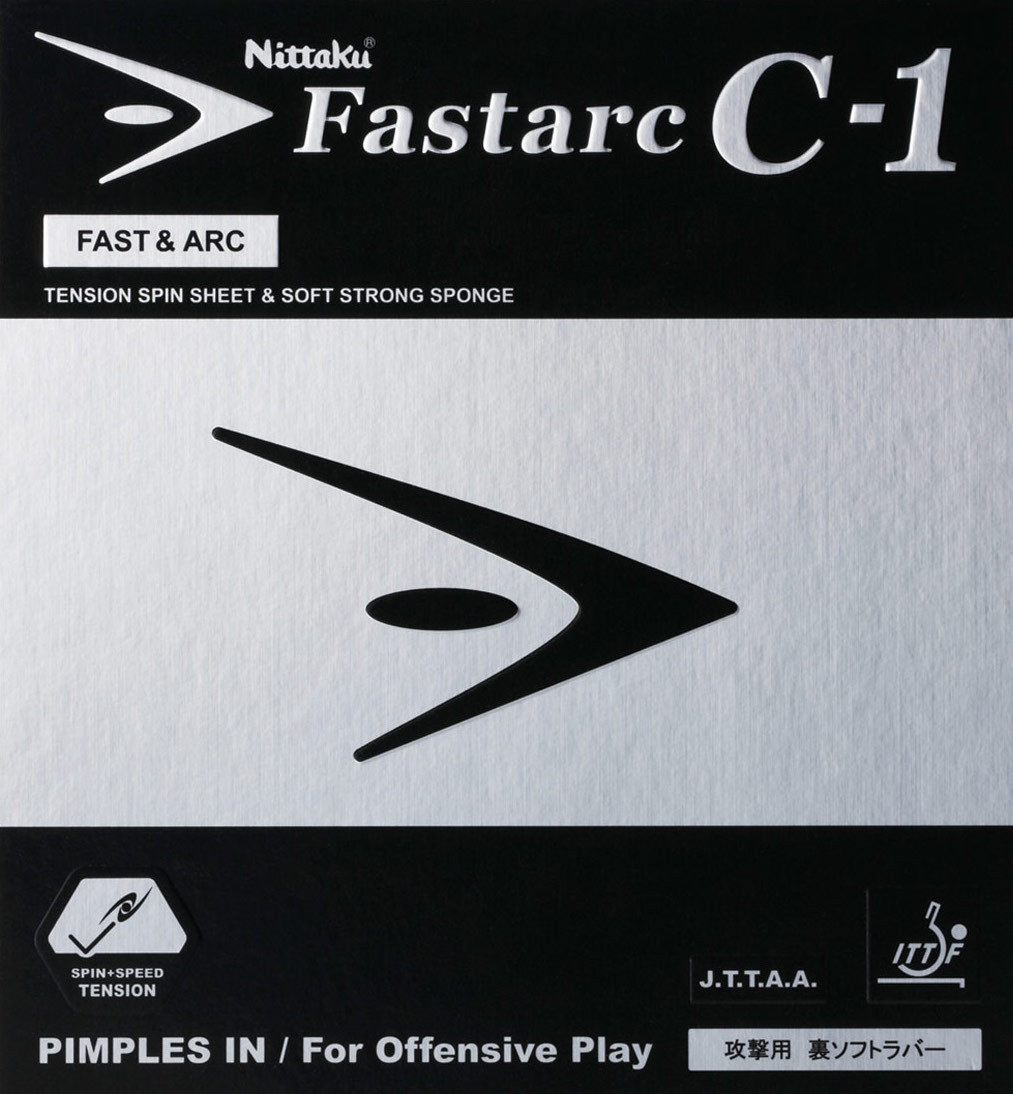
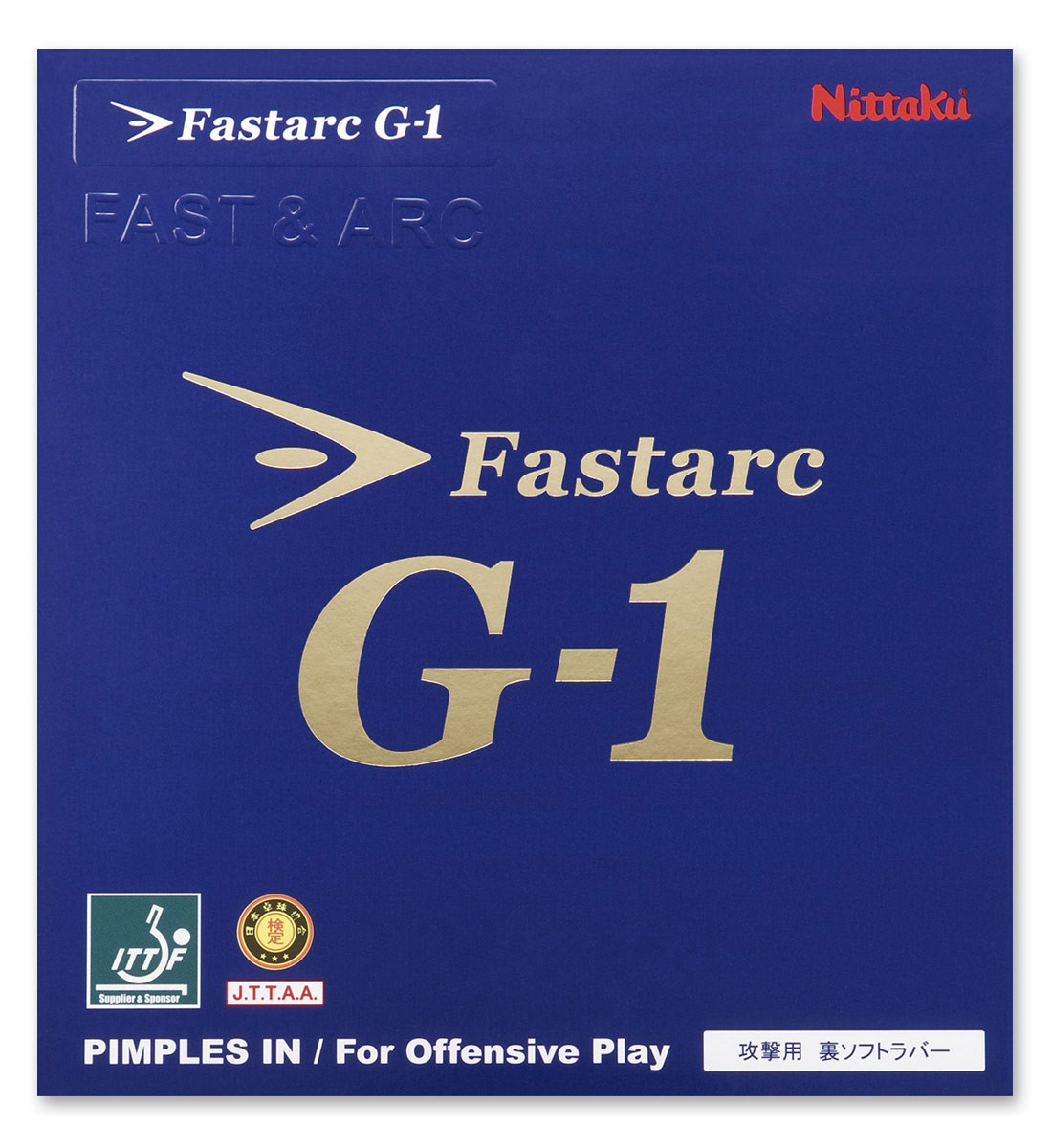
We may earn a commission from links on this page. Learn more.
The number that actually matters: throw
Of every axis in this pair, one gap dwarfs the rest: throw. Fastarc G-1 scores 8.5 on throw against Fastarc C-1’s 5.4, a 3.1-point gap, the largest single delta anywhere in this batch of comparisons. Throw angle determines the shape of your loop’s arc and how far forward the ball launches off the rubber before gravity takes over. A 3.1-point gap is not a subtle difference in feel; it means these two rubbers, despite sharing the same topsheet and a similar brand lineage, will send the ball on genuinely different trajectories on the same stroke.
What that throw gap means on the table
Nittaku’s own C-1 review summary confirms the mechanism: it does not generate much free spin passively and needs active strokes, which is the low-throw, low-catapult side of a tensor rubber, favoring a flatter, more compact loop. The G-1, by contrast, is described across the Tabletennis11 blog and Racket Insight’s dedicated review as giving a high, safe throw that makes opening loops against backspin consistent and forgiving, precisely what a high throw angle buys you: margin for error against low, heavy backspin serves and pushes.
The rest of the axis data
Control is the second most meaningful gap: 9.2 for C-1 versus 8.0 for G-1, a 1.2-point edge to the C-1. That tracks with C-1’s own billing as the more control-oriented, forgiving sibling in the Fastarc line. Speed moves the other way by a smaller amount, 9.0 versus 8.1, a 0.9-point edge to C-1, genuinely surprising, since G-1 is often assumed to be the faster of the pair by name recognition alone, but the aggregated data says C-1 is both faster and more controlled. Durability adds a 1.4-point gap in C-1’s favor (8.4 vs 7.0); its topsheet holds up well over time per its own review summary. Spin is close to identical: 9.1 versus 8.9, a 0.2-point gap not worth factoring into a decision. Tackiness is also close, 2.0 versus 2.5, a 0.5-point gap.
What the sources say
Revspin, MyTableTennis.NET, TableTennisDaily, and Megaspin all cover C-1, converging on the same framing: strong value against Tenergy 64 or 80 at a noticeably lower price, with a forgiving high arc and effortless passive blocking. On the G-1 side, the Tabletennis11 blog’s three-rubber Fastarc review, Megaspin’s product page, and Racket Insight’s dedicated write-up all describe Tenergy-class performance and durability at a lower cost, with a firm 47.5-degree sponge that rewards a committed, technically sound stroke.
Migration advice
If you play C-1 and are considering the switch to G-1 specifically because you’re missing arc against heavy backspin, the 3.1-point throw gap is the single best reason in this whole batch to make that switch, since it directly targets a real, common technical problem. But be honest about the cost: you will lose 1.2 points of control, 0.9 points of speed, and 1.4 points of durability in exchange. If your issue is instead a lack of raw pace or a topsheet wearing out too fast, staying with C-1 or looking elsewhere is the better call; G-1 will not fix either of those.
Going from G-1 to C-1 makes sense if you already generate your own arc through technique and want to trade some of that built-in throw for more control and speed, plus a rubber that keeps its grip longer.
Fit and scenario
C-1 fits players who already loop actively and want premium tensor spin without a passive free-spin cushion; it works especially well as a backhand rubber or a control-first forehand option. G-1 is the better fit for players who need help clearing heavy backspin or want a genuinely all-court attacking rubber for either wing, and who are prepared to swing through a firmer 47.5-degree sponge rather than rely on the rubber to do passive work for them.
Frequently asked questions
What's the single biggest difference between Fastarc C-1 and G-1?
Throw. G-1 scores 8.5 versus C-1's 5.4, a 3.1-point gap that changes how high and long your loop arcs off the rubber.
Is G-1 actually the faster rubber, as the name suggests?
No. The aggregated data shows C-1 is 0.9 points faster (9.0 vs 8.1) and 1.2 points more controlled.
Which rubber is better against heavy backspin?
G-1, thanks to its much higher throw angle, is described as giving a high, safe arc that makes opening loops against backspin more forgiving.
Is spin much different between the two?
Barely. Spin differs by just 0.2 points (9.1 vs 8.9), essentially tied.
Which rubber lasts longer?
C-1, by 1.4 points on durability (8.4 vs 7.0), with reviewers noting its topsheet grip holds up well over time.