Donic Waldner Senso Carbon V1 vs Nittaku Acoustic Carbon: Which Should You Buy?
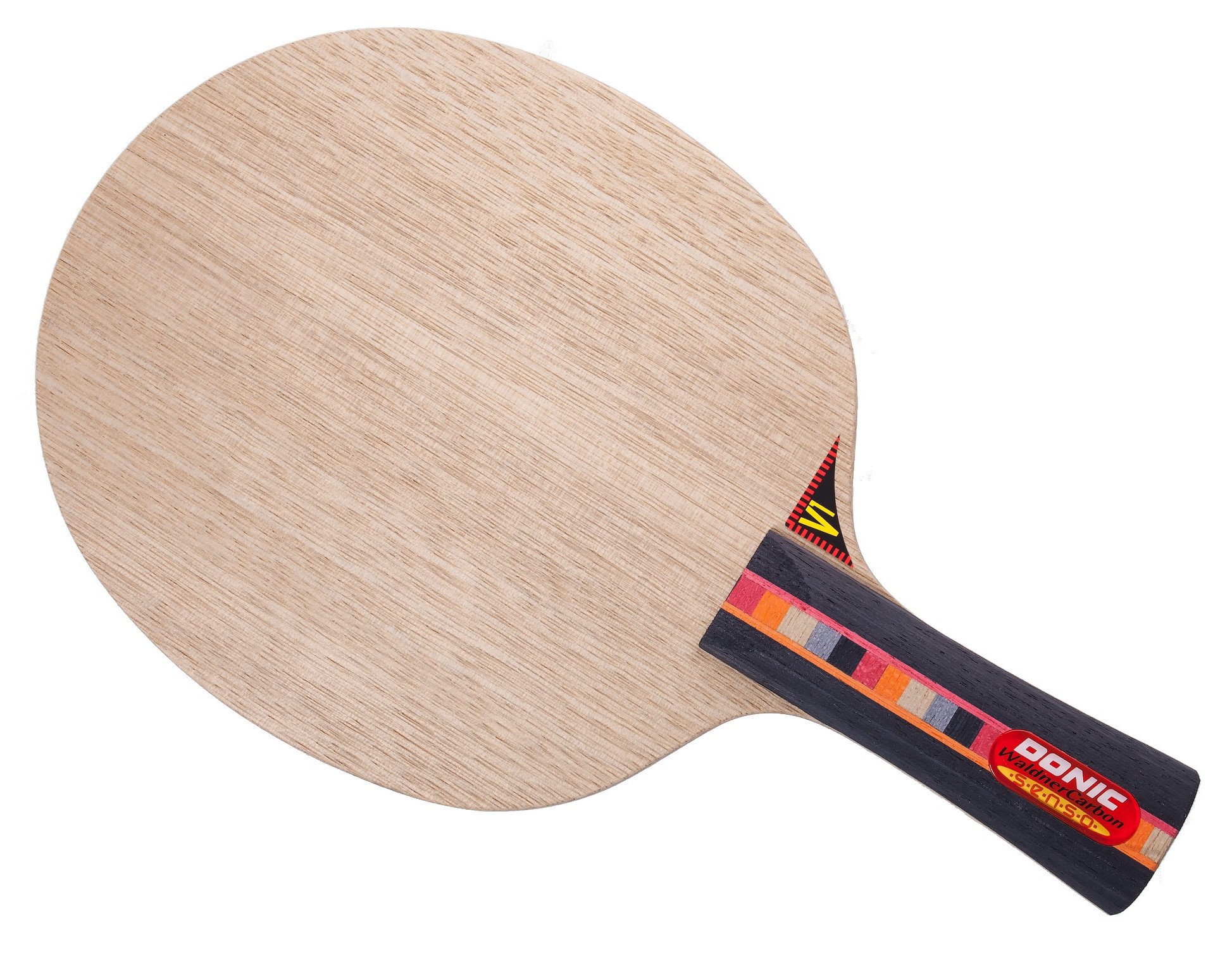
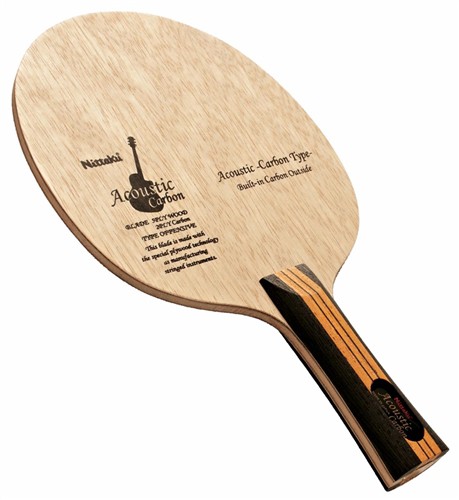
| Donic Waldner Senso Carbon V1 | Nittaku Acoustic Carbon | |
|---|---|---|
| Our rating | 8.2/10 | 8.8/10 |
| feel | Soft woody feel with carbon kick; elastic and spin-friendly; medium-high throw angle | Medium-hard outer carbon with surprising wood-like dwell and ball retention; crisp sound on contact |
| handle | Senso V1 hollow handle (vibration-damping) — FL, AN, ST options | FL, ST (also Large Handle and Chinese Penhold variants available) |
| plies | 7 plies: 5 wood (Limba outer, Ayous mid) + 2 carbon composite | 7 plies — 5 wood + 2 FE carbon (Limba - FE Carbon - Limba - Tung - Limba - FE Carbon - Limba) |
| speed | OFF- | OFF |
| thickness_mm | 5.6-5.8mm | 5.5mm |
| weight_g | 85-87g | approx 90g |
We may earn a commission from links on this page. Learn more.
The short answer
Both blades chase the same goal — carbon speed without losing the wood-like touch that all-wood purists love — but Nittaku Acoustic Carbon gets there with more raw pace and a heavier build, while Donic’s Senso Carbon V1 stays lighter and closer to the table. The axis deltas here are smaller than in most carbon-versus-wood matchups, which tells you something useful on its own: these two blades are closer cousins than their brand names suggest.
What the axis numbers say
Speed: Acoustic Carbon leads 9.2 to 8.3, a 0.9-point gap that is real and worth caring about. Reviewers specifically note Acoustic Carbon’s speed score “matches TBALC and beats Viscaria and Tenor” — that’s Acoustic Carbon being measured against established top-tier carbon blades, not just against Senso V1.
Control: essentially tied, 8.8 for Senso V1 against 9.0 for Acoustic Carbon, a 0.2-point gap that sits inside normal review variance. Neither blade sacrifices control to get its speed — this is the “large sweet spot with strong balance between speed and control” that Acoustic Carbon’s own review copy calls out, and it applies almost equally well to Senso V1.
Stiffness and hardness: Acoustic Carbon runs stiffer (6.4 vs 5.3, a 1.1-point gap) and harder (6.4 vs 5.5, a 0.9-point gap). Combined with Acoustic Carbon’s roughly 90g weight against Senso V1’s 85-87g, this is a genuinely heavier, firmer-hitting blade, not just a marginally faster one.
Consistency: dead even at 8.6 for both. Whichever you choose, the reliability of the sheet is not the deciding factor.
Where these numbers come from
Senso Carbon V1 is documented across Revspin, Megaspin, and a dedicated TableTennisDaily equipment thread. Acoustic Carbon has its own Revspin and TableTennisDaily equipment pages plus an independent entry on TableTennisReference, and its review copy notes it is “trusted by professional players including Ayane Morita” — a detail worth knowing if you’re curious why the blade shows up in pro-adjacent gear discussions despite being priced below comparable Butterfly carbon blades.
Is it worth switching
Moving from Senso V1 to Acoustic Carbon makes sense if you’ve found yourself wanting more finishing speed on your loops without wanting to jump all the way to a stiff, unforgiving OFF+ blade — Acoustic Carbon’s large sweet spot is specifically designed to keep that transition forgiving. Be aware of two real costs: Acoustic Carbon is meaningfully heavier (around 90g, versus Senso V1’s 85-87g), which changes racket feel and can tire your arm on long sessions, and its own con list warns of “a steep learning curve” where “the bounce can feel unruly until technique adapts.”
Moving from Acoustic Carbon to Senso V1 makes sense if you play close to the table and want to shed weight and stiffness without giving up much control — the 0.2-point control gap means you are not sacrificing much there. Senso V1’s hollow handle is specifically built to dampen harsh vibrations, which may suit players who found Acoustic Carbon’s carbon feel too sharp on off-center hits.
Who each blade actually fits
Senso Carbon V1 fits intermediate to improving players moving from all-wood to carbon without wanting to lose feel, especially close-to-table European-style loopers who value control and spin over outright speed, and who use a wide range of European inverted rubbers. Acoustic Carbon fits intermediate to advanced offensive players who loop close to mid-table and specifically want carbon speed while keeping wood-like touch and sharp short-game precision — its cons note it “soaks up sticky and tacky rubbers like NEO Hurricane 3 without trampolining,” so it particularly rewards players running tacky Chinese-style rubber on the forehand.
One caution common to both: Senso V1’s speed “drops noticeably at mid to far distance from the table” per its own review notes, while Acoustic Carbon’s medium throw angle and head-heavy balance “require adjustment from all-wood players.” Neither blade is a drop-in replacement for a pure all-wood setup — budget time to adapt regardless of which you pick.
Frequently asked questions
Is Nittaku Acoustic Carbon heavier than Donic Senso Carbon V1?
Yes, noticeably. Acoustic Carbon runs around 90g against Senso V1's 85-87g, and that extra weight shows up as more stiffness (6.4 vs 5.3) and hardness (6.4 vs 5.5) as well.
Which blade has better control?
They are essentially tied -- Acoustic Carbon scores 9.0 against Senso V1's 8.8, a 0.2-point gap that's within normal review variance.
Do professional players use either blade?
Acoustic Carbon's review copy specifically notes it is used by professional player Ayane Morita; no equivalent pro-usage claim appears in Senso Carbon V1's review sources.
Which blade suits close-to-table looping better?
Both are built for it, but Senso Carbon V1 is the lighter, more forgiving option for players easing in from all-wood blades, while Acoustic Carbon rewards players ready for more pace and weight.