Donic Persson Powerplay vs Stiga Cybershape Wood: Which Should You Buy?
| Donic Persson Powerplay | Stiga Cybershape Wood | |
|---|---|---|
| Our rating | 8.2/10 | 8.4/10 |
| feel | Hard outer koto plies with internal foil damping layers; crisp feel with excellent feedback | Medium-soft, dwell-heavy, linear feedback |
| handle | FL | Flare / Straight / Anatomic (Italian wood) |
| plies | 7-ply all wood | 7-ply all wood |
| speed | OFF | OFF- |
| thickness_mm | 5.9 | 5.8-5.9 mm |
| weight_g | 90 | 80-85 g (base); up to 94 g with CWT weights |
We may earn a commission from links on this page. Learn more.
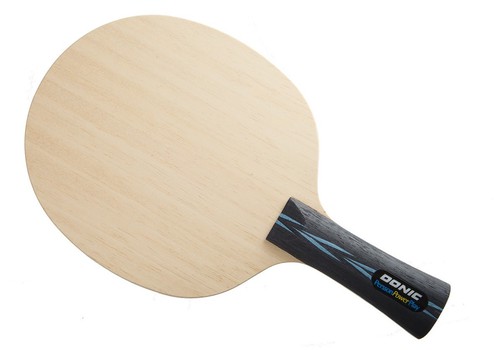
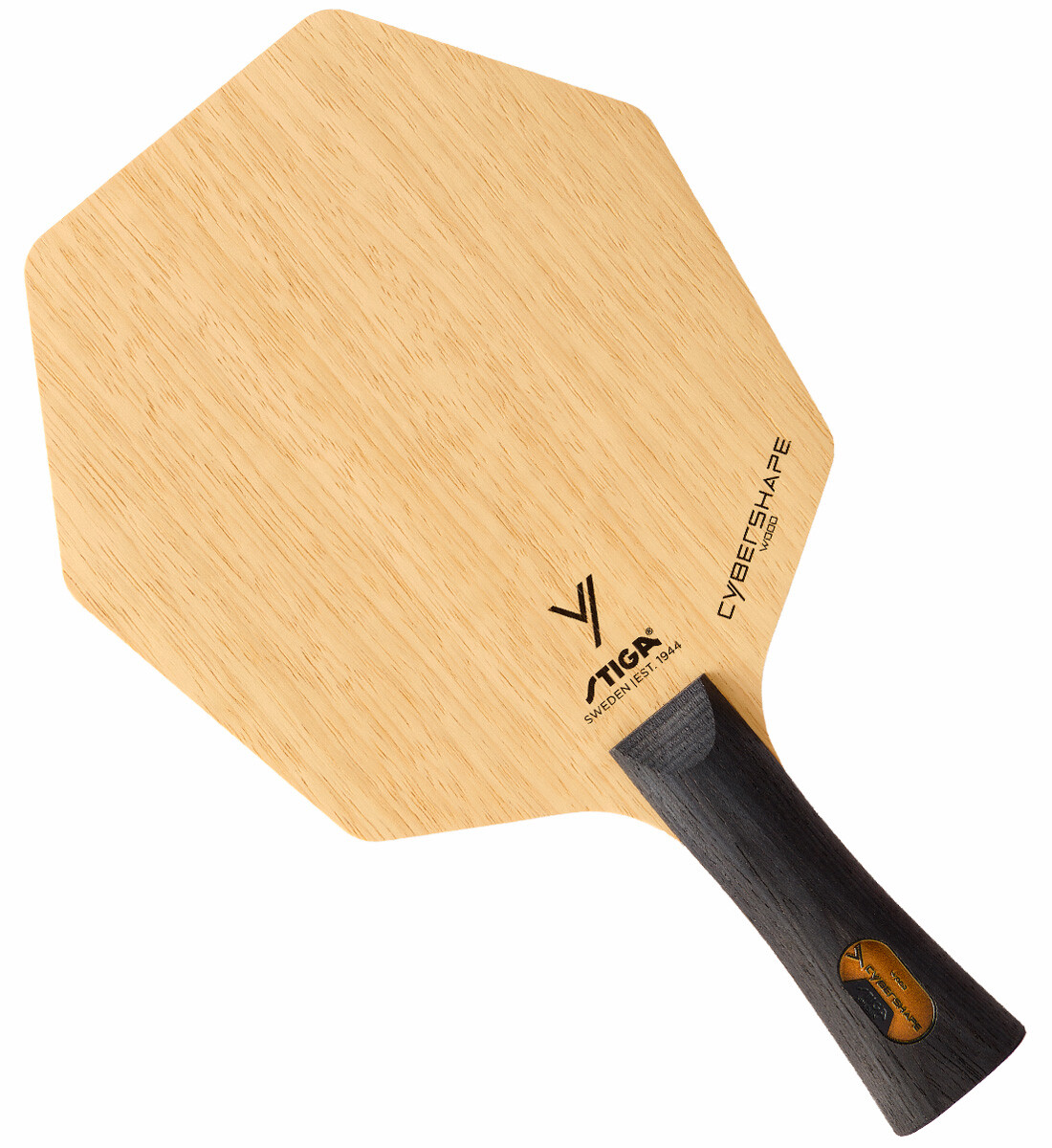
Cybershape Wood and Persson Powerplay are both all-wood OFF blades but with contrasting design philosophies. Cybershape Wood (8.4 rating) features a hexagonal shape with enlarged sweet spot, optional magnetic weights (CWT) for balance tuning, and dwell-heavy construction suited for spin and consistency players. Persson Powerplay (8.2 rating) is a traditional oval all-wood design with crisp koto plies and damping, favoring straightforward two-wing attacking.
Cybershape Wood appeals to control-first attackers wanting fine-tuning and spin emphasis. Persson Powerplay is simpler and more direct for intermediate players comfortable with traditional oval geometry.
FAQ
What are CWT magnetic weights and when do I need them?
CWT weights fine-tune total racket balance. Use them if your full setup feels head-light or butt-heavy after rubber mounting.
Does the hexagonal geometry help spin?
Indirectly—the enlarged sweet spot and dwell time aid consistency. But the shape itself does not directly generate spin.
Is Cybershape Wood really 5-ply and thus lighter?
No—it is 7-ply like Persson Powerplay but weighs 80-85g base before CWT, making it lighter and easier to accelerate.
Why is Cybershape more expensive?
Italian wood handle quality, CWT customization, and R&D on the hexagonal shape justify the premium over Persson Powerplay.