Donic Persson Powerplay vs Sanwei T5000: Which Should You Buy?
| Donic Persson Powerplay | Sanwei T5000 | |
|---|---|---|
| Our rating | 8.2/10 | 8.1/10 |
| feel | Hard outer koto plies with internal foil damping layers; crisp feel with excellent feedback | Stiff with crisp carbon feedback; solid rebound and good sweet spot consistency |
| handle | FL | Flared (FL) |
| plies | 7-ply all wood | 5 wood + 2 carbon (7 total) |
| speed | OFF | OFF |
| thickness_mm | 5.9 | 6.5 |
| weight_g | 90 | 86 |
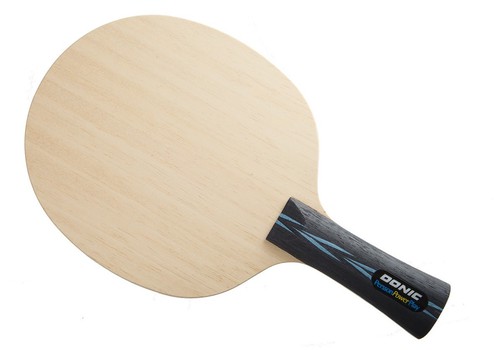
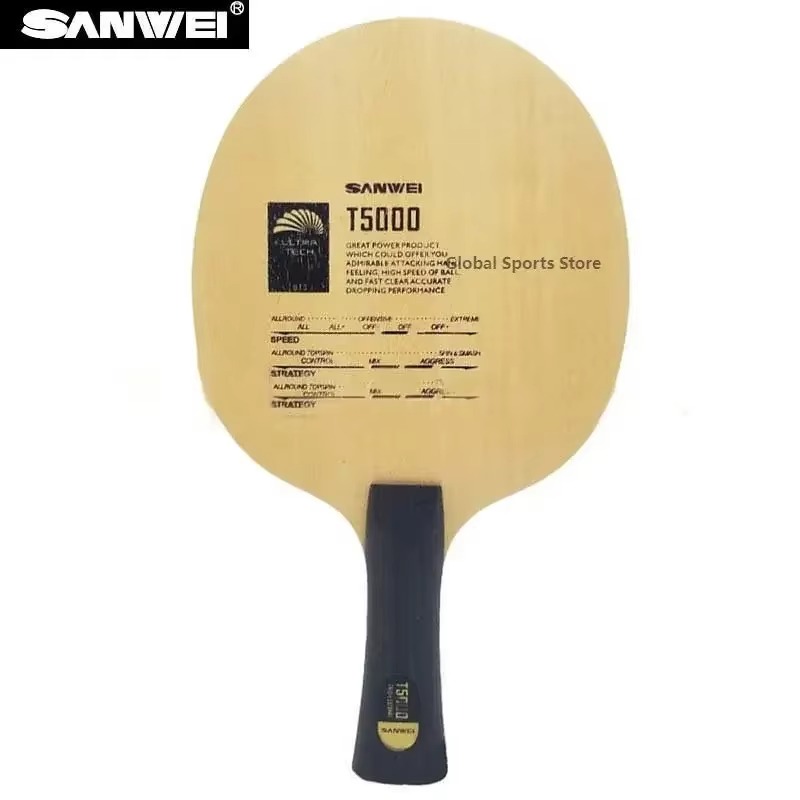
We may earn a commission from links on this page. Learn more.
T5000 and Persson Powerplay target opposite skill tiers on a tight budget. T5000 (8.1 rating) is a 5+2 carbon beginner-to-intermediate upgrade under 15 USD, with a catapult effect and strong sweet spot but lower looping spin than premium carbons. It excels for club players and backup rackets. Persson Powerplay (8.2 rating) anchors intermediate-to-advanced attacking with true all-wood consistency, stronger feedback, and better performance on loop shots despite lower inherent speed.
For pure budget value, T5000 beats Persson Powerplay. But for serious intermediate two-wing development and penholder stability, Persson delivers richer feedback and more forgiving all-round play.
FAQ
Is T5000 recommended for beginners?
Yes, it is explicitly designed for beginners upgrading from all-wood. Good sweet spot consistency and catapult effect mask imprecision.
Why is T5000 so cheap?
5+2 carbon construction, Koto outer ply, and inner-vs-outer ambiguity lower manufacturing cost. Build quality reflects the price.
Can T5000 match premium carbon looping?
No—looping is noticeably slower than comparable DHS or Yinhe inner-carbon blades, limiting long-distance attacking upside.
Which is better for learning penholder grip?
Persson Powerplay. Penholder players especially praise its stable, feedback-rich platform at fair pricing.