Donic Epox Control vs Tibhar Stratus Power Wood: Which Should You Buy?
| Donic Epox Control | Tibhar Stratus Power Wood | |
|---|---|---|
| Our rating | 7.8/10 | 9.0/10 |
| feel | Low vibration, elastic, soft touch | Elastic with long dwell time, lively yet controlled, larger-than-average head and big sweet spot |
| handle | Flared / Anatomic / Straight | FL / ST / AN |
| plies | 5-ply all wood | 5-ply all wood (Limba-Limba-Ayous-Limba-Limba) |
| speed | ALL+ | OFF- |
| thickness_mm | 5.1 | 6.2 |
| weight_g | 80-90 | 90 |
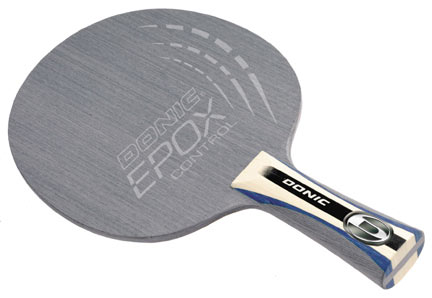
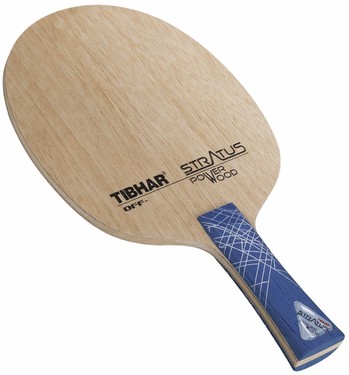
We may earn a commission from links on this page. Learn more.
Donic Epox Control delivers refined, low-vibration play for technique builders—ideal for beginners seeking touch consistency. Tibhar Stratus Power Wood punches far above its price bracket with long dwell time, large sweet spot, and a lively feel that rewards offensive two-wing looping.
Stratus is beginner-friendly despite its OFF- speed; Epox is slightly slower but more refined and durable with edge protection. Stratus wins on value and spin-arc control; Epox wins on precision placement and low vibration.
For a first attack blade, Stratus is phenomenal value. Epox suits players prioritizing feel over firepower.
FAQ
Which is the better value blade?
Tibhar Stratus Power Wood; widely called the best value 5-ply all-wood blade, often priced around 20-30 USD.
Which generates more spin on loops?
Tibhar Stratus Power Wood; its long dwell time and elastic feel make heavy topspin arcs easier than Epox’s crisp, predictable response.
Which forgives off-center hits better?
Tibhar Stratus Power Wood with its larger head and bigger sweet spot; Epox Control is also forgiving but more compact.
Which suits faster players better?
Epox Control offers more control at high speeds due to low vibration; Stratus is beginner-friendly but plays faster than its rating.
Do both work with pimple-out or defensive rubbers?
Yes, both adapt well; Epox is traditionally the control player choice, but Stratus is versatile enough for different styles.