Donic Bluefire M2 vs Xiom Vega Pro: Which Should You Buy?
| Donic Bluefire M2 | Xiom Vega Pro | |
|---|---|---|
| Our rating | 8.4/10 | 8.5/10 |
| best_side | both | both |
| control | medium-high | medium-high |
| speed | high | offensive |
| spin | high | high |
| sponge_hardness | around 42.5 to 45 degrees (medium) | 47.5° |
| type | tensor inverted | tensor inverted |
| weight_uncut_g | 68 | 69 |
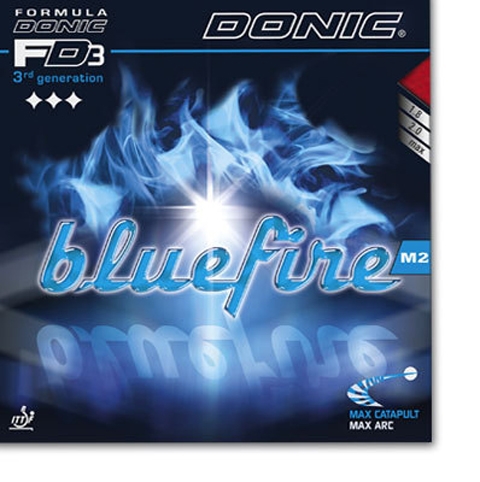
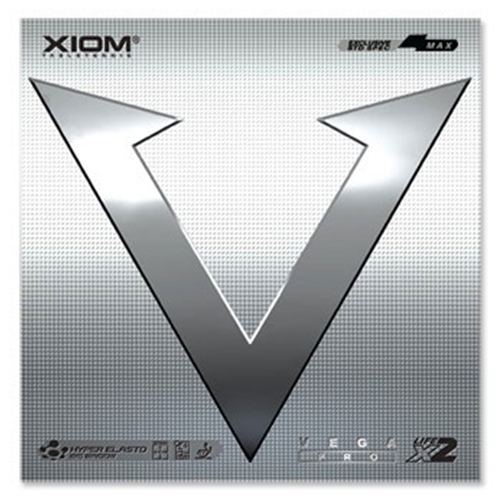
We may earn a commission from links on this page. Learn more.
When the Overall Rating and the Axis Data Tell Different Stories
Here’s an honest tension worth naming upfront: Xiom Vega Pro’s overall rating (8.5) edges out Donic Bluefire M2’s (8.4), yet on the individual axes, M2 leads on speed (plus 0.5), spin (plus 0.2), control (plus 0.7) and throw (plus 2.0), and the two are tied on tackiness. Vega Pro only wins clearly on durability (plus 1.0 in its favor). If you just add up the axis wins, M2 looks like the stronger rubber. The overall rating doesn’t simply average these six numbers; it’s also shaped by real-world factors like price and predictability that don’t show up as a dedicated axis, and Vega Pro’s own pros make a specific claim here: it costs “about half the price of Tenergy,” positioned as an “outstanding-value alternative to premium rubbers.” Read the overall score as partly a value-adjusted figure, not a pure performance ranking.
Throw Is the Biggest Real Gap, and It Explains Everything Else
The largest single-axis gap here is throw: 8.0 for M2 versus 6.0 for Vega Pro, a full 2.0 points. This single number explains most of the character difference between these two rubbers. M2’s higher throw means more catapult, a bigger looping arc, and more built-in margin for error on full swings, consistent with its own pros describing “strong catapult and speed that respond well to boosting” and a “high arc that opens up backspin easily.” Vega Pro’s lower throw means a flatter, more direct trajectory with less sponge-driven assistance, which is exactly why its own pros describe it as “unusually linear and predictable… you get the speed you ask for, no uncontrollable catapult surprises.”
Control: Two Different Meanings of the Same Word
Here’s where the data gets genuinely interesting rather than contradictory. The aggregated control axis actually favors M2 (7.5 versus 6.8), yet Vega Pro’s own pros claim “lots of control in the short game and on opening loops.” These aren’t in conflict once you separate two different things the word “control” can mean. M2’s higher number reflects a more forgiving margin driven by its higher throw and catapult; you can swing imperfectly and the sponge still gives you a usable arc. Vega Pro’s lower number, paired with its own cons noting the “firm sponge” is “a touch harder to control at first,” reflects a rubber with less built-in forgiveness on full swings, but genuine precision on close, linear, short-game contact once you adapt to it. If your shots are mostly full loops with margin for error, M2’s number is the more relevant one. If your game lives in blocking, flat hitting, and touch shots near the table, Vega Pro’s own described strength in exactly those situations may matter more than the aggregate control figure.
Durability: Vega Pro Wins, But Watch the Sponge Change Character
Durability favors Vega Pro by 1.0 (6.5 versus 5.5), but its own cons include a detail worth flagging: “the sponge softens after a few weeks/months, raising the throw and reducing the initial firmness.” In plain terms, as a Vega Pro sheet ages, it actually becomes more forgiving and higher-throwing than it was new, drifting somewhat toward the character M2 has out of the box, right up until it needs replacing. M2’s own durability weakness is different in kind: its sponge is described as “fragile, porous” and prone to shrinking when reglued, a more structural wear pattern than a gradual softening.
Tackiness and Serve Sensitivity: A Genuine Tie
Tackiness is identical at 2.0 for both rubbers, a rare true tie in this dataset, not a rounding artifact. Neither rubber is tacky, so if your decision was hinging on serve-and-receive grip, this axis simply won’t differentiate them. Vega Pro’s own pros do note it “picks up less dust” and is “less sensitive to the opponent’s serve spin,” which may be a subtle sheet-texture difference not captured by the tackiness number itself.
Should You Switch?
If you’re on M2 and considering Vega Pro: expect to give up throw and catapult margin, and to need more physical effort on shots played away from the table, per Vega Pro’s own cons. In exchange you get a firmer, more linear, more predictable response, better durability, and a meaningfully lower price relative to premium tensors.
If you’re on Vega Pro and considering M2: you gain catapult-driven speed and a more forgiving arc, plus stronger backhand performance, a stated M2 strength, but you take on faster sponge degradation and less linear predictability at speed.
Bottom Line
These two occupy genuinely different niches despite a near-identical overall rating. M2 is the higher-throw, more forgiving, catapult-driven rubber best suited to backhand use and full-swing loopers. Vega Pro is the firmer, more linear, close-to-table rubber for counter-hitters and blockers who want predictability and exceptional value over raw catapult. Don’t let the 0.1-point overall gap decide this one; the underlying axis data tells a much more specific story about where each rubber wants to be used.
Frequently asked questions
Why does Vega Pro have a higher overall rating than M2 despite losing most individual axes?
The overall rating factors in value and predictability alongside raw performance. Vega Pro's own pros cite a price roughly half that of Tenergy-class rubbers, which likely factors into its rating even though M2 leads on speed, control and throw.
Which rubber has more catapult and forgiving arc?
M2, by a large margin. Its throw rating of 8.0 versus Vega Pro's 6.0 is the biggest single-axis gap in this comparison, and it explains M2's more forgiving, higher-arcing feel on full swings.
Is Xiom Vega Pro good for blocking and counter-hitting close to the table?
Yes, per its own bestFor guidance, which specifically recommends it for close-to-mid-table attackers and counter-hitters wanting a linear, predictable forehand tensor.
Does Vega Pro change character as it wears in?
Yes. Its own cons note the sponge softens after a few weeks to months, which raises its throw and reduces its initial firmness, meaning an older sheet plays somewhat differently from a fresh one.
Are these two rubbers equally tacky?
Yes, this is a genuine tie. Both rate 2.0 on the tackiness axis, so neither offers a tack advantage on serves or receives.