Donic Bluefire M1 vs Palio AK47: Which Should You Buy?
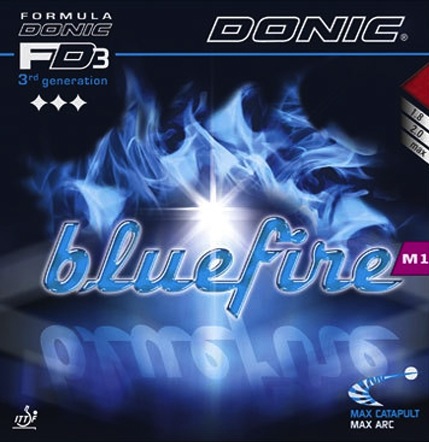
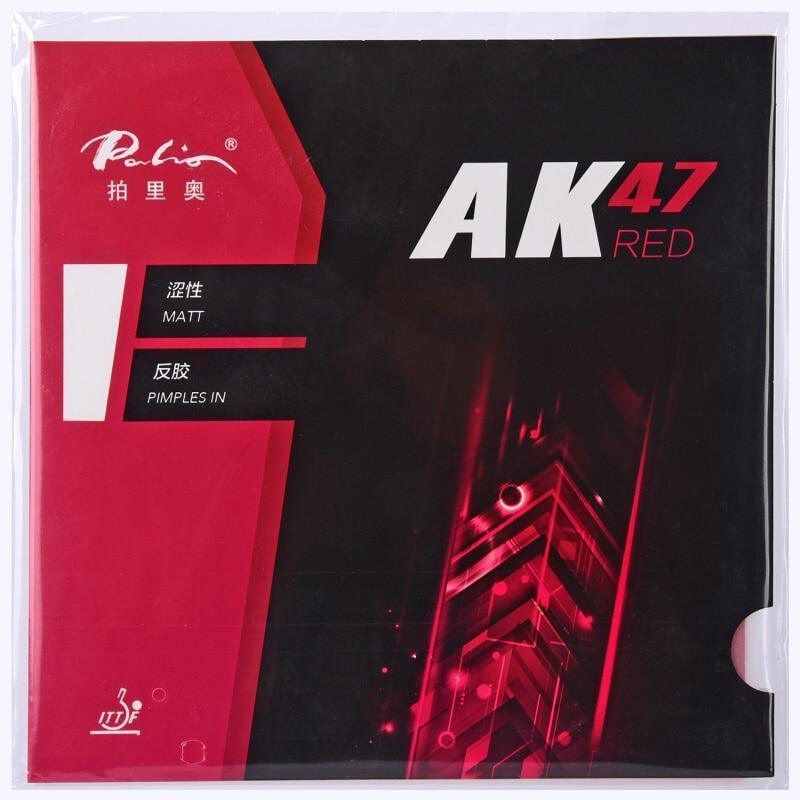
| Donic Bluefire M1 | Palio AK47 | |
|---|---|---|
| Our rating | 8.4/10 | 7.8/10 |
| best_side | Forehand | both |
| control | 9.1 / 10 | high (best on the softer Blue) |
| speed | 9.7 / 10 | medium-high (Blue softer and more linear, Red fastest) |
| spin | 9.0 / 10 | high |
| sponge_hardness | 47.5 degrees (medium-hard) | Blue around 38-40 deg, Yellow around 40-42 deg, Red around 45-47 deg (Euro scale) |
| type | Inverted / Tensor | non-tacky inverted tensor (offered in Blue, Yellow and Red sponges) |
| weight_uncut_g | approx 49 g | 67 |
We may earn a commission from links on this page. Learn more.
Choose Donic Bluefire M1 if you are an advanced close-to-mid table attacker rated 1500-plus USATT who needs hard, fast forehand speed with high throw angle. It is not for beginners and demands proper technique. Pick Palio AK47 if you are a developing or intermediate player building your first custom racket on a budget who wants flexibility across three sponge hardnesses (Blue, Yellow, Red). The AK47 Blue offers excellent short-game control, Yellow gives balance, and Red provides offensive speed—all remarkably light. M1 is elite forehand; AK47 is flexible learning.
FAQ
Why does AK47 come in three hardnesses?
To match your speed and control needs. Blue is softest for control, Yellow is balanced, and Red is fastest for offensive play.
Which is faster overall?
M1 is faster; AK47 Red is fast for a budget rubber but does not match M1’s speed.
Which is lighter?
AK47 Red at around 37 grams cut is remarkably light; M1 at roughly 49 grams is heavier.
Which should beginners choose?
Palio AK47 Blue for its excellent control on pushes, blocks and short game; M1 is too fast for beginners.