DHS Hurricane 8 vs Donic Bluefire M3: Which Should You Buy?
| DHS Hurricane 8 | Donic Bluefire M3 | |
|---|---|---|
| Our rating | 8.2/10 | 8.3/10 |
| best_side | forehand | backhand |
| control | medium-high | High |
| speed | high | Medium-high (ALL+ to OFF-) |
| spin | extreme | Very high |
| sponge_hardness | 39-40 (DHS scale, medium-hard) | 40 degrees (ESN), approximately 33-34 degrees Shore A |
| type | hybrid tacky tensor | inverted |
| weight_uncut_g | 70 | 47 |
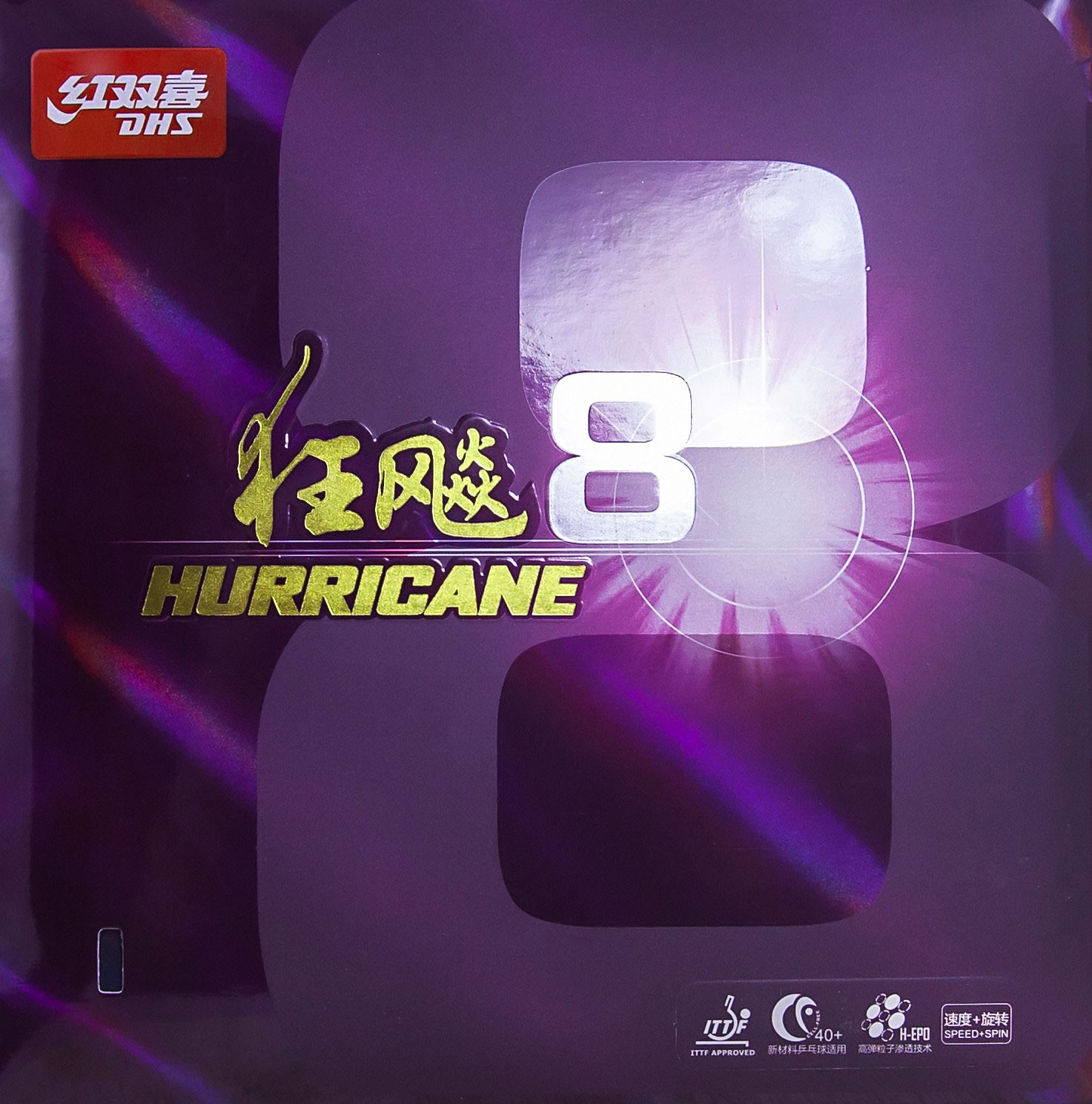
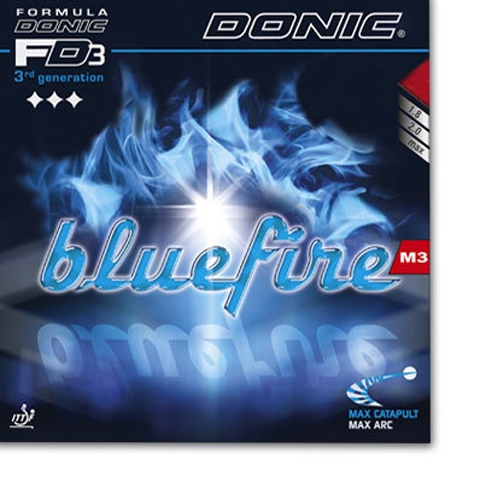
We may earn a commission from links on this page. Learn more.
The DHS Hurricane 8 is faster and easier to drive than Hurricane 3-NEO, making it a strong choice for forehand-dominant attackers who want tacky grip combined with drivable speed. Excellent spin and tack on serves and short pushes, plus fast low-arc loopdrives and counterloops, make it versatile. Boosting enhances its ceiling, and it offers good durability unboosted for some players. The heavy 50g-plus cut and inconsistent tackiness fading after two weeks demand commitment and technique.
The Donic Bluefire M3 is the softest and most control-oriented rubber in the Bluefire M range, designed for spin-first backhand play. Its exceptional topspin generation with high looping arc makes it very forgiving on off-center hits. Long dwell time rewards brushy technique on flicks and banana serves. Topsheet durability is below average under heavy use, and it feels too slow when paired with soft blades. Better as a backhand rubber for intermediate-to-advanced players.
FAQ
Which is better for forehand use?
Hurricane 8. It’s purpose-designed for forehand attacking with tacky grip and drivable speed. Bluefire M3 is optimized for backhand loops.
Which is more durable?
Hurricane 8. Bluefire M3’s topsheet durability is below average—grip fades within months under heavy use. Hurricane 8 holds up better.
Which is better for beginners?
Neither. Both demand solid technique. Hurricane 8 needs footwork for its weight; Bluefire M3 needs active strokes for consistency.