DHS Hurricane 3 vs Donic Bluefire M1: Which Should You Buy?
| DHS Hurricane 3 | Donic Bluefire M1 | |
|---|---|---|
| Our rating | 8.5/10 | 8.4/10 |
| best_side | forehand | Forehand |
| control | medium | 9.1 / 10 |
| speed | offensive | 9.7 / 10 |
| spin | extreme | 9.0 / 10 |
| sponge_hardness | 39–41° (DHS scale) | 47.5 degrees (medium-hard) |
| type | tacky inverted | Inverted / Tensor |
| weight_uncut_g | 70 | approx 49 g |
We may earn a commission from links on this page. Learn more.
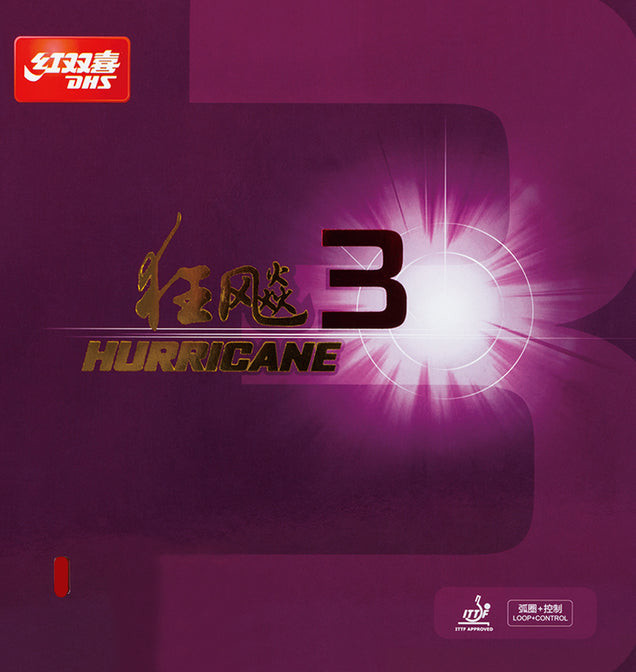
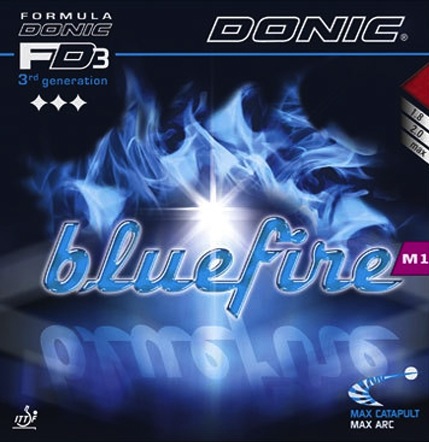
DHS Hurricane 3 (8.5 rating) is a forgiving, hard tacky Chinese rubber with extreme spin, low throw angle, and deep version ecosystem. Donic Bluefire M1 (8.4 rating) is the hardest, fastest Bluefire variant (9.7/10 speed), producing heavy dipping topspin with high throw angle—demanding advanced technique and losing performance after 1-2 months.
Hurricane 3 suits attacking players embracing Chinese loop technique, boosting their rubbers, and prioritizing spin and control over speed. Bluefire M1 is exclusively for advanced attackers (1500+ USATT) wanting hard, fast speed with premium looping power and high throw angles. H3’s extreme spin (98 rating) vs M1’s speed (9.7/10) highlight different priorities. H3 is forgiving and teaches technique; M1 is unforgiving and speed-focused. H3 sustains long-term with boost maintenance; M1’s factory boost fades quickly.
FAQ
Which rubber is harder to control?
M1. Its hardness and speed demand advanced technique and arm acceleration. H3’s tackiness aids spin control even at high speeds.
Can I block and play short game with each?
H3 is excellent for short game due to tackiness. M1 struggles with fine touch due to hardness; it’s primarily a looping weapon.
Which rubber stays good longer?
H3 with proper boost maintenance. M1’s factory boost expires after 1-2 months, requiring frequent replacement or re-evaluation.