DHS Hurricane 3-NEO vs Yasaka Rakza Z: Which Should You Buy?
| DHS Hurricane 3-NEO | Yasaka Rakza Z | |
|---|---|---|
| Our rating | 8.5/10 | 8.6/10 |
| Best side | Forehand | Forehand |
| Control | medium-high | high |
| Speed | offensive (medium passive, high when fully engaged) | medium |
| Spin | extreme | extreme |
| Sponge hardness | 39-41 degrees (DHS scale), also offered in 37 and 38 | 50 degrees (medium-hard; Extra Hard version around 57 degrees) |
| Type | tacky inverted (NEO internal energy sponge) | hybrid tacky tensor |
| Uncut weight | 70 g | 72 g |
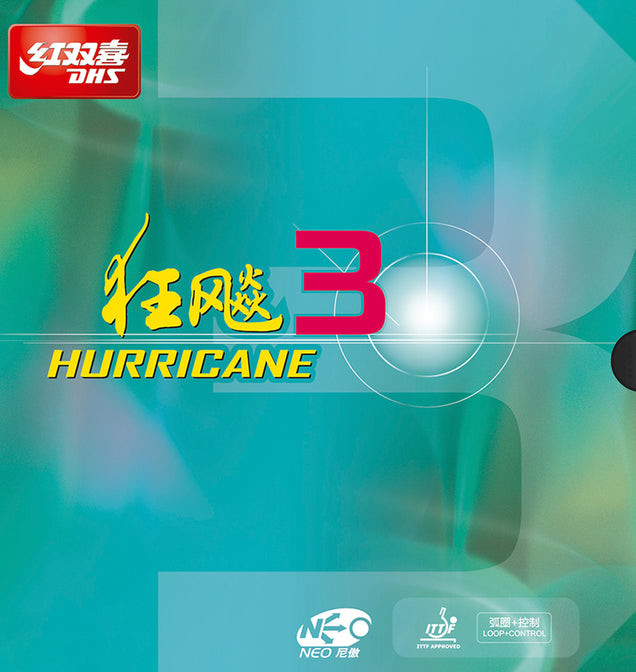
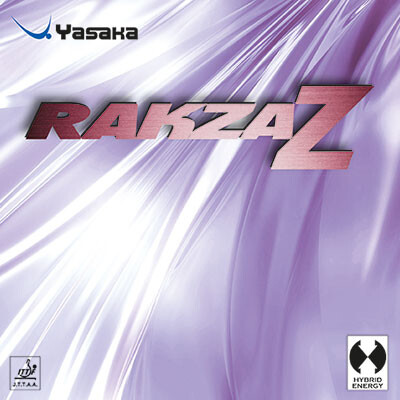
We may earn a commission from links on this page. Learn more.
A rare case where the “loser” only trails on one axis
Yasaka Rakza Z edges out DHS Hurricane 3-NEO on the overall rating, 8.6 to 8.5, and the axis data explains why: it leads on five of six measured axes. Speed favors Rakza Z by 0.3 (8.7 vs 8.4), spin by 0.2 (9.5 vs 9.3), control by 0.5 (9.2 vs 8.7), throw by 0.7 (6.5 vs 5.8), and durability by 0.8 (8.3 vs 7.5). None of these individually is a blowout, but stacked together in the same direction, they add up to a genuinely more complete rubber on paper.
Where Hurricane 3-NEO still wins, and it’s not small
Tackiness is the one axis Hurricane 3-NEO wins, and it does so by 1.5 points (8.1 vs 6.6) — the largest single-axis gap in this comparison. That’s a real, usable advantage for short-game manipulation, serve variation, and low-speed backspin receives where surface grip matters more than sponge-driven kick. Rakza Z is still tacky by rubber standards (6.6 is not a low number), but Hurricane 3-NEO’s topsheet grips noticeably harder.
Two “heavy rubber” complaints, two different mechanisms
Both rubbers carry documented weight-related cons, and the spec rows explain why they feel heavy for different reasons. Rakza Z weighs about 72 grams uncut against Hurricane 3-NEO’s 70 grams — close in absolute terms — but Rakza Z’s sponge sits at roughly 50 degrees, with an Extra Hard version near 57, compared to Hurricane 3-NEO’s 39 to 41 degree range. A harder sponge transmits more shock back through the blade on full-power strokes, which lines up with Rakza Z’s own documented con: “heavy rubber that can cause arm or wrist fatigue, especially on carbon blades.” Hurricane 3-NEO’s fatigue risk, by contrast, comes from needing to “hit hard to unlock pace” on a lower-throw, tacky sheet — a technique-driven demand rather than a pure sponge-hardness one.
Throw angle: the biggest functional gap
The 0.7-point throw advantage for Rakza Z (6.5 vs 5.8) is one of the larger practical differences here. Rakza Z’s own cons note it needs “a more closed blade angle” precisely because of that higher throw, while Hurricane 3-NEO’s low throw is flagged directly as a factor making “consistent looping harder to learn.” If you’re still building a reliable loop trajectory, that throw gap matters more than the headline spin numbers.
Value: roughly a wash, on the evidence given
Both rubbers are independently pitched as value plays against premium rivals — Hurricane 3-NEO’s pros cite “exceptional value,” while Rakza Z’s pros claim “great value versus Dignics 09C and Tenergy.” Nothing in the review data lets us rank these against each other on price, so treat this as a wash rather than a deciding factor either way.
Should you switch?
If you’re on Hurricane 3-NEO and the low throw angle is costing you consistency on opening loops, Rakza Z’s 0.7-point throw edge plus modest gains everywhere except tackiness make it a reasonable step up — provided you’re ready for a heavier, harder-sponge feel and the arm demands that come with it, particularly on carbon blades. If you’re on Rakza Z purely for tackiness-adjacent short game and want more surface grip specifically, Hurricane 3-NEO’s 1.5-point tackiness edge is the one thing it can offer that Rakza Z documented cannot match — though you would give back speed, control, throw, and durability to get it.
What the review sources actually emphasize
Revspin and RacketInsight both frame Rakza Z’s strength around “low-slip spin” and “long dwell time for a hard rubber” — language that explains why it can lead on control and spin at the same time despite a harder sponge. That combination is unusual; hard sponges more often trade control for power. Hurricane 3-NEO’s own source material, by contrast, keeps returning to community-aggregated spin scores and first-attack loop strength, which is consistent with its narrower but deeper tackiness-driven identity rather than Rakza Z’s broader, more balanced axis profile.
Bottom line
This is the closest thing in this data set to a genuine “better rubber, same price tier” result — Rakza Z leads on five axes by modest but consistent margins, and Hurricane 3-NEO’s only real answer is a 1.5-point tackiness advantage that matters specifically for players who lean on surface grip in the short game.
Frequently asked questions
Is Yasaka Rakza Z better than DHS Hurricane 3-NEO?
On the measured axes, yes, in most respects -- it leads on speed, spin, control, throw, and durability, and edges the overall rating 8.6 to 8.5. Hurricane 3-NEO's one clear advantage is tackiness, where it leads by 1.5 points.
Which rubber has a more forgiving throw angle for looping?
Yasaka Rakza Z, by 0.7 points (6.5 vs 5.8). Hurricane 3-NEO's documented con specifically flags its low throw angle as something that makes consistent looping harder to learn.
Does Rakza Z cause more arm fatigue than Hurricane 3-NEO?
Its own review data says the sponge hardness, roughly 50 degrees versus Hurricane 3-NEO's 39 to 41, can cause arm or wrist fatigue especially on carbon blades. Hurricane 3-NEO's fatigue risk comes from a different source -- needing full-power strokes to unlock its pace.
Which rubber has better tackiness for short game and serves?
Hurricane 3-NEO, by 1.5 points (8.1 vs 6.6), the largest single-axis gap between these two rubbers.