Butterfly Zhang Jike ALC vs Donic Persson Powerplay: Which Should You Buy?
| Butterfly Zhang Jike ALC | Donic Persson Powerplay | |
|---|---|---|
| Our rating | 8.7/10 | 8.2/10 |
| feel | medium-hard but flexible, crisp carbon with long dwell | Hard outer koto plies with internal foil damping layers; crisp feel with excellent feedback |
| handle | FL/ST/AN | FL |
| plies | 5W+2 Arylate-Carbon (5 wood plies with 2 Arylate-Carbon layers) | 7-ply all wood |
| speed | OFF | OFF |
| thickness_mm | 5.8 | 5.9 |
| weight_g | 88 | 90 |
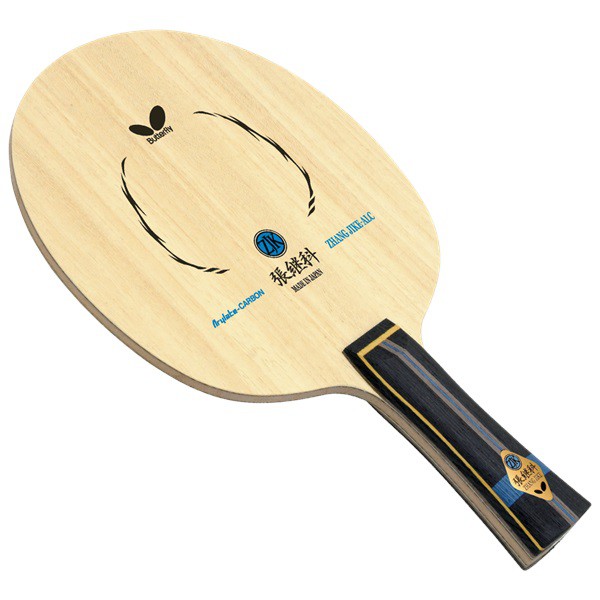
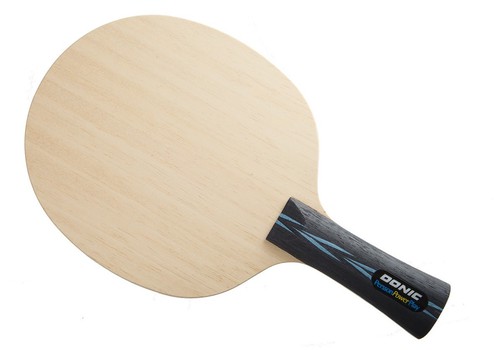
We may earn a commission from links on this page. Learn more.
The Butterfly Zhang Jike ALC delivers OFF-class speed with soft, flexible carbon feel and long dwell time ideal for looping and spin impartation. It offers strong control relative to other ALC and ZLC blades and works well with both tensor and tacky Chinese rubbers, though its smaller sweet spot and premium price limit appeal.
The Donic Persson Powerplay is a seven-ply all-wood blade with hard koto plies and internal foil damping, delivering exceptional control under pressure with crisp, feedback-rich feel. It suits both shakehand and penhold players seeking reliable OFF pace with outstanding vibration damping.
Choose Zhang Jike for carbon speed and spin-loop emphasis. Choose Persson Powerplay for all-wood reliability, vibration damping, and exceptional control feedback.
FAQ
Speed comparison?
Both rate OFF. Zhang Jike feels faster; Persson Powerplay feels more controlled.
Loop and spin specialty?
Zhang Jike excels at looping with long dwell; Persson Powerplay loops well but is less dwell-focused.
Sweet spot size?
Zhang Jike has smaller sweet spot; Persson Powerplay has stable, forgiving sweet spot.
Rubber pairing?
Zhang Jike pairs with tensor and tacky Chinese rubbers; Persson Powerplay works with any quality rubber.