Butterfly Timo Boll ZLC vs Tibhar Stratus Power Wood: Which Should You Buy?
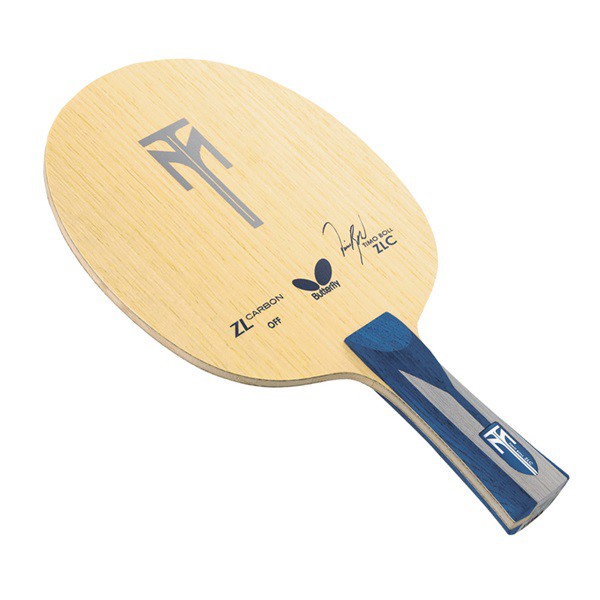
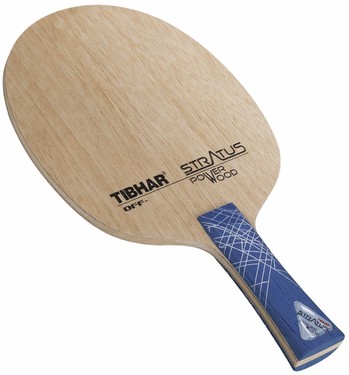
| Butterfly Timo Boll ZLC | Tibhar Stratus Power Wood | |
|---|---|---|
| Our rating | 9.0/10 | 9.0/10 |
| feel | direct and responsive with ZLC dwell | Elastic with long dwell time, lively yet controlled, larger-than-average head and big sweet spot |
| handle | FL/AN/ST | FL / ST / AN |
| head_size | 157 x 150 mm | — |
| plies | 7 plies: Koto / ZLC / Limba / Ayous / Limba / ZLC / Koto (5 wood + 2 ZL Carbon composite) | 5-ply all wood (Limba-Limba-Ayous-Limba-Limba) |
| reaction | 117 | — |
| speed | OFF++ | OFF- |
| thickness_mm | 5.5 | 6.2 |
| vibration | 108 | — |
| weight_g | 85 | 90 |
We may earn a commission from links on this page. Learn more.
Nearly Tied Numbers, Not Nearly Tied Prices
If you only looked at the axis deltas here, you would assume these two blades are functionally the same product. Speed differs by just 0.4 points, 9.3 versus 8.9, ZLC ahead. Control differs by 0.2 points, 9.1 versus 9.3, Stratus Power Wood ahead, yes, the cheaper wood blade edges the premium carbon one here. Stiffness differs by 0.4 points. Hardness differs by 0.7 points, the largest gap in the set and still a modest one. Consistency differs by just 0.2 points. On raw radar numbers, this is the tightest matchup among the comparisons in this dataset.
What the radar does not show is the roughly 200-dollar price gap between a 270-dollar elite ZLC blade and what Reddit r/tabletennis and Tabletennis11’s blog both call the best value 5-ply all-wood blade on the market. That gap is the real story here, not the numbers.
Why the Cheaper Blade Even Competes
The Stratus Power Wood’s control edge, small as it is, comes from its pure 5-ply wood construction, no carbon layers to add stiffness or reduce feel. Reviewers describe a long dwell time that produces a high, long arc and heavy spin on loops, per Tabletennis11, plus a larger-than-average head and a genuinely forgiving sweet spot. The ZLC counters with dual ZL Carbon layers engineered specifically to extend dwell time despite the speed on offer, according to Megaspin’s product listing, which is precisely why the gap on control is only 0.2 points rather than the wider split you would expect between an elite carbon blade and a wood blade at a fraction of the price.
What the Cons Lists Reveal
The ZLC’s weaknesses are about accessibility, not performance: a steep learning curve, a premium price limiting who can justify buying it, and a reactive feel to incoming spin that makes push and short-game returns harder to control, per Revspin. The Stratus Power Wood’s weaknesses are much smaller in scope, a slightly head-heavy balance and backhand blocks that reward precise timing, and notably, its own listing admits it plays faster than its OFF- rating suggests, undercutting the idea that you are sacrificing much speed at all by choosing the budget option.
Should You Switch
Here is the honest read: if you are playing on a Stratus Power Wood today and considering a ZLC purely for performance reasons, the radar numbers do not support it. A 0.4-point speed gain and a 0.2-point control loss is not a meaningful upgrade for most intermediate and advancing players. You would be paying an elite-blade premium for numbers this close. The upgrade only makes sense if you are specifically chasing tournament-level speed and flat-hit power at close-to-table distance and have the advanced technique the ZLC’s own reviewers say is required, or if you have specifically outgrown what an all-wood blade’s dwell characteristics can offer for your particular stroke.
Going from ZLC to Stratus Power Wood as a second, cheaper blade is a much easier call, particularly if the ZLC’s numb feel and reactive spin sensitivity noted by Revspin have been working against your short game.
Fit and Setup
The ZLC is aimed squarely at elite attackers and tournament players running aggressive topspin and flat-hit games close to mid distance from the table. The Stratus Power Wood is aimed at beginner-to-intermediate two-winged loopers who want real attacking speed without the price or the learning curve. Given how close the radar numbers actually land, the deciding factor for most players should be budget and current skill level, not raw performance. The data here just does not support paying a large premium purely for marginal gains on speed, control, stiffness, hardness, or consistency.
Frequently asked questions
How different are the Timo Boll ZLC and Tibhar Stratus Power Wood really?
On the radar data, barely. Every axis gap is 0.7 points or smaller, the tightest match in this comparison set. The real difference is price, roughly 200 dollars, and the level of technique each blade assumes.
Does the cheaper Stratus Power Wood actually beat the ZLC on any axis?
Yes, control, by 0.2 points, 9.3 versus 9.1, though that gap is small enough to be within normal review variance.
Is the Timo Boll ZLC worth buying if I am not an elite player?
It is positioned for elite attackers and tournament professionals. For intermediate players, the radar gap over the Stratus Power Wood is too small to justify the price difference on performance alone.
Who should buy the Stratus Power Wood instead of the ZLC?
Beginner-to-intermediate two-winged loopers who want real attacking speed without the ZLC's steep learning curve or price, per the Stratus Power Wood's own recommendation.