Butterfly Timo Boll ZLC vs Nittaku Acoustic Carbon: Which Should You Buy?
| Butterfly Timo Boll ZLC | Nittaku Acoustic Carbon | |
|---|---|---|
| Our rating | 9.0/10 | 8.8/10 |
| feel | direct and responsive with ZLC dwell | Medium-hard outer carbon with surprising wood-like dwell and ball retention; crisp sound on contact |
| handle | FL/AN/ST | FL, ST (also Large Handle and Chinese Penhold variants available) |
| head_size | 157 x 150 mm | — |
| plies | 7 plies: Koto / ZLC / Limba / Ayous / Limba / ZLC / Koto (5 wood + 2 ZL Carbon composite) | 7 plies — 5 wood + 2 FE carbon (Limba - FE Carbon - Limba - Tung - Limba - FE Carbon - Limba) |
| reaction | 117 | — |
| speed | OFF++ | OFF |
| thickness_mm | 5.5 | 5.5mm |
| vibration | 108 | — |
| weight_g | 85 | approx 90g |
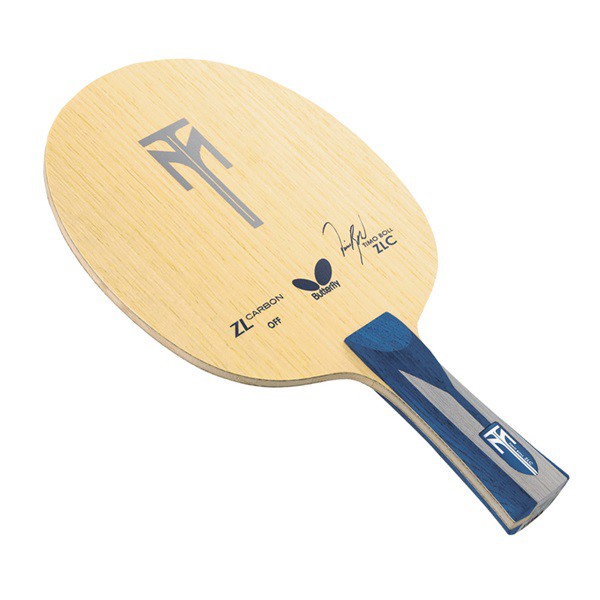
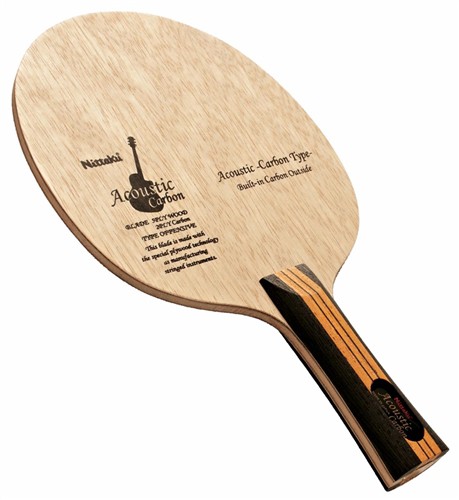
We may earn a commission from links on this page. Learn more.
Nearly Identical on the Two Axes That Matter Most
Speed and control are the two numbers most players check first, and here they are almost a dead heat: the Timo Boll ZLC leads by just 0.1 points on speed, 9.3 versus 9.2, and by an identical 0.1 points on control, 9.1 versus 9.0. Neither gap survives contact with real play. You will not feel a 0.1-point difference on either axis across a training session, let alone a single rally. If speed and control were the whole story, this comparison would not be worth writing.
They are not the whole story. Stiffness is where the real gap sits, 1.1 points, with the Acoustic Carbon at 6.4 against the ZLC’s 5.3. That matches the underlying construction. The ZLC’s dual ZL Carbon layers are specifically engineered by Butterfly to extend dwell time, per Megaspin’s product listing and reviews, a deliberate design choice to keep the blade from feeling like a stiff plank despite the speed on offer. Consistency also separates the two by 0.7 points in the ZLC’s favor, 9.3 versus 8.6, and hardness by a smaller 0.3 points.
What Elite Actually Means Here
The ZLC’s own positioning does not hedge: elite attackers and tournament professionals. Its cons list backs that up specifically, a steep learning curve requiring advanced technique to unlock full potential, and an initial numb feel that demands an adaptation period before consistent play, according to Revspin’s blade database. At 270 dollars, per its listing, it also sits at a genuinely premium price point that reviewers flag as limiting accessibility.
The Acoustic Carbon is pitched one tier down in ambition, priced below comparable Butterfly carbon blades per its own pros list, while still delivering a speed score that TableTennisDaily and Revspin both note matches the Timo Boll ALC and beats the Viscaria and Tenor. That is a specific, checkable claim about where it sits in Butterfly and Nittaku’s competing carbon lineups, not a vague marketing line.
Sources Worth Checking Yourself
The ZLC’s numbers come from Megaspin’s product page, Megaspin’s separate customer reviews section, and Revspin’s blade database, three independently maintained sources rather than one seller’s copy. The Acoustic Carbon draws on Revspin, a dedicated TableTennisDaily equipment thread, and the spec database at TableTennisReference. Worth opening those pages yourself before spending on either blade, particularly given the ZLC’s price.
Should You Switch
If you already own a ZLC, the Acoustic Carbon is not really an upgrade path. You would be giving up 0.1 points of speed and control, which is immaterial, while trading the ZLC’s extended dwell and 0.7-point consistency edge for a stiffer, slightly less consistent blade, in exchange for a lower price and a wood-like touch some players prefer. That is a lateral move driven by feel and budget, not performance.
Coming from the Acoustic Carbon toward the ZLC only makes sense if you specifically want elite-tier speed and have the advanced technique the ZLC’s own reviewers say is required to unlock it. Otherwise the numb feel and adaptation period are real costs for a speed gain you will barely register on the radar numbers.
Fit and Setup
Both are OFF-class carbon blades at nearly identical thickness, 5.5mm for both, but the ZLC is built for aggressive topspin and flat-hit styles played close to mid distance from the table by players who already finish points fast. The Acoustic Carbon is built for players who loop close to mid-table and specifically want to pair it with sticky or tacky forehand rubber like NEO Hurricane 3, which its reviewers note it absorbs without trampolining, a pairing consideration the ZLC’s own reviews do not emphasize in the same way.
Frequently asked questions
Is the Timo Boll ZLC actually faster than the Nittaku Acoustic Carbon?
Only by 0.1 points on the radar, a statistical tie you will not feel in play. The real difference is stiffness, where the Acoustic Carbon is 1.1 points firmer, and price, where the ZLC costs significantly more.
Is the Timo Boll ZLC worth the 270-dollar price tag?
Its own reviewers describe it as built for elite attackers and tournament professionals with a steep learning curve and an initial numb feel. If you do not already have advanced technique, the price premium is hard to justify over the Acoustic Carbon.
Which blade is more consistent?
The Timo Boll ZLC, by 0.7 points, 9.3 versus 8.6. The Acoustic Carbon's own cons note the bounce can feel unruly until technique adapts.
What rubber works best with the Nittaku Acoustic Carbon?
Sticky or tacky rubber, per its own reviewers, especially NEO Hurricane 3 on the forehand, which the blade absorbs without trampolining.