Butterfly Timo Boll Spirit vs Tibhar Stratus Power Wood: Which Should You Buy?
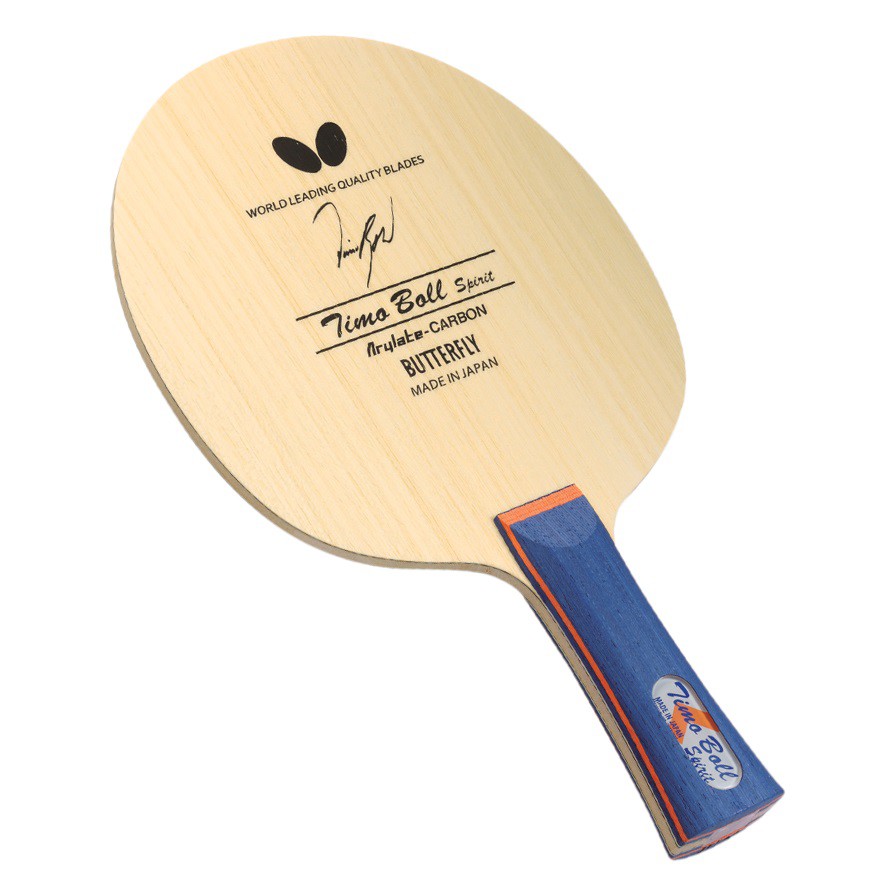
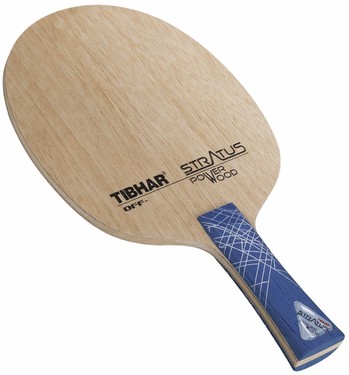
| Butterfly Timo Boll Spirit | Tibhar Stratus Power Wood | |
|---|---|---|
| Our rating | 9.0/10 | 9.0/10 |
| Feel | Medium and offensive with notable flex and long dwell, crisp but forgiving for a carbon blade | Elastic with long dwell time, lively yet controlled, larger-than-average head and big sweet spot |
| Handle | FL / ST / AN | FL / ST / AN |
| Plies | 5 wood plies plus 2 arylate-carbon outer layers (5W and 2 ALC) | 5-ply all wood (Limba-Limba-Ayous-Limba-Limba) |
| Speed | OFF | OFF- |
| Sponge thickness | 5.7 mm | 6.2 mm |
| Weight | 87 g | 90 g |
We may earn a commission from links on this page. Learn more.
Two 9-Out-of-10 Blades, Two Different Budgets
The Timo Boll Spirit and the Tibhar Stratus Power Wood both carry a 9 out of 10 aggregate rating, which on paper makes this look like a coin flip. It is not, because the two blades are built from different materials for different budgets and different stages of a player’s development. The Spirit is a 5-ply wood plus 2-ply arylate-carbon composite. The Stratus Power Wood is pure 5-ply wood with no carbon at all. That distinction explains almost every number in the radar comparison.
Where the Numbers Diverge
Control tips 0.7 points toward the Stratus Power Wood, 9.3 versus 8.6, a meaningful gap and consistent with what an all-wood blade typically offers over a carbon composite: more time on the ball, less runaway energy on mishits. Hardness and stiffness both run in the Stratus Power Wood’s favor too, by 0.7 and 0.6 points respectively, meaning the Tibhar is the softer, more flexible blade of the pair despite carbon usually being associated with stiffness. The takeaway is that the Spirit’s carbon layers make it the firmer-feeling blade of these two, not the Stratus.
Speed is close, just a 0.3-point edge to the Stratus Power Wood, 8.9 versus 8.6, which is notable on its own. An all-wood blade essentially matching a carbon-composite blade for pace is unusual, and it is exactly why Tabletennis11’s blog and Reddit’s r/tabletennis reviewers keep calling this the best value 5-ply all-wood blade on the market. Weight runs 1.1 points apart on the radar, tracking with the 3-gram real-world difference, 87g for the Spirit versus 90g for the Stratus Power Wood.
What the Pros and Cons Actually Tell You
The Stratus Power Wood’s own cons list flags that it plays faster than its OFF- rating suggests, a specific, checkable claim rather than a generic complaint. It means the nominal OFF- speed classification undersells how it actually performs, consistent with the near-tie on the speed axis above. Its other weaknesses are minor: a slightly head-heavy balance and backhand blocks that reward precise timing.
The Spirit’s cons are about ceiling, not floor. Its OFF speed can run away from players with weak technique, and it carries a premium price tag compared with plainer offensive blades. That is the core trade-off: the Stratus Power Wood is forgiving and inexpensive, the Spirit is more demanding and expensive, and the small numeric gaps in the radar mostly just confirm that framing.
Should You Switch
If you are currently playing on a Stratus Power Wood and wondering whether to upgrade to a Spirit, the honest answer based on the radar data is that you would be trading away 0.7 points of control and a softer, more forgiving feel for very little real speed gain, just 0.3 points, which most players will not detect blind. The upgrade only makes sense if you have outgrown the Stratus Power Wood’s ceiling specifically because you want to add carbon-boosted acceleration to combination styles like counter-hitting and fast blocking that the Spirit’s reviewers highlight.
Going the other direction almost never makes sense on performance grounds. Nobody trades a Spirit for a Stratus Power Wood to get better. It only makes sense as a second, cheaper blade, or as a first blade for a beginner who is not ready for the Spirit’s premium price or its less forgiving carbon feel.
Fit and Setup
Both blades share the same handle options, FL, ST, and AN, and similar thickness, 5.7mm versus 6.2mm, so this is not a case of radically different ergonomics. The real decision is whether you are a beginner-to-intermediate two-winged looper on a budget, which points to the Stratus Power Wood, or an intermediate-to-advanced attacker who wants one premium carbon blade for looping, blocking, and counterplay, which points to the Spirit.
Frequently asked questions
Is the Tibhar Stratus Power Wood really as fast as a carbon blade like the Spirit?
Nearly. The radar gap is just 0.3 points, 8.9 versus 8.6, and multiple reviewers call it the best-value all-wood blade on the market partly because it undersells its own OFF- speed rating.
Which blade offers more control?
The Stratus Power Wood, by 0.7 points, 9.3 versus 8.6. It is a pure 5-ply all-wood build with no carbon layers, which typically means more time on the ball.
Should a beginner buy the Timo Boll Spirit or the Stratus Power Wood?
The Stratus Power Wood, based on price and its own recommendation for beginner-to-intermediate two-winged loopers. The Spirit is aimed at intermediate-to-advanced attackers and costs significantly more.
Is the Spirit worth the extra price over the Stratus Power Wood?
Only if you specifically want carbon-boosted acceleration for combination styles like fast blocking and counter-hitting. On the radar data alone, the performance gap does not obviously justify the price gap for most players.