Butterfly Timo Boll Spirit vs Stiga Carbonado 290: Which Should You Buy?
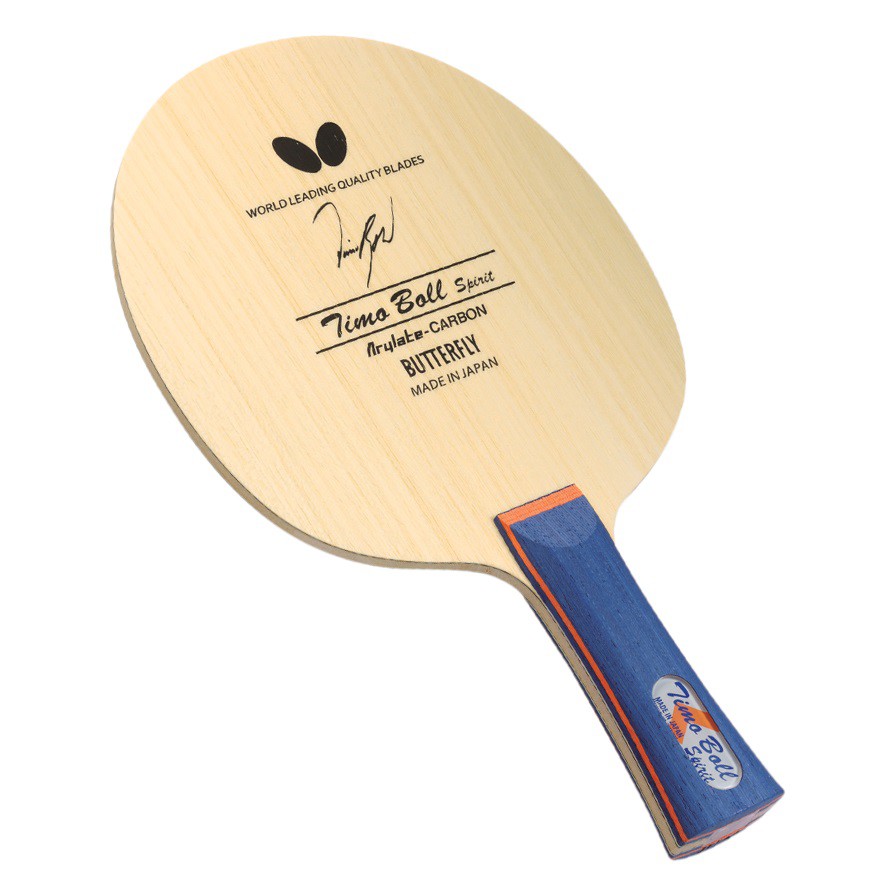
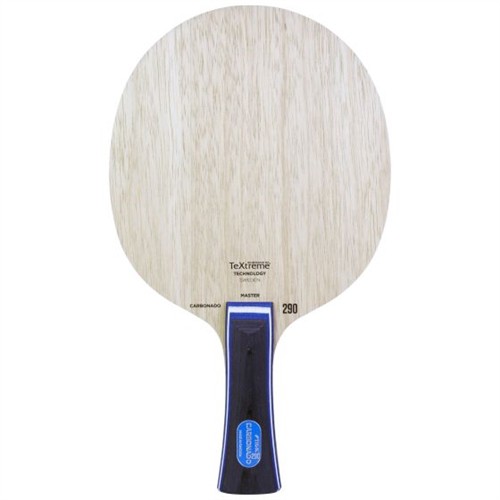
| Butterfly Timo Boll Spirit | Stiga Carbonado 290 | |
|---|---|---|
| Our rating | 9.0/10 | 8.3/10 |
| feel | Medium and offensive with notable flex and long dwell, crisp but forgiving for a carbon blade | very stiff, hard, crisp and direct carbon feel with a high-pitched sound; fast and linear with a low throw |
| handle | FL / ST / AN | FL |
| plies | 5 wood plies plus 2 arylate-carbon outer layers (5W and 2 ALC) | 5 wood + 2 carbon (7-ply), TeXtreme carbon |
| speed | OFF | OFF+ |
| thickness_mm | 5.7 | 6.2 |
| type | — | OFF+ |
| weight_g | 87 | 95 |
We may earn a commission from links on this page. Learn more.
Same Consistency Score, Wildly Different Everything Else
Here is the first thing worth flagging: the Timo Boll Spirit and the Stiga Carbonado 290 score identically on consistency, 9.4 apiece. If you only looked at that one number you would assume these are interchangeable blades. They are not. Weight is where they diverge hardest, a 2.9-point gap on the aggregated radar, which lines up with the actual scale numbers in the spec sheet: the Carbonado 290 typically runs 95 grams against the Spirit’s 87 grams. An 8-gram difference in a paddle you hold for an hour sounds trivial until you have actually swung both.
Hardness is nearly as wide a gap, 8.1 versus 6.1, a full 2.0 points. Stiga’s own doubled 200-gram TeXtreme carbon layers are the reason. TTGearLab’s lab teardown and ExpertTableTennis’s full review both describe the Carbonado 290 as stiff and direct with a distinctly higher-pitched sound off the blade, while Greg’s Table Tennis Pages calls the Spirit crisp but forgiving by comparison. Stiffness itself runs 1.8 points apart, 7.3 versus 5.5, reinforcing the same story from a different angle: this is not a subtle difference in feel, it is two different categories of blade.
Speed and Control: Real but Secondary
Speed favors the Carbonado 290 by 0.8 points, 9.4 versus 8.6, and that tracks with its OFF+ rating against the Spirit’s plain OFF classification. Stiga’s own reviewers on Revspin rate it on par with a Jun Mizutani ZLC-class blade, which is elite-tier pace. Control runs 0.4 points to the Carbonado 290 as well, 9.0 versus 8.6, which is a genuinely small gap you would be hard-pressed to feel rally to rally.
What the Cons Lists Actually Warn You About
The Carbonado 290’s own listed weaknesses are specific and consistent with the hardness and weight numbers: a very low throw that can cause netting until you adapt your bat angle, reduced consistency over long rallies for some techniques, and a poor match for chopping with long pimples. Reddit’s r/tabletennis search results and the TableTennisDaily review thread both echo that this is a blade that rewards players who already have a fast, compact stroke. It will not teach you one.
The Spirit’s cons run the opposite direction: its complaint is that the OFF speed can run away from players with weak technique, which is a gentler failure mode than the Carbonado 290’s low-throw netting problem. Reviewers consistently rate the Spirit as more forgiving of imperfect technique, not less.
Should You Switch
If you play with the Timo Boll Spirit today and are eyeing the Carbonado 290 because it sounds faster, the 0.8-point speed gap is real, but you are also taking on 8 extra grams, a much stiffer feel, and a lower, less forgiving throw angle. That is worth it only if you are already an aggressive, technically compact attacker or offensive penholder finishing points at or near the table, exactly the player ExpertTableTennis’s review says the blade is built for. If your game leans on long rallies, backspin looping from mid-distance, or you play with long pimples anywhere on your racket, stay with the Spirit or look elsewhere.
Going from Carbonado 290 to Spirit makes sense if the low throw has been causing you to net returns, or if 95 grams is wearing out your wrist over a long session. The Spirit’s lighter build and higher throw angle are specifically what the Carbonado’s own reviewers say it lacks.
Fit and Setup
The Carbonado 290’s premium price sits at the high end of the blade market, per its own reviewers, and it demands rubbers and a stroke that can handle its stiffness without spraying the ball. It is not a beginner’s second blade. The Spirit remains the more universal recommendation for intermediate to advanced players who want one blade that covers looping, blocking, and counterplay without demanding elite-level compact technique first.
Frequently asked questions
Is the Stiga Carbonado 290 too stiff for intermediate players?
Its own reviewers frame it as built for advanced, aggressive attackers with compact technique. At 7.3 stiffness versus the Spirit's 5.5, and 8g heavier, it is a notably firmer, heavier blade that will feel unforgiving without a fast stroke already in place.
Do the Spirit and Carbonado 290 really have the same consistency score?
Yes, both land at 9.4 on the aggregated radar. That number alone does not capture how differently they play. The Carbonado 290 achieves it through stiffness and stability, the Spirit through a softer, more forgiving feel.
How much heavier is the Carbonado 290?
About 8 grams in typical units, 95g versus 87g for the Spirit, which shows up as a 2.9-point gap on the radar's weight axis.
Can the Carbonado 290 handle long pimples?
No. Its own cons list specifically states it is not suited to chopping with long pimples.