Butterfly Tenergy 80 vs Yasaka Mark V: Which Should You Buy?
| Butterfly Tenergy 80 | Yasaka Mark V | |
|---|---|---|
| Our rating | 8.8/10 | 8.0/10 |
| best_side | both | both |
| control | medium-high | 9.5 |
| speed | 13.5/14 | 8.4 |
| spin | 11.2/12 | 8.5 |
| sponge_hardness | 36° | medium (around 43 degrees ESN) |
| type | tensor inverted (Spring Sponge) | inverted |
| weight_uncut_g | 67 | 47 |

We may earn a commission from links on this page. Learn more.
Different rubbers for different eras - and that shows in every axis
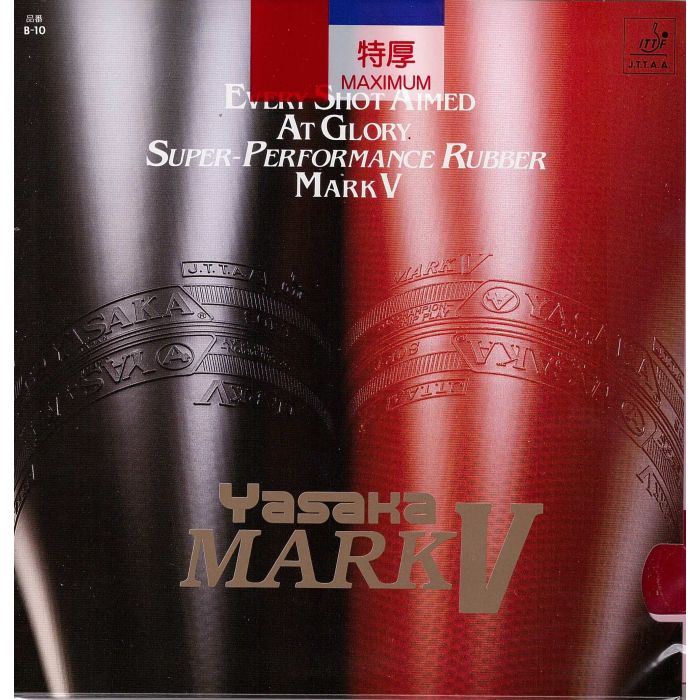
Butterfly Tenergy 80 and Yasaka Mark V are 0.8 rating points apart (8.8 vs 8.0) but the axis deltas make clear this is not really a close contest on outright performance: Tenergy 80 leads speed by 1.3 (9.3 vs 8.0), spin by 1.2 (9.4 vs 8.2), and throw by 1.5 - the single largest gap in this comparison (5.9 vs 4.4). Three separate axes each show a full point or more of separation, which is a genuinely large, feel-able gap on all three, not noise.
Control is the outlier axis, and it goes the wrong way for a modern-tensor-beats-classic-rubber story: Tenergy 80 leads by only 0.3 (9.0 vs 8.7), and Mark V’s own specRow control figure of 9.5 and its pros list - class-leading control and ball placement that several reviewers rate near or at a perfect 10 - suggest that on pure directional control, Mark V is at least Tenergy 80’s equal, maybe better. That is the whole reason this rubber has survived for decades: it does not compete with modern tensors on power, and it is not trying to.
The plastic ball problem nobody puts in the headline
The single most useful fact in Mark V’s own cons list is easy to miss: it is designed for celluloid balls and performs noticeably worse with modern plastic balls. Every sanctioned match today uses the plastic ball. If you play exclusively in a league, tournament, or club that has moved to plastic, this is not a minor caveat - it is a real performance tax that this rubber’s own reviewers flag, and it is a reason a legacy Mark V recommendation deserves a second look before you buy one for competitive plastic-ball play today.
Durability runs the other way: Mark V leads by a full point (8.7 vs 7.7), and its pros list calls out excellent consistency and sheet-to-sheet uniformity over a very long lifespan - a real advantage for a player who does not want to re-sheet every few months, and one that partly offsets the plastic-ball caveat if you mostly play casually or with celluloid-adjacent gear.
Who should actually buy which
Mark V’s bestFor is explicit: beginners and developing players building technique, plus value-focused allrounders who prize feel and consistency over raw tensor speed. Tenergy 80 is built for upper-intermediate and advanced offensive players who want a faster, more direct, forgiving Tenergy with elite blocking. These are not competing for the same buyer. A beginner reading a Tenergy 80 vs Mark V comparison and picking Tenergy 80 for the higher rating is very likely making the wrong call - Mark V’s forgiving low spin sensitivity (Reddit’s r/tabletennis threads back this reputation up repeatedly) and pocket-friendly price make it the more sensible starting rubber, and the control gap between them is nearly nothing.
Going from Mark V to Tenergy 80 makes sense once you are already looping consistently and hitting a ceiling on speed and spin that Mark V’s below-average spin and flat trajectory (per its own cons) cannot break through. Going from Tenergy 80 back to Mark V rarely makes sense unless you specifically want a much cheaper, extremely durable, high-control rubber for casual or celluloid-ball play and are willing to give up 1.2 to 1.5 points of spin and throw to get it. Weight is a side note here: Mark V is 20 grams lighter uncut (47g vs 67g), which matters more for racket balance than for either rubber’s core performance profile.
One more axis is worth a mention because it cuts against the overall pattern: tackiness slightly favors Mark V, by 0.5 (2.6 vs 2.1). That is a small edge, but it is consistent with Mark V’s reputation among older players for grabbing the ball on serves and short pushes even without tensor-level spin. It will not close the 1.2-to-1.5-point gaps in speed, spin and throw, but it partly explains why some long-time owners, per its own pros list, say they prefer Mark V’s feel to newer sheets even after trying modern tensors.
Frequently asked questions
Is Yasaka Mark V good for beginners?
Yes - its own bestFor summary names beginners and developing players building technique as its core audience, citing forgiving low spin sensitivity and a pocket-friendly price.
Does Mark V work with modern plastic balls?
Not as well as with the ball it was designed for. Its own cons list states it is designed for celluloid balls and performs noticeably worse with modern plastic balls - a real factor if you play sanctioned plastic-ball matches.
How much control do you lose moving from Mark V to Tenergy 80?
Almost none. Control is the smallest gap on the whole radar at just 0.3 (9.0 vs 8.7), against much larger gaps in speed (1.3), spin (1.2) and throw (1.5).