Butterfly Tenergy 64 vs Nittaku Fastarc P-1: Which Should You Buy?
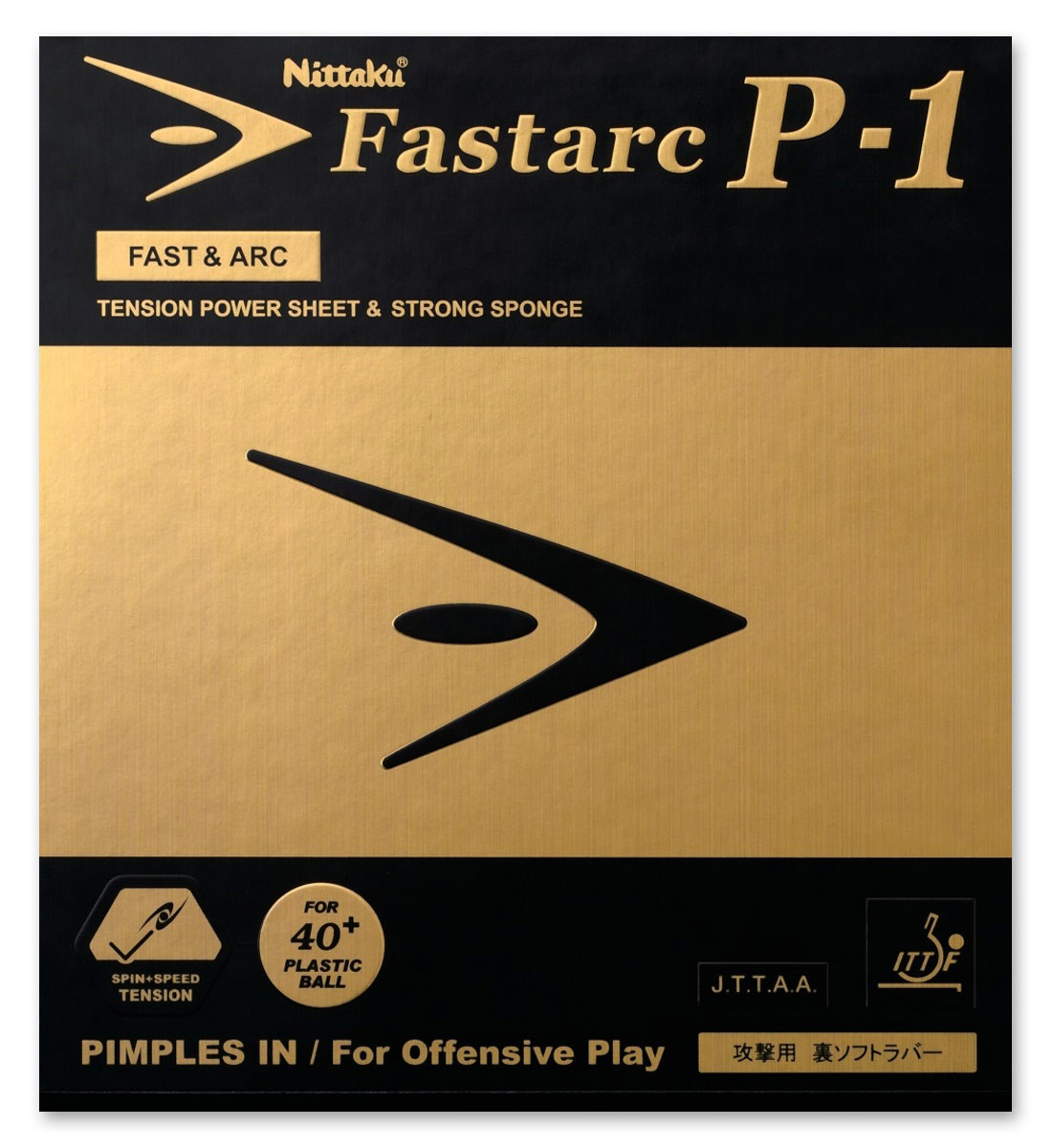
| Butterfly Tenergy 64 | Nittaku Fastarc P-1 | |
|---|---|---|
| Our rating | 8.6/10 | 7.8/10 |
| best_side | both wings, but especially the backhand and for speed-first attackers | forehand |
| control | medium-high | 8.5 |
| speed | very high | 15.5 |
| spin | high but the lowest of the Tenergy line | 12.25 |
| sponge_hardness | approximately 36 degrees on the Butterfly scale (around 48 degrees ESN, plays nearer 45) | 47.5 degrees |
| type | spring sponge high tension tensor, inverted topsheet | tensor |
| weight_uncut_g | approximately 70 (around 47 g cut at 2.1 mm) | 70 |

We may earn a commission from links on this page. Learn more.
Tenergy 64 (8.6) is the fastest Tenergy with effortless acceleration and spin-insensitive design. Fantastic block feel and reliable active blocks. Outstanding backhand rubber, light weight. However, modest short game and premium price; edges can chip.
Fastarc P-1 (7.8) generates impressive spin on power loops despite soft in-play feel. Low spin sensitivity aids blocking and counter-looping; high throw angle provides generous safety margin. Durable German construction; works on all-wood and carbon blades. Very linear and demanding: weak strokes produce error-prone results.
Tenergy 64 suits speed-first attackers, blockers, and backhand players. Fastarc P-1 suits advanced forehand loopers committed to full, technically sound topspin.
FAQ
Which blocks better?
Tenergy 64 has fantastic block feel with reliable active blocks. Fastarc P-1 has low spin sensitivity aiding consistency.
Which is easier for developing players?
Tenergy 64 is more forgiving. Fastarc P-1 is very linear; tentative strokes produce weak results.
Which weights more?
Fastarc P-1 is heavier uncut (70g). Tenergy 64 is light, around 47g cut at 2.1mm.
Which handles all-wood blades better?
Fastarc P-1 suits both all-wood and carbon blades. Tenergy 64 is premium-tier and optimized for fast setups.
Which performs better on backhand?
Tenergy 64 is outstanding backhand rubber. Fastarc P-1 is less suitable due to linearity demands.