Butterfly Tenergy 19 vs Donic Bluestorm Z2: Which Should You Buy?
| Butterfly Tenergy 19 | Donic Bluestorm Z2 | |
|---|---|---|
| Our rating | 8.7/10 | 8.6/10 |
| best_side | forehand | forehand |
| control | high — extended dwell time provides greater margin for error than other Tenergy variants | 8.2 |
| speed | 132 | 8.8 |
| spin | 117 | 9 |
| sponge_hardness | 36 degrees (approx 48 degrees ESN) | 47.5 |
| type | inverted / pimples-in tensor | inverted |
| weight_uncut_g | approx 49 g | 68 |
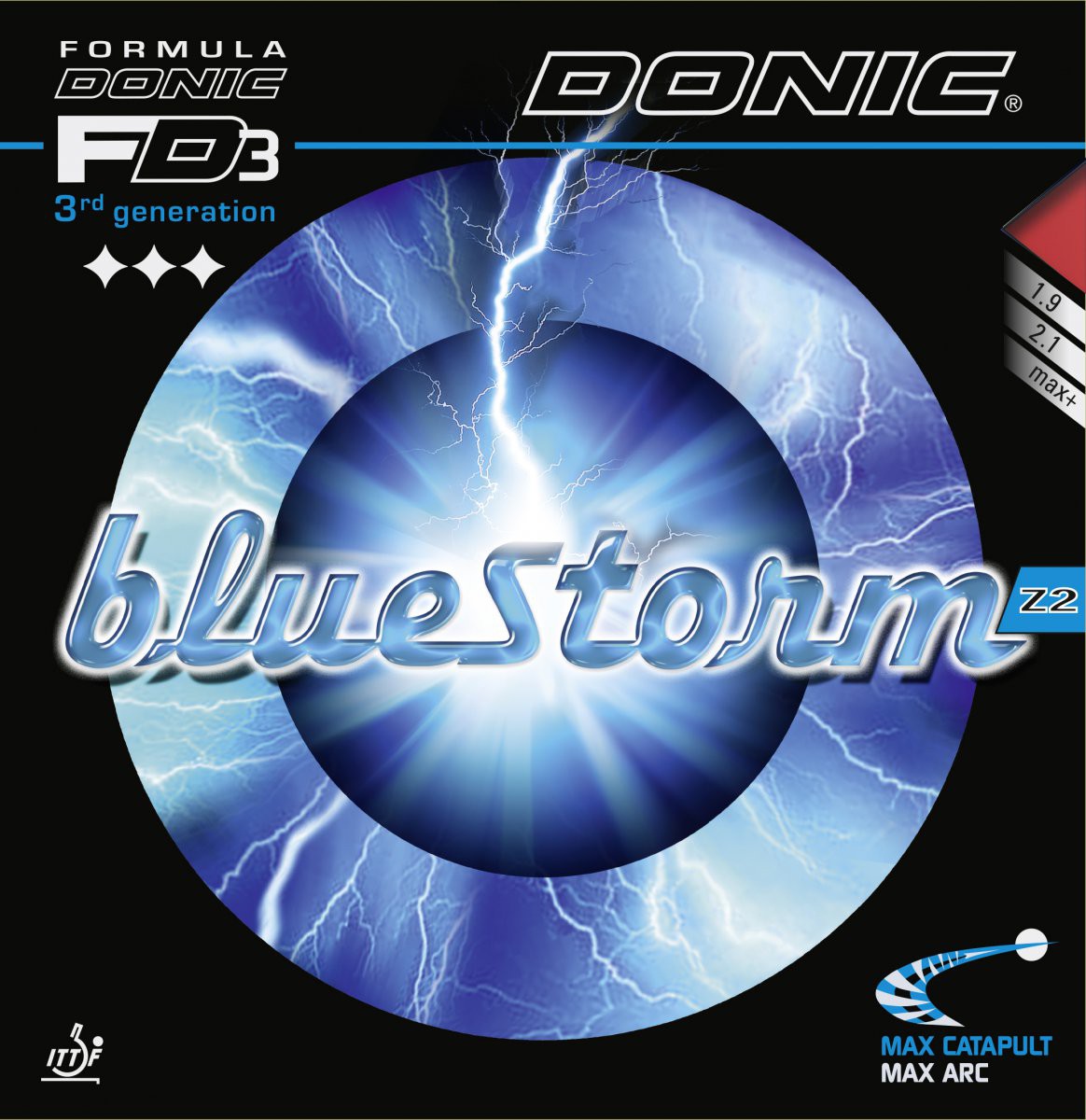
We may earn a commission from links on this page. Learn more.
Tenergy 19 (8.7 rating) and Donic Bluestorm Z2 (8.6 rating) both target intermediate to advanced attackers but approach the game distinctly. Tenergy 19’s extended dwell time provides a larger margin for error on forehand loops and emphasizes spin ceiling over all else. Bluestorm Z2 focuses on counterloop speed and forgiving responsiveness, rated 9.07/10 by 30 independent reviewers.
Tenergy 19 achieves higher spin at 117 versus Bluestorm’s 9, but Bluestorm’s dwell time for a speed-oriented rubber exceeds expectations, bringing unexpected forgiveness. Tenergy’s 132 speed rating represents a different measurement than Bluestorm’s 8.8, reflecting dwell-first design versus speed-first architecture. Tenergy 19’s medium-high throw angle keeps topspin safely on table; Bluestorm’s lower throw angle than M-series rubbers surprises many players.
Bluestorm requires committed full-stroke technique and struggles with heavy incoming spin, demanding active ball reading. Tenergy 19 is sensitive to incoming spin and punishes poor timing and off-center contacts. Both demand advanced technique, but Tenergy rewards dwell and consistency, while Bluestorm demands aggressive energy. Bluestorm’s durability at 80+ hours of use exceeds many competitors. Tenergy requires pairing with carbon or ALC blades for speed expression.
FAQ
Which rubber allows more varied swing speeds?
Tenergy 19 offers extended dwell for controlled loops at varying speeds. Bluestorm requires committed full-stroke technique and misfires on passive shots, offering less speed variation forgiveness.
Which handles serve pressure better?
Tenergy 19 excels in short-game spin and serve control through extended dwell. Bluestorm offers excellent flick shots on both wings but relies more on active technique than dwell forgiveness.
How do price and durability compare?
Tenergy 19 is extremely expensive with consistent quality. Bluestorm is more accessible and offers reported durability of 80+ hours, providing good long-term value despite initial cost.