Butterfly Tenergy 19 vs Donic Bluefire M2: Which Should You Buy?
| Butterfly Tenergy 19 | Donic Bluefire M2 | |
|---|---|---|
| Our rating | 8.7/10 | 8.4/10 |
| best_side | forehand | both |
| control | high — extended dwell time provides greater margin for error than other Tenergy variants | medium-high |
| speed | 132 | high |
| spin | 117 | high |
| sponge_hardness | 36 degrees (approx 48 degrees ESN) | around 42.5 to 45 degrees (medium) |
| type | inverted / pimples-in tensor | tensor inverted |
| weight_uncut_g | approx 49 g | 68 |

We may earn a commission from links on this page. Learn more.
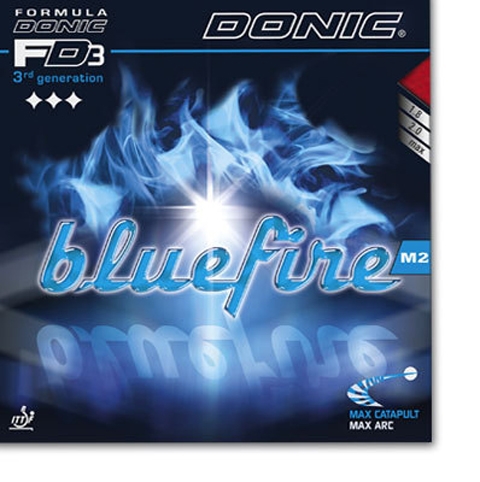
Tenergy 19 is optimized for forehand topspin loops with a larger error margin and customizable thickness. Donic Bluefire M2 is a versatile, backhand-friendly tensor with excellent arc and speed-responsive catapult, strong value versus premium Japanese rubbers, and good control for a lively tensor. M2’s downside is bouncy feel on slow touches—short pushes and passive blocks can go long—and fragile sponge that shrinks when reglued. Tenergy 19 is more forgiving overall and specialized for forehand. M2 is the pick for intermediate-to-advanced players who want a spinny, fast, backhand-friendly tensor at lower cost; Tenergy 19 suits dedicated forehand attackers.
FAQ
Which is better on backhand?
M2 is excellent on backhand for flicks, loops, blocks, and sidespin. Tenergy 19 is forehand-optimized.
Is M2 bouncier?
Yes. M2 is bouncy on slow touches, so short pushes and passive blocks can go long. Tenergy 19 is more controlled.
Who should pick Tenergy 19?
Intermediate-to-advanced forehand-dominant players who prioritize spin on loops and want a large margin for error.
Who should pick M2?
Intermediate-to-advanced players seeking a spinny, fast, backhand-friendly tensor at sensible price, especially loopers who play close-to-mid distance.
Durability?
M2 has fragile sponge that shrinks noticeably when reglued and durability drops when boosted. Tenergy 19 is more durable.