Butterfly Sriver FX vs Victas V>15 Extra: Which Should You Buy?
| Butterfly Sriver FX | Victas V>15 Extra | |
|---|---|---|
| Our rating | 7.8/10 | 8.4/10 |
| best_side | both | forehand |
| control | high | 81 |
| speed | medium | 94 |
| spin | medium-high | 88 |
| sponge_hardness | soft | 47.5 degrees |
| type | high-tension inverted (soft) | inverted |
| weight_uncut_g | 62 | 70 |
We may earn a commission from links on this page. Learn more.
Different price tiers, different jobs
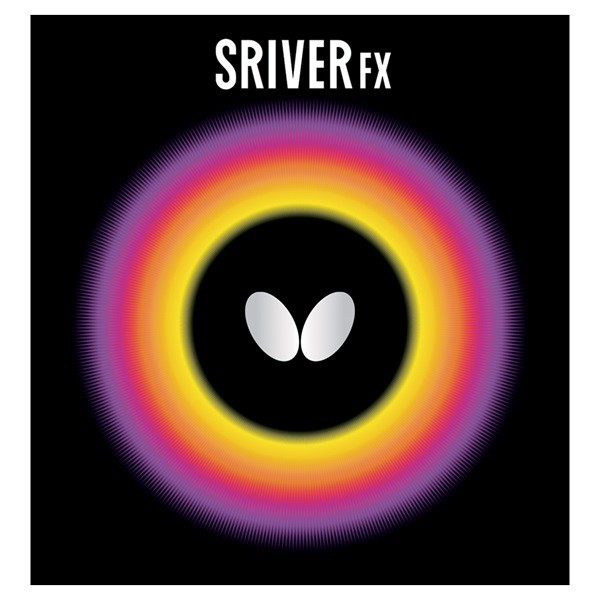
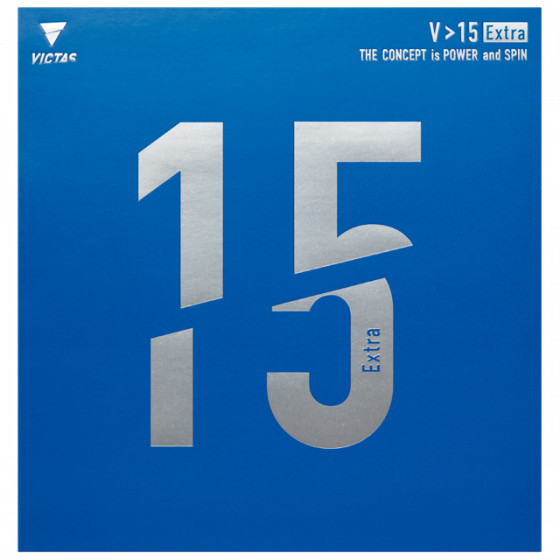
Butterfly Sriver FX (7.8 overall) and Victas V>15 Extra (8.4) are not really competing for the same buyer. The axis gaps make that obvious before you even read a single pro or con: V>15 Extra out-speeds Sriver FX by 1.3 points (9.2 vs 7.9) and out-spins it by 1.1 (9.2 vs 8.1) — both are large, decision-relevant gaps, not rounding noise.
Speed and spin: the real story
A 1.3-point speed gap and a 1.1-point spin gap put these rubbers in different performance classes. Sriver FX was designed in the speed-glue era, and per its own con list it “feels slow and tame unglued” and lacks “the catapult, speed and high throw of modern tensors.” V>15 Extra, reviewed by ExpertTableTennis and discussed on TableTennisDaily’s forums, is built around exactly what Sriver FX is missing: strong forehand topspin speed and spin output, with reviewers describing unusually low sensitivity to incoming spin that makes attacking backspin easier. If raw attacking firepower is what you are shopping for, this is not a close contest.
Tackiness runs the other way
Tackiness is the one axis where Sriver FX wins, and by a wide margin: 2.7 versus 1.1, a 1.6-point gap. Sriver FX’s topsheet is genuinely tacky and touch-friendly, which lines up with its pro list calling out “solid spin for a non-tensor classic” and its strength in blocking and chopping. V>15 Extra’s lower-tack, high-grip topsheet — noted in its pros as strong for serves — plays differently, generating spin through the sponge and stroke rather than through surface tack.
Control is close, throw and durability lean opposite ways
Control differs by only 0.3 points (8.6 vs 8.9) — genuinely marginal, and not the deciding factor here despite Sriver FX’s reputation as a control rubber. Throw favors V>15 Extra by 0.8 (5.6 vs 4.8), consistent with its three-gear performance profile that adapts from flat drives to fine-angle loops. Durability tips back to Sriver FX, 7.1 versus 6.5, a 0.6-point edge — some V>15 Extra owners report the topsheet wearing unevenly, per its own con list, while Sriver FX’s older, simpler construction holds up predictably over time.
What the spec sheet adds
The weight and hardness numbers explain why these feel so different in hand. Sriver FX is a soft, 62-gram uncut sheet; V>15 Extra is a firm 47.5-degree sponge at 70 grams uncut — eight grams heavier and meaningfully harder. That is exactly the profile V>15 Extra’s own con list warns about: it is “demanding on technique” because “errors are amplified by the hard sponge,” and backhand blocking can be inconsistent without precise angles. Sriver FX’s soft sponge is the opposite trade: forgiving of imperfect technique, but unable to generate power on big strokes.
Who should buy which
Sriver FX, at roughly 30 to 40 USD, is aimed at beginners, intermediates, and control-or-defensive players who want a soft, forgiving rubber for blocking, chopping and steady all-round play, and it remains a durable value pick. V>15 Extra is for intermediate-to-advanced offensive players who prioritize aggressive forehand looping and early-ball attacks and want a German tensor that undercuts premium Japanese rubbers like Tenergy 05 on price while keeping most of the performance.
Should you switch?
If you are playing Sriver FX today because you are still building consistency, jumping to V>15 Extra is likely to hurt more than help — the hard sponge will punish exactly the technique gaps Sriver FX was forgiving. If you have outgrown Sriver FX and are looking for more forehand speed and spin without paying Tenergy prices, V>15 Extra is a legitimate, data-backed step up on the two axes that matter most for attacking play.
Bottom line
This is one of the more clear-cut comparisons in this set: V>15 Extra wins decisively on speed and spin, Sriver FX wins on tackiness and durability, and control is close enough to ignore. The choice comes down to whether you want a forgiving classic or a demanding modern tensor, not which one is “better” in some universal sense.
Frequently asked questions
Is Victas V15 Extra really faster than Butterfly Sriver FX?
Yes, by a wide margin — 1.3 points on the speed axis (9.2 versus 7.9) and 1.1 points on spin, making this one of the largest performance gaps in this comparison set.
Which rubber is more forgiving for beginners?
Sriver FX. Its soft sponge and higher tackiness (2.7 versus 1.1) make it more forgiving of technique errors, while V15 Extra's harder sponge is explicitly described in reviews as demanding on technique.
Which rubber lasts longer?
Sriver FX, by 0.6 points on durability (7.1 versus 6.5) — a modest but real edge, partly reflecting reports of uneven topsheet wear on some V15 Extra units.
Should I switch from Sriver FX to V15 Extra?
Only if you have outgrown a soft control rubber and want more forehand speed and spin without paying Tenergy prices. If you are still building consistency, the hard sponge is likely to punish more than it rewards.