Butterfly Rozena vs Nittaku Fastarc P-1: Which Should You Buy?
| Butterfly Rozena | Nittaku Fastarc P-1 | |
|---|---|---|
| Our rating | 8.4/10 | 7.8/10 |
| best_side | both | forehand |
| control | high | 8.5 |
| speed | 13.0/14 | 15.5 |
| spin | 10.8/12 | 12.25 |
| sponge_hardness | ~35° | 47.5 degrees |
| type | tensor inverted (Spring Sponge) | tensor |
| weight_uncut_g | 67 | 70 |

We may earn a commission from links on this page. Learn more.
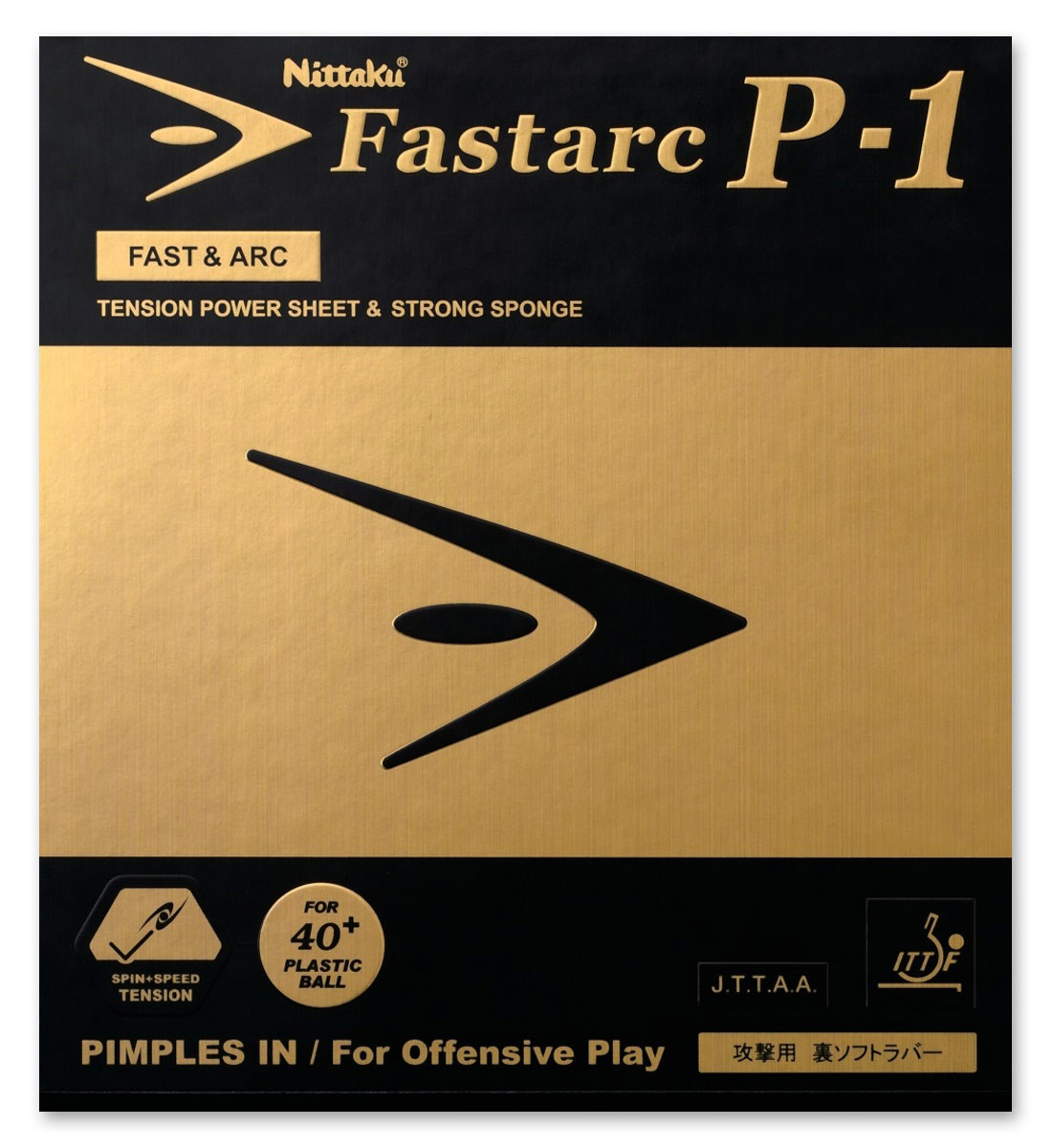
Opposite ends of the difficulty spectrum. Rozena (8.4) is the confidence builder—soft, low-demand, equally effective on forehand and backhand. Fastarc P-1 (7.8 rating) is the high-arc specialist: impressive spin on power loops, high throw angle for safety, but very linear and demanding. Tentative or arm-only strokes produce weak, error-prone results.
Rozena is the safer buy for intermediate development. Fastarc P-1 is a tool for advanced forehand loopers committed to technically sound, full-body topspin strokes.
FAQ
Why is P-1 rated lower despite being advanced?
It’s intentionally niche. High-arc, spin-capable tensors sacrifice versatility for specialists. Rozena’s broad appeal raises its rating.
Can P-1 be a backhand rubber?
Technically yes, but not recommended. It’s designed for forehand loopers who commit to full-stroke power.
Is P-1 really spin-capable despite soft feel?
Yes. Its soft in-play feel masks strong spin output on power loops. Deceptive and rewarding for proper technique.
Which forgives contact errors?
Rozena, substantially. P-1 is unforgiving; poor contact point precision leads to weak balls and errors.
Best for developing loopers?
Rozena. P-1 is for players already past the fundamentals and ready to specialize.