Butterfly Maze Advance vs DHS Hurricane 301: Which Should You Buy?
| Butterfly Maze Advance | DHS Hurricane 301 | |
|---|---|---|
| Our rating | 8.2/10 | 8.6/10 |
| feel | soft, controlled, slightly stiff for an all-wood blade | medium-hard, crisp, direct inner arylate-carbon with deep dwell on power shots |
| handle | FL | FL |
| plies | 5W (all wood) | 5W+2 Aramid-Carbon (Koto outer, Ayous middle and core, inner Arylate-Carbon) |
| speed | ALL+ | OFF |
| thickness_mm | 6.7 | 5.8 |
| weight_g | 85 | 90 |
We may earn a commission from links on this page. Learn more.
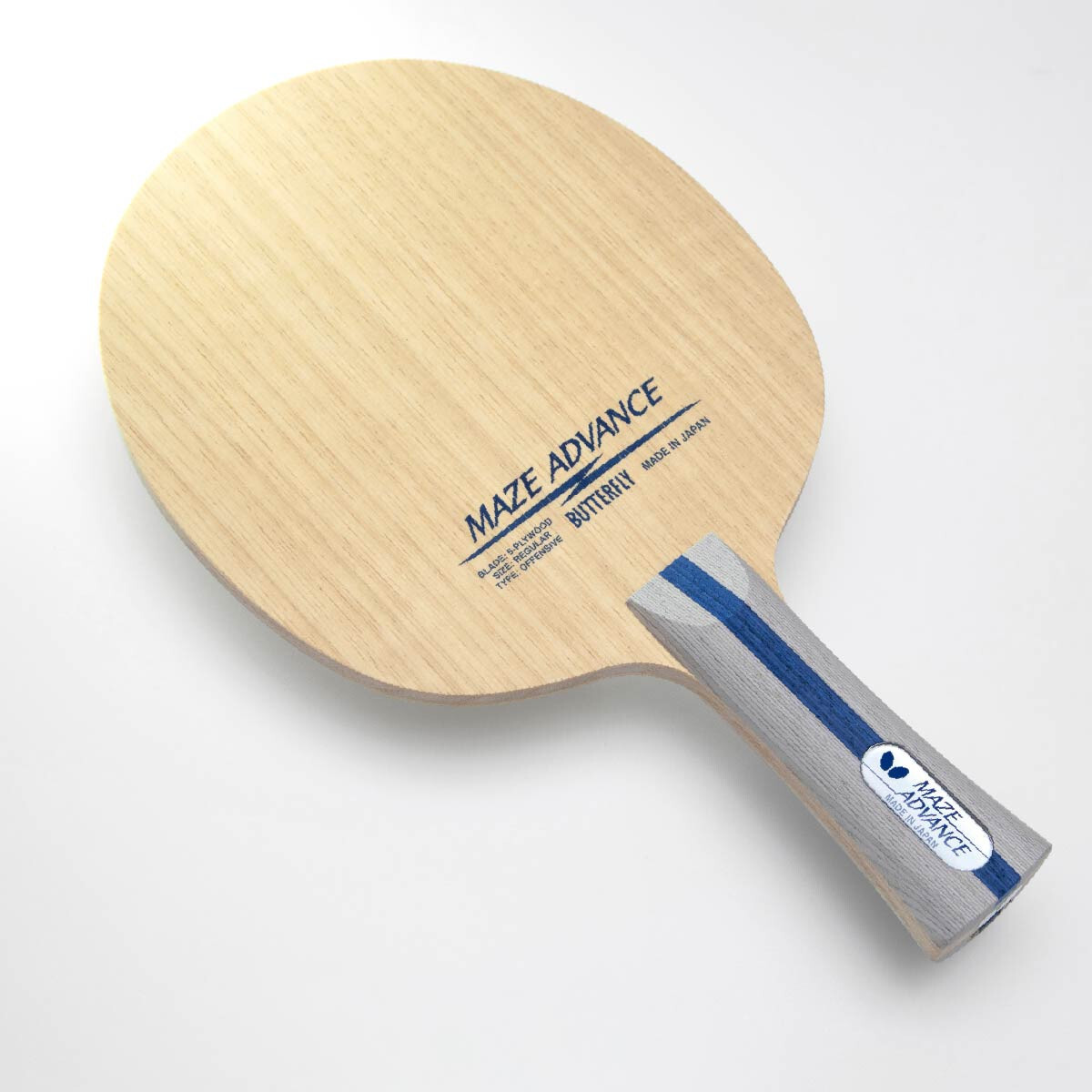
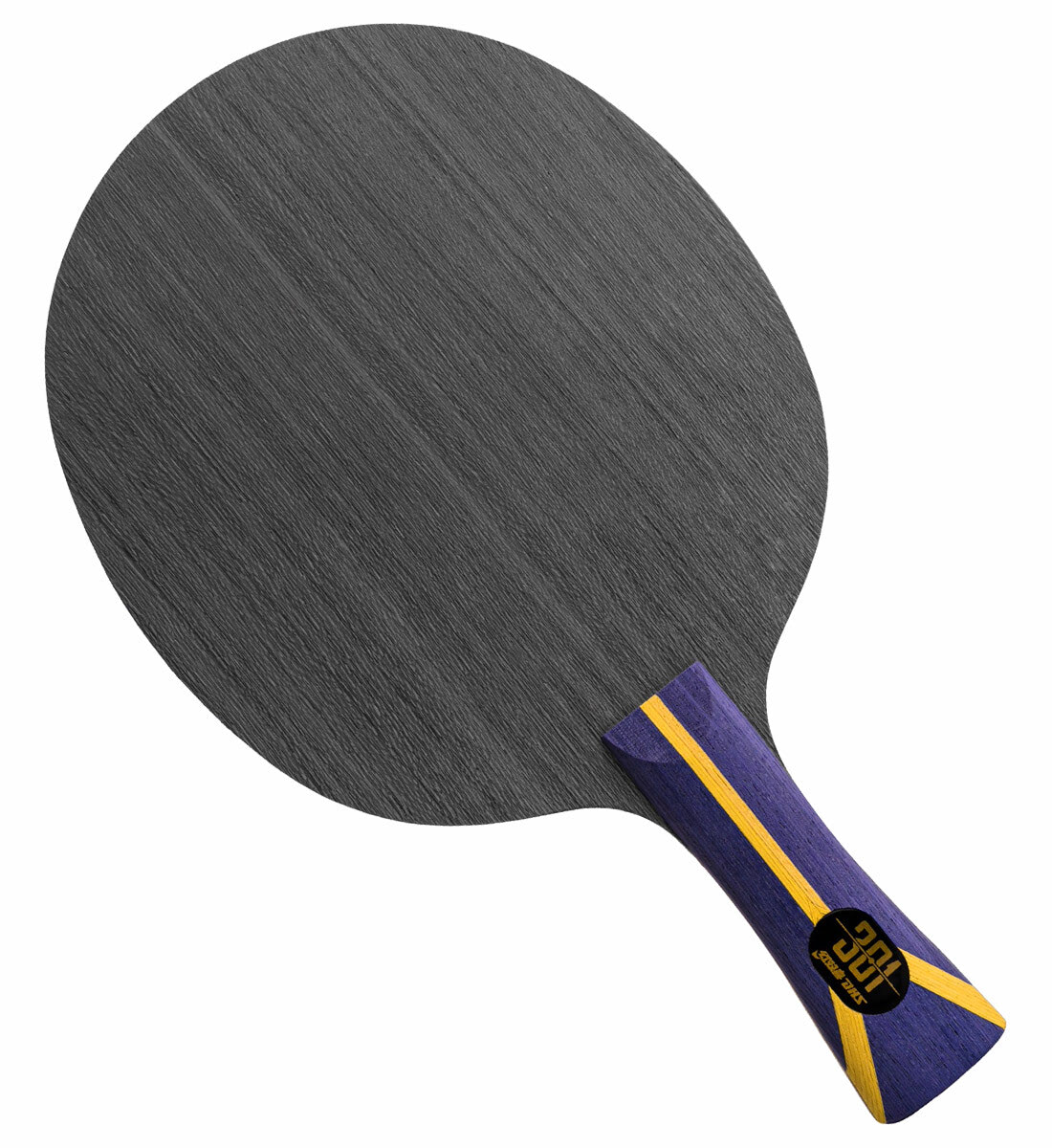
The Maze Advance is a lightweight all-wood control blade for developing players, with low vibration and clean short play. The Hurricane 301 is an inner arylate-carbon blade with a much wider gear range: controllable on touch but climbing to OFF and OFF+ on power loops, with long dwell, high spin and a hard, crisp Koto top.
Go with the Maze Advance if you want simple, forgiving control to learn on and prefer a softer, quieter feel. Go with the Hurricane 301 if you are an improving, forehand-dominant looper or third-ball attacker who wants spin, a wide control range and far more offensive ceiling, all at a strong price, around a third of premium inner-ALC blades.
The 301 splinters when changing rubbers so it should be sealed, and its sharp, direct feel can divide players used to softer Limba tops. The Maze trades that offensive range for easy handling and a clean, direct all-wood touch.
FAQ
Which blade has the wider range of play?
The Hurricane 301. It is controllable on touch yet reaches OFF to OFF+ on power loops, giving a much wider gear range than the moderate-speed, control-focused Maze Advance.
Is the Hurricane 301 good value?
Yes. It is often cited at around one third the price of premium inner-ALC blades while offering long dwell, high spin and a wide control range, making it strong value for improving loopers.
What maintenance does the Hurricane 301 need?
It splinters when changing rubbers, so sealing or sanding the surface is recommended. Its hard Koto top also gives a sharp, direct feel that some players used to softer Limba tops find polarizing.