Butterfly Lin Gaoyuan ALC vs Butterfly Timo Boll Spirit: Which Should You Buy?
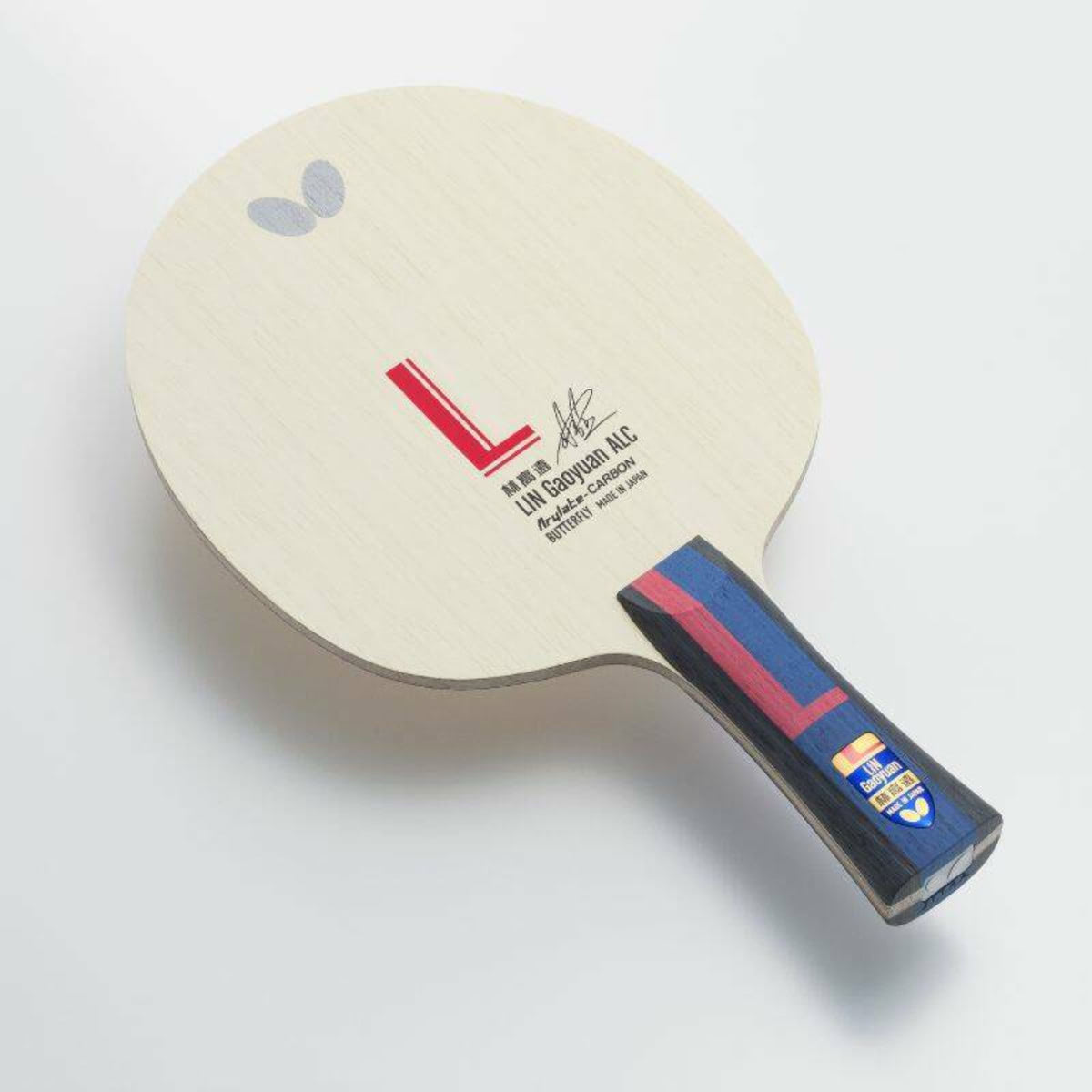
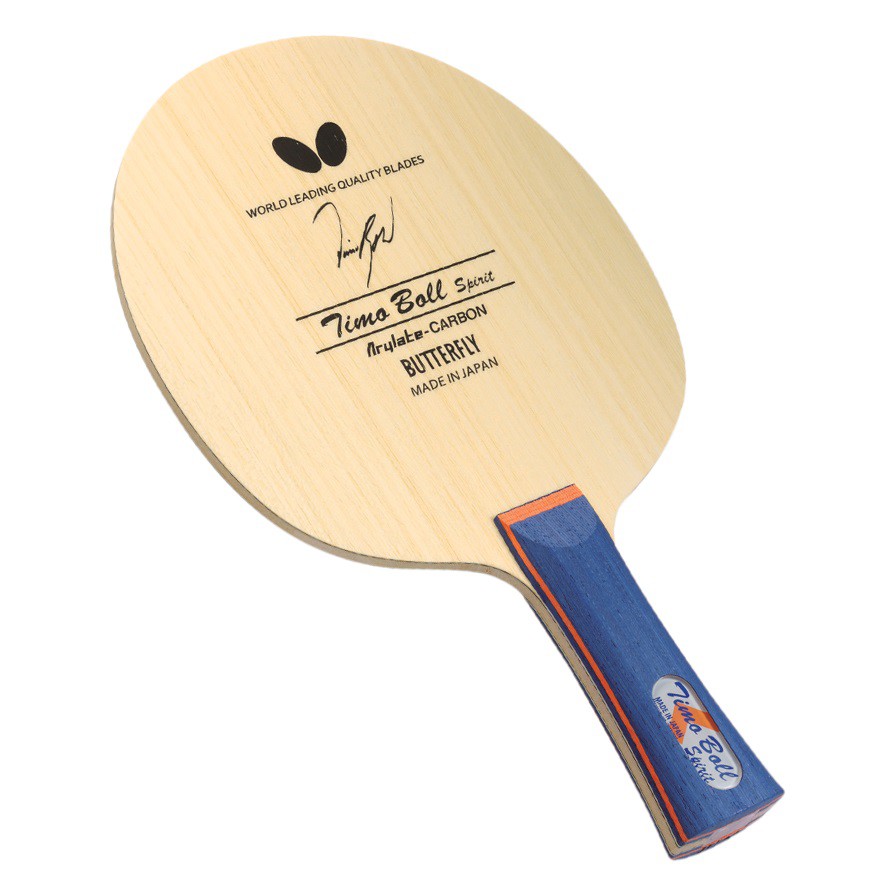
| Butterfly Lin Gaoyuan ALC | Butterfly Timo Boll Spirit | |
|---|---|---|
| Our rating | 8.7/10 | 9.0/10 |
| feel | Soft — flexible ALC gives a more wood-like feel than other carbon blades; high dwell time | Medium and offensive with notable flex and long dwell, crisp but forgiving for a carbon blade |
| handle | Shakehand (FL, AN, ST options); shorter anatomic handle than Viscaria | FL / ST / AN |
| plies | 5 wood + 2 arylate-carbon (ALC) — 7-ply construction with koto outer layers and inner arylate-carbon fiber | 5 wood plies plus 2 arylate-carbon outer layers (5W and 2 ALC) |
| speed | OFF (Butterfly rates Reaction 118, mid-fast; equivalent to OFF/OFF+ class) | OFF |
| thickness_mm | 5.7mm | 5.7 |
| weight_g | 84-87g typical (Butterfly spec approx 87g) | 87 |
We may earn a commission from links on this page. Learn more.
Control Is Exactly Tied — Read That Number Carefully
Of every axis in this comparison set, this pair has the single cleanest result: control rates 8.6 for both the Lin Gaoyuan ALC and the Timo Boll Spirit, a 0-point gap. Not close — identical. Whatever you decide between these two blades, do not decide it based on which one is “more controllable,” because the aggregated data says there is no difference.
Speed is where they actually separate: Lin Gaoyuan ALC rates 9.2, Timo Boll Spirit rates 8.6, a 0.6-point gap in the Lin Gaoyuan ALC’s favor — a real, noticeable difference, larger than the 0.2-point speed gap you’d see if you compared the Lin Gaoyuan ALC against the Timo Boll ALC instead. If raw pace off the blade is your priority between these two specific options, the Lin Gaoyuan ALC has a genuine edge here.
Stiffness runs the other way: Timo Boll Spirit rates 5.5, Lin Gaoyuan ALC rates 4.5, a 1.0-point gap. The Lin Gaoyuan ALC is again the softer, more flexible blade — consistent with its description as sitting “closer to wood than most carbon blades” — while the Timo Boll Spirit’s own reviewers describe it as offering a “more forgiving and softer feel than the stiffer Viscaria,” meaning it’s the middle option: stiffer than the Lin Gaoyuan ALC, softer than Butterfly’s harder carbon blades. Hardness is a non-factor here too, at 6.0 versus 6.1 — a 0.1-point gap you won’t feel.
The Same Consistency Gap Shows Up Again
If you’ve compared the Lin Gaoyuan ALC against other blades, this number will look familiar: consistency rates 5.6 for the Lin Gaoyuan ALC versus 9.4 for the Timo Boll Spirit — a 3.8-point gap, even larger than the 3.7-point gap against the Timo Boll ALC. That the Lin Gaoyuan ALC’s consistency score sits at the same low mark across multiple independent comparisons is worth noting on its own: this isn’t a one-off artifact of pairing it against one specific opponent, it’s a consistent characteristic of the blade itself. The Timo Boll Spirit’s own reviewers back up its side of the gap, calling it a blade that has “aged exceptionally well and still recommended after twenty years” with “outstanding ball feel that many reviewers rate above rival blades” and genuine versatility across “looping, counter-hitting and combination styles.”
Who Should Actually Buy Which
The Timo Boll Spirit’s bestFor language is built around versatility: “intermediate to advanced attacking players who want one offensive carbon blade that loops with heavy spin yet keeps a soft, forgiving touch for blocking and control.” That forgiving, do-it-all reputation matches its far higher consistency score and its two-decade track record.
The Lin Gaoyuan ALC’s bestFor is narrower and more demanding: “advanced attackers who want OFF-speed arylate-carbon power and a flatter arc without losing the feedback of a pure wood blade,” built specifically for “close-to-mid-distance topspin and counter-topspin play.” It rewards a player who already has the stroke technique to exploit its extra speed and softer flex without getting punished by its lower forgiveness on off-timed or passive shots.
Practical Tie-Breakers
Thickness is identical at 5.7mm for both blades, and weight is close (84-87 grams typical for the Lin Gaoyuan ALC versus 87 grams for the Timo Boll Spirit), so neither of those specs pushes you toward one or the other. Handle fit does: the Lin Gaoyuan ALC runs a shorter anatomic handle than comparable Butterfly blades, a real fit risk worth checking before buying, while the Timo Boll Spirit’s complaint is availability rather than fit — its anatomic and straight handles “can be hard to source,” not that they fit poorly once found. And remember the Lin Gaoyuan ALC is discontinued industry-wide, which for many buyers will settle this comparison before the performance numbers do — a 0.6-point speed edge is a real reason to want it, but only if you can actually find one to buy.
Frequently asked questions
Is the Lin Gaoyuan ALC or the Timo Boll Spirit more controllable?
Neither — they're rated exactly the same on Revspin's aggregated control scale, 8.6 versus 8.6. Control isn't a deciding factor between these two.
Which blade is faster?
The Lin Gaoyuan ALC, by 0.6 points (9.2 versus 8.6) — a real, noticeable edge if raw pace matters to you.
Why does the Lin Gaoyuan ALC keep showing a low consistency score across different comparisons?
Because it's a genuine characteristic of the blade, not a one-off — it scores 5.6 on consistency here and in its comparison against the Timo Boll ALC, both far below the 9-plus scores of the blades it's compared against.
Can I still buy a new Lin Gaoyuan ALC?
No, it's discontinued, which makes finding a copy harder and pricier than a current-production blade like the Timo Boll Spirit.