Butterfly Innerforce Layer ALC vs Yasaka Ma Lin Soft Carbon: Which Should You Buy?
| Butterfly Innerforce Layer ALC | Yasaka Ma Lin Soft Carbon | |
|---|---|---|
| Our rating | 8.8/10 | 8.1/10 |
| Feel | medium, high feel/dwell | medium-soft and flexible for a carbon blade, with clear feedback and a large sweet spot |
| Handle | FL/ST/AN | FL/ST/AN |
| Plies | 5W+2 Inner Arylate-Carbon | 7-ply (5 wood plus 2 very thin carbon layers) — same outer veneer as the Yasaka Extra |
| Speed | OFF | OFF- |
| Sponge thickness | 5.9 mm | 5.8 mm |
| Weight | 86 g | 87 g |
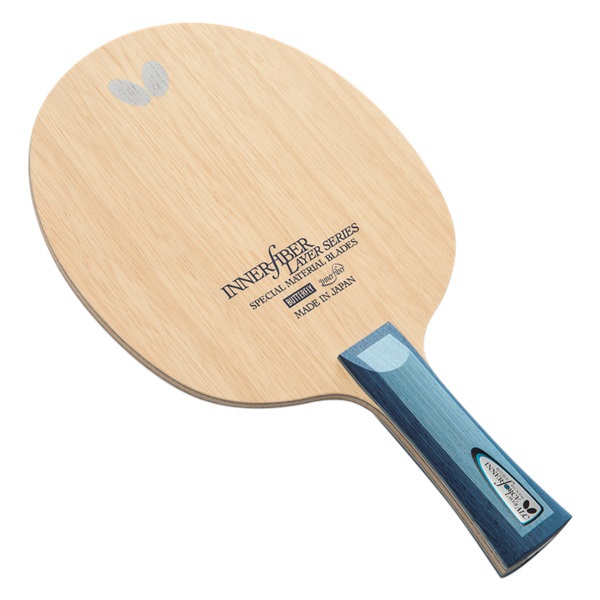
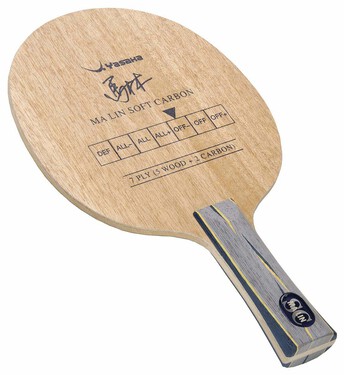
We may earn a commission from links on this page. Learn more.
The clearest upgrade path in this batch
Of all the comparisons in this set, this is the one where the axis data draws the brightest line: Butterfly Innerforce Layer ALC beats Yasaka Ma Lin Soft Carbon by wide, unambiguous margins on three separate axes, and the qualitative source material on both sides agrees about why.
Consistency: the single largest gap in the dataset
Innerforce ALC rates 9.5 on consistency; Ma Lin Soft Carbon rates 6.7, a 2.8-point delta, the biggest single-axis gap across this entire batch of comparisons. That is not a marginal preference difference, it is a blade built for a different level of player. Ma Lin Soft Carbon’s own cons list confirms it directly: it “vibrates and feels sluggish when you miss the sweet spot,” and there is “some weight inconsistency between individual blades.” Innerforce ALC’s own material, by contrast, describes “a large, stable sweet spot” as one of its headline strengths. If repeatability - hitting the same shot the same way, session after session - matters more to you than any other single quality, this axis alone should settle the comparison.
Speed and control also favor Innerforce ALC by a lot
Speed splits 9.1 to 7.6, a 1.5-point gap, and control splits 9.5 to 8.3, a 1.2-point gap. Both are large enough to feel immediately on contact - Ma Lin Soft Carbon is not a slow blade by absolute standards, but it is genuinely a notch down in both raw pace and precision compared to Innerforce ALC. Its own bestFor description is honest about this trade-off, positioning it for “control-oriented offensive players moving up from premade bats” rather than players chasing raw far-table speed, and its cons list explicitly flags that “aggressive far-table attackers may want more raw speed.”
Hardness is a smaller but real difference; weight and stiffness are noise
Hardness favors Innerforce ALC by 0.7 (5.2 vs 4.5) - Ma Lin Soft Carbon is, as its name suggests, the softer-feeling blade of the two, which lines up with its own description as “medium-soft and flexible” versus Innerforce ALC’s “medium-hard” character in the spec table. Stiffness (5.0 vs 4.8, delta +0.2) and weight (6.8 vs 7.1, delta -0.3) are both within noise, and the actual weight specs confirm this: 86 grams and 87 grams respectively, essentially identical uncut.
Where Ma Lin Soft Carbon still wins
This is not a case of one blade being strictly worse - it is a case of one blade being built for an earlier stage of development. Ma Lin Soft Carbon’s own pros list highlights “outstanding short game with very decent control on pushes, touches and serves” and calls it “a natural, controllable upgrade from premade bats for improvers.” If you are coming from a premade racket and want a soft, forgiving, honest blade that will not punish mis-hits while you build technique, that is a real and legitimate use case that Innerforce ALC - described in its own cons list as “a premium, OFF blade that rewards a developed stroke” - is not built for.
Should you upgrade?
If you already own Ma Lin Soft Carbon and are asking whether Innerforce ALC is worth the jump: for most improving players who have outgrown the forgiving-sweet-spot phase, yes - the consistency, speed and control gaps here are large enough that you will likely feel the difference in your first week, not just on a spec sheet. The exception is if you are still working on stroke fundamentals and specifically value Ma Lin Soft Carbon’s soft, honest feedback over Innerforce ALC’s faster, less forgiving platform - in that case, stay put until your technique catches up to the blade you already own.
Who each blade actually suits
Sources on Ma Lin Soft Carbon, including Megaspin’s buyer reviews and Tabletennis11’s coverage, consistently frame it as a stepping-stone blade rather than a long-term ceiling. Innerforce ALC’s sources - Revspin, Megaspin, and TableTennisDaily’s review threads - treat it as a durable, long-term choice for allround-to-offensive players, not something most players will outgrow quickly.
Bottom line
This is an upgrade comparison more than a lateral one. Innerforce ALC wins convincingly on consistency, speed and control; Ma Lin Soft Carbon’s case rests entirely on being the gentler, cheaper stepping-stone for players moving up from premade bats. Weight and stiffness will not factor into your decision either way - they are statistically tied.
Frequently asked questions
Should I upgrade from Yasaka Ma Lin Soft Carbon to Butterfly Innerforce Layer ALC?
If you have outgrown a soft, forgiving premade-style blade, yes - Innerforce ALC leads by 2.8 points on consistency, 1.5 on speed and 1.2 on control, gaps large enough to feel in your first week. Stay on Ma Lin Soft Carbon only if you are still building basic stroke technique.
Is Ma Lin Soft Carbon good for players coming from a premade bat?
Yes - its own bestFor description specifically names improving, control-oriented offensive players moving up from premade bats, citing its soft, forgiving carbon feel and strong short game as the reasons.
Why is the consistency gap between these two so large?
Ma Lin Soft Carbon's own cons list explains it directly: the blade vibrates and feels sluggish when you miss the sweet spot, and there is some reported weight inconsistency between individual blades. Innerforce ALC's larger, more stable sweet spot avoids both issues.
Do Innerforce ALC and Ma Lin Soft Carbon weigh differently?
Barely - 86 grams versus 87 grams uncut, essentially identical. The weight-axis delta of -0.3 is noise; do not use weight as a deciding factor between these two.