Butterfly Innerforce Layer ALC vs Tibhar Stratus Power Wood: Which Should You Buy?
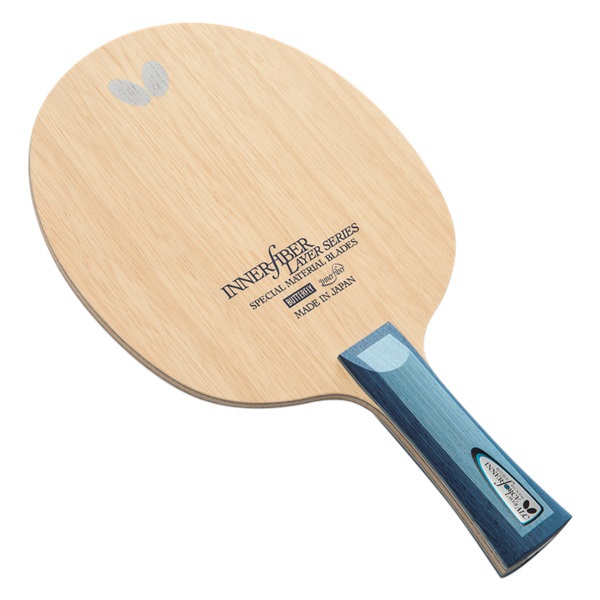
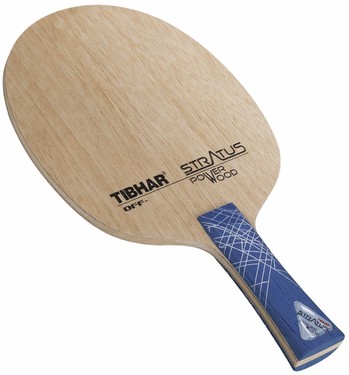
| Butterfly Innerforce Layer ALC | Tibhar Stratus Power Wood | |
|---|---|---|
| Our rating | 8.8/10 | 9.0/10 |
| Feel | medium, high feel/dwell | Elastic with long dwell time, lively yet controlled, larger-than-average head and big sweet spot |
| Handle | FL/ST/AN | FL / ST / AN |
| Plies | 5W+2 Inner Arylate-Carbon | 5-ply all wood (Limba-Limba-Ayous-Limba-Limba) |
| Speed | OFF | OFF- |
| Sponge thickness | 5.9 mm | 6.2 mm |
| Weight | 86 g | 90 g |
We may earn a commission from links on this page. Learn more.
An all-wood blade that matches a premium carbon composite almost axis-for-axis
This is the most surprising pairing in this batch: Tibhar Stratus Power Wood is a pure 5-ply all-wood blade, yet it rates higher overall than Butterfly Innerforce Layer ALC (9.0 vs 8.8) despite the Innerforce carrying carbon layers and sitting in a higher price bracket. The axis data explains why the two play more alike than the “wood versus composite” label suggests, and it isolates the one axis where the gap is actually large.
Weight is the one big gap, and it’s not really about grams
The weight axis is the standout delta here: Stratus Power Wood rates 8.2, Innerforce ALC rates 6.8, a 1.4-point gap, the largest in this comparison. But look at the actual spec sheet: Stratus is 90 grams uncut against Innerforce ALC’s 86 grams, just a 4-gram difference. The 1.4-point radar gap is really capturing balance and perceived heft rather than raw mass. Stratus’s own cons list admits it has a “slightly head-heavy balance that some players find a touch heavy,” which is a different problem than simply weighing more on a scale. If you have ever held two blades of nearly identical weight that swing completely differently because the mass sits toward the head, this is that axis.
Everything else is close enough to call a tie
Speed (9.1 vs 8.9, delta +0.2), control (9.5 vs 9.3, delta +0.2), stiffness (5.0 vs 4.9, delta +0.1), and hardness (5.2 vs 5.4, delta -0.2) are all inside two-tenths of a point. None of these differences will be noticeable mid-rally. Consistency is the only other axis with real separation, 9.5 vs 9.1, a 0.4-point edge to Innerforce ALC, which tracks with its carbon layer giving a slightly more repeatable, damped response - though it is a modest gap, not a category difference.
Reading the specs alongside the axes
Innerforce ALC’s speed classification is a straight OFF; Stratus Power Wood is rated one notch below at OFF-, yet the measured speed axis puts them within 0.2 of each other. Stratus’s own pros list flags exactly this mismatch, noting it “plays faster than its OFF- rating suggests” - which the axis data corroborates, since it is not meaningfully slower than a full OFF-rated composite blade. That is unusual for an all-wood blade at this level, and it is the core reason Tibhar’s own source material describes it as “widely called the best value 5-ply all-wood blade.”
Switching between them
If you are on Innerforce ALC and considering a move to Stratus Power Wood to save money without giving up performance, the axis data actually supports that move for most playing styles - speed, control, stiffness and hardness are all near-identical, and Stratus’s higher weight-axis score mostly shows up as head-heavy balance rather than reduced control. The one group that should be cautious: control-first defenders and blockers, since Stratus’s own cons list specifically warns it is “not ideal for control-first defenders” given its faster-than-rated character, and that “backhand blocks reward precise timing” - an area where Innerforce ALC’s carbon damping and higher measured consistency (9.5 vs 9.1) likely helps more.
Going the other way, from Stratus to Innerforce ALC, mainly buys a slightly softer sweet spot and better measured consistency, plus the option to lean on carbon-composite feel for tacky Chinese rubbers, but you are not buying more raw speed or control since those axes are already close to tied.
Who each blade actually suits
Stratus Power Wood’s own bestFor description names “beginner to intermediate two-winged loopers who want a forgiving, spin-friendly all-wood blade with real attacking speed at an unbeatable price.” Innerforce ALC’s own bestFor description is aimed at a similar but slightly more developed player: “allround-to-offensive shakehand players” who want the feel of an all-wood blade plus carbon-driven acceleration, and who have “a developed stroke” to reward, per its own cons list.
Bottom line
Do not assume the carbon blade automatically outperforms the all-wood one here - on this axis data, it mostly does not. Weight and balance is the real differentiator, since Stratus swings head-heavy, and everything else is close enough that price, handle feel, and whether you are a control-first blocker should decide it, not raw performance numbers.
Frequently asked questions
Can an all-wood blade really compete with a carbon composite blade?
In this case, yes - Tibhar Stratus Power Wood rates 9.0 overall against Innerforce Layer ALC's 8.8, and the two are within 0.2 points of each other on speed, control, stiffness and hardness. The carbon layer's main measurable edge is a 0.4-point consistency advantage.
Which blade is better for control-first defenders or blockers?
Innerforce Layer ALC. Stratus Power Wood's own cons list states directly that it is not ideal for control-first defenders because it plays faster than its OFF- rating suggests, and that backhand blocks reward precise timing.
Is Tibhar Stratus Power Wood good for beginners?
Yes - its own bestFor description specifically names beginner to intermediate two-winged loopers wanting a forgiving, spin-friendly all-wood blade with real attacking speed at a low price.
Why does Stratus Power Wood feel heavier if it's only 4 grams more than Innerforce ALC?
The gram difference is small, but the weight-axis gap (8.2 vs 6.8) is larger because it reflects balance, not just mass. Stratus's own cons list admits a slightly head-heavy balance that some players find a touch heavy, which changes how the blade swings independent of total weight.