Butterfly Innerforce Layer ALC vs Butterfly Primorac Carbon: Which Should You Buy?
| Butterfly Innerforce Layer ALC | Butterfly Primorac Carbon | |
|---|---|---|
| Our rating | 8.8/10 | 8.5/10 |
| feel | medium, high feel/dwell | Medium-Hard |
| handle | FL/ST/AN | FL|ST|AN |
| plies | 5W+2 Inner Arylate-Carbon | 5 wood + 2 carbon (TAMCA 5000 carbon, outer layer) |
| speed | OFF | OFF |
| thickness_mm | 5.9 | 6.9 |
| weight_g | 86 | 88 |
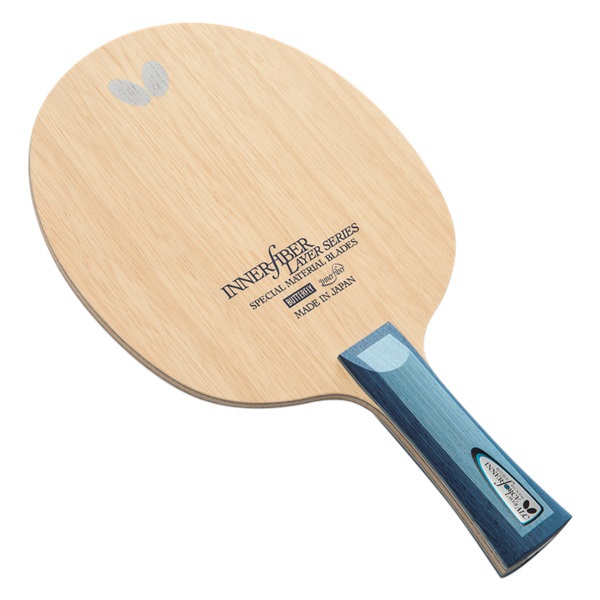
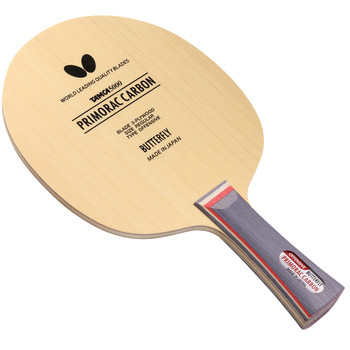
We may earn a commission from links on this page. Learn more.
Butterfly Innerforce Layer ALC and Butterfly Primorac Carbon offer distinct approaches to offensive blade construction. Butterfly Innerforce Layer ALC emphasizes superior control and dwell with its construction, while Butterfly Primorac Carbon provides solid all-around performance through its carbon construction. Pick Butterfly Innerforce Layer ALC for close-to-table spin-focused play; pick Butterfly Primorac Carbon for faster attack and mid-distance aggression.
FAQ
How do Butterfly Innerforce Layer ALC and Butterfly Primorac Carbon differ in speed?
Butterfly Innerforce Layer ALC offers OFF speed while Butterfly Primorac Carbon delivers OFF. This affects how much pace you generate and how suitable each is for your playing distance and style.
Which rubber or blade has better control?
Control varies by construction. Inner ALC gives all-wood feel and dwell up close, then a carbon kick and acceleration on hard swings with Butterfly Innerforce Layer ALC, while Exceptional OFF-class speed backed by TAMCA 5000 carbon outer layers with Butterfly Primorac Carbon.
What is the weight difference between these options?
Butterfly Innerforce Layer ALC weighs 86 while Butterfly Primorac Carbon weighs 88. Lighter options reduce fatigue on long rallies; heavier options provide more stability.
Which blade suits all-wood fundamentals better?
Butterfly Innerforce Layer ALC maintains stronger all-wood characteristics, ideal for players valuing traditional feel. Butterfly Primorac Carbon adds carbon for enhanced stability and power.