Butterfly Garaydia ALC vs DHS Hurricane 301: Which Should You Buy?
| Butterfly Garaydia ALC | DHS Hurricane 301 | |
|---|---|---|
| Our rating | 8.5/10 | 8.6/10 |
| control | — | — |
| feel | Crisp, hard and stiff with a direct, low-vibration touch and a notably low throw arc | medium-hard, crisp, direct inner arylate-carbon with deep dwell on power shots |
| handle | FL | FL |
| plies | 5-ply total: 3 wood + 2 Arylate-Carbon (ALC) layers, with an outer carbon construction under a Japanese hinoki surface ply | 5W+2 Aramid-Carbon (Koto outer, Ayous middle and core, inner Arylate-Carbon) |
| speed | OFF | OFF |
| spin | — | — |
| thickness_mm | 6.9 | 5.8 |
| type | OFF | — |
| weight_g | 83 | 90 |
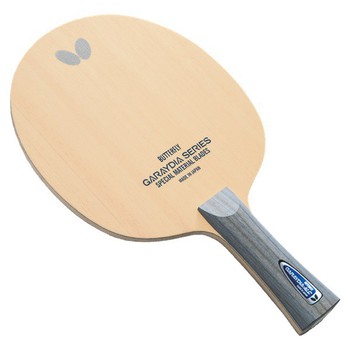
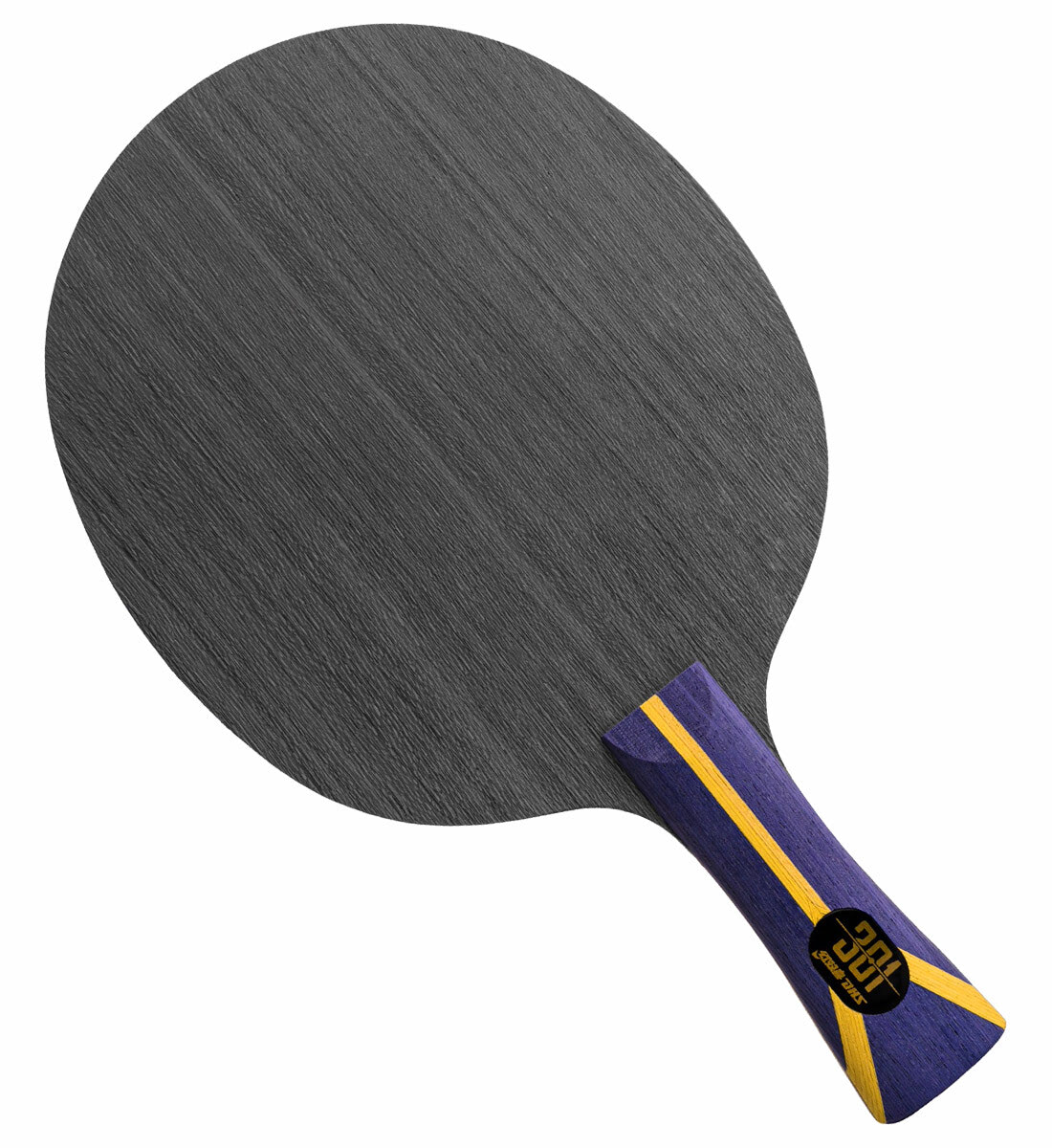
We may earn a commission from links on this page. Learn more.
A one-third-the-price challenger to a discontinued premium blade
DHS Hurricane 301’s own listed pros make the comparison explicit: it offers “exceptional value, often cited at around one third the price of premium inner-ALC blades.” Butterfly Garaydia ALC, at 8.5 overall against Hurricane 301’s 8.6, is exactly the kind of premium inner-carbon blade that comparison is aimed at - and Garaydia ALC is now discontinued, meaning new copies are hard to source. That combination - near-identical rating, a third of the price, and actual availability - makes this one of the more practically important comparisons in this whole set.
The axis that actually explains the price gap
Hardness is where these two blades diverge hardest: Garaydia ALC scores 3.5 against Hurricane 301’s 5.4, a 1.9-point gap, the second largest single-axis gap anywhere in this batch. Garaydia ALC’s own cons describe the effect directly: it is “so damped that you feel little ball feedback, which some players dislike.” Its pros frame the same trait positively as “crisp, stiff, almost vibration-free direct feel.” Hurricane 301, by contrast, has a “hard Koto top” giving “a crisp, direct feel” that TableTennisDaily and Revspin reviewers note can be “polarizing for players used to softer Limba tops” - the opposite complaint, too much feedback rather than too little.
Weight shows the largest single delta of the pair at 2.5 points on the tracked weight axis, reflecting a genuine physical difference: Garaydia ALC sits around 83 grams while Hurricane 301 runs closer to 90 grams. That is a real, feelable difference in swing weight, not a rounding artifact.
Speed favors Hurricane 301 by 0.5 (8.6 vs 9.1), and control by a smaller 0.2 (9.2 vs 9.4) - both modest advantages for the cheaper blade. Stiffness is dead even at 4.2 for both, meaning neither blade should be marketed as stiffer than the other; any perceived stiffness difference players report is likely driven by the much larger hardness gap instead. Consistency is a small 0.3-point edge to Hurricane 301 (8.8 vs 9.1).
Not quite a like-for-like swap
Despite the price argument, these two blades are not solving the same problem. Garaydia ALC’s stated ideal use case is a “very low throw arc that excels at blocking, flicking and counter-topspins” for players who rely on close-to-table control rather than raw power - its own cons explicitly warn it is “poorly matched to tacky hard Chinese rubbers because of the low throw” and “can feel weak away from the table without strong footwork.” Hurricane 301 is built for a different job: reviewer language calls it a “wide control range” blade for “forehand-dominant loopers and third- or fifth-ball attackers,” and TTGearLab’s lab testing found “deep ball-holding on strong impacts” - a power-game trait Garaydia ALC does not claim.
Should you switch?
If you currently own Garaydia ALC and it is wearing out or unfindable, do not assume Hurricane 301 is a drop-in replacement just because the rating and price argument look favorable. The 1.9-point hardness gap means you would trade Garaydia’s near-vibration-free blocking control for a harder, more direct feel that TableTennisDaily reviewers call polarizing. If your game depends on that ultra-low-arc blocking style, look for another stiff, low-throw blade rather than defaulting to Hurricane 301.
If you are choosing between the two fresh, with no existing attachment to either: Hurricane 301’s cons are minor and fixable - splintering when changing rubbers is solved with sealant or light sanding - while Garaydia ALC’s central con, discontinuation, is not fixable at all. For most players building a first premium-feeling setup, Hurricane 301’s third-of-the-price value proposition, wider gear range, and actual availability make it the more sensible starting point, reserving Garaydia ALC only for players who specifically want its documented low-arc blocking specialty and can still find one.
Who each one actually suits
Garaydia ALC fits advanced and upper-intermediate topspin attackers who play close to or at mid distance, rely on blocking, flicking and counter-topspin, and want a stiff, low-throw arylate-carbon blade with high control rather than a springy power blade. Hurricane 301 fits intermediate and improving offensive players, especially forehand-dominant loopers and third- or fifth-ball attackers, who want a spin-friendly inner-carbon blade with a wide control range at an affordable price.
Frequently asked questions
Is DHS Hurricane 301 a good substitute for discontinued Garaydia ALC?
Only partly. It is much cheaper and rates almost identically overall, but the 1.9-point hardness gap means it trades Garaydia's near-vibration-free, low-arc blocking control for a harder, more direct feel. If ultra-low-arc blocking is your priority, Hurricane 301 is not a true replacement.
Why is Garaydia ALC so damped compared to Hurricane 301?
Its construction is specifically built for a stiff, near-vibration-free direct feel, which its own cons acknowledge can mean you feel little ball feedback. Hurricane 301's harder Koto top gives the opposite experience - a crisp, sometimes polarizing amount of feedback.
Does Hurricane 301 work with tacky Chinese rubber?
Yes, and that is one of its stated strengths - it is light at around 90 grams and pairs well with tacky Chinese or fast Euro and Japanese rubbers, giving it a wider rubber compatibility range than Garaydia ALC, which is poorly matched to tacky hard Chinese rubber due to its low throw.
What is the main practical downside of Hurricane 301?
It can splinter when changing rubbers, so sealing or light sanding of the surface is recommended before mounting new rubber. This is a minor, fixable issue compared with Garaydia ALC's unfixable con of being discontinued.